
Creamy beans, smoky pancetta, and a rosemary-scented broth give this Tuscan white bean soup the kind of depth that tastes like it simmered all afternoon, even though it comes together in under an hour. The mashed beans thicken the pot naturally, so you get a spoonable, hearty soup without cream or flour. Kale softens into the broth just enough to stay green and a little toothsome, which keeps every bowl feeling balanced instead of heavy.
The key is building flavor in stages. Browning the pancetta first leaves you with savory fat for the onion, celery, and garlic, and that base carries the whole soup. Cannellini beans are the right choice here because they break down into a silky texture when you mash some of them, while the rest stay intact for bite. A parmesan rind is optional, but if you have one, it adds a quiet salty richness that makes the broth taste fuller.
Below you’ll find the small choices that keep this soup from tasting flat or muddy, plus a few swaps that still give you a rich result. If you’ve ever ended up with bean soup that felt thin or bland, this version solves both problems without extra fuss.
The soup thickened up perfectly after I mashed some of the beans, and the rosemary with the parmesan rind made it taste like something from a little trattoria. My husband went back for seconds before I’d even sat down.
Tuscan White Bean Soup gets its best texture from mashed cannellini beans, so save this one for a cozy bowl with rosemary, kale, and crusty bread.
The Secret to a Brothy Soup That Still Eats Like a Meal
The mistake most bean soups make is staying separate at the end: beans in broth, greens floating around, and not much in between. This one gets body from two places. First, the pancetta fat coats the onion, celery, and garlic so the base tastes seasoned from the start. Then a third of the beans get mashed right in the pot, which thickens the broth without turning it into puree.
That mash matters more than people think. If you skip it, the soup can taste a little thin even when the flavor is good. If you mash all of the beans, it turns pasty and loses the contrast that makes each spoonful interesting. The goal is a broth that clings to the beans and greens, not a pot of bean paste.
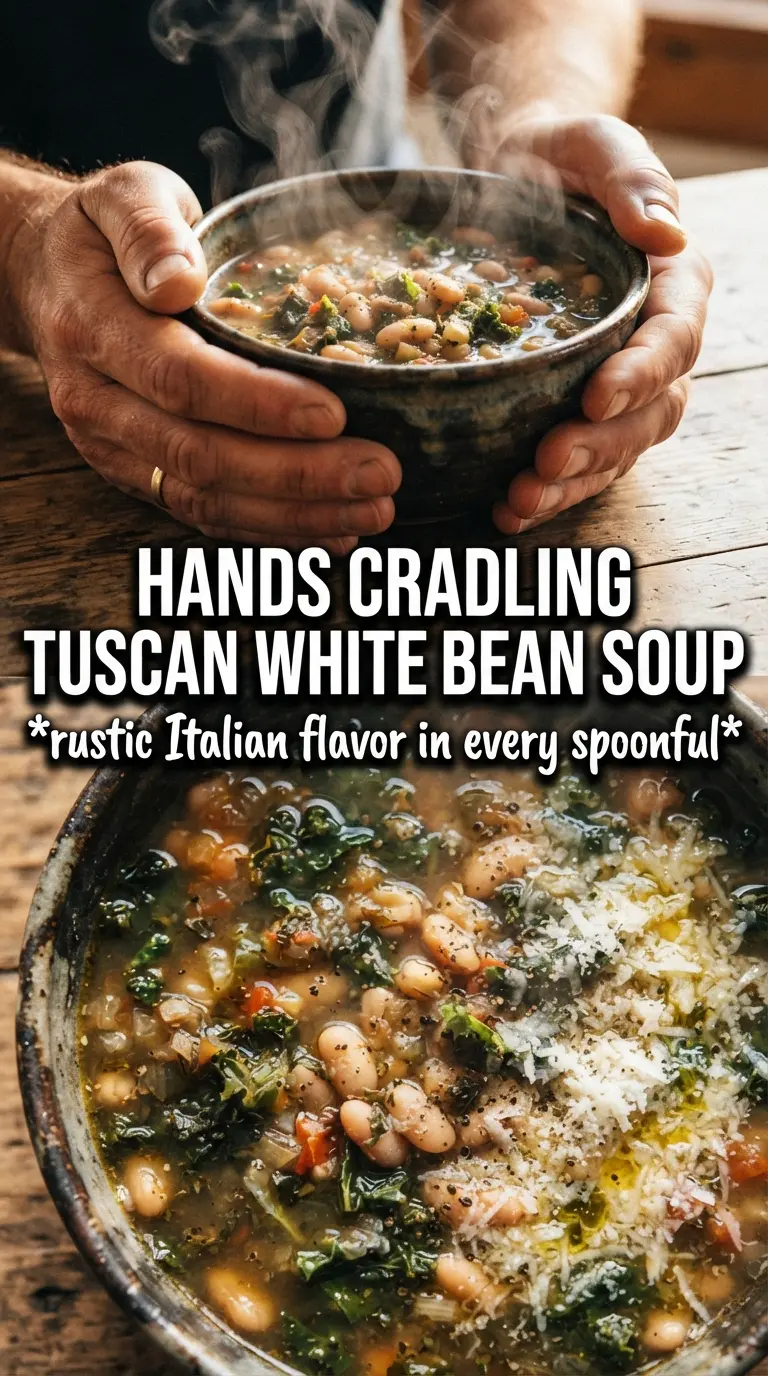
What Each Ingredient Is Actually Doing in This Soup
- Cannellini beans — These are the backbone of the soup. They soften enough to mash into the broth, but they still hold their shape in the final bowl. Great Northern beans can work in a pinch, but cannellini have a creamier texture and a milder flavor that fits this broth better.
- Pancetta or bacon — This adds the first layer of savory flavor and gives you fat for sautéing the vegetables. Pancetta is a little cleaner and more Italian in flavor, while bacon brings a smokier edge. If you skip it, use olive oil and add a pinch of smoked paprika if you want to replace some of that depth.
- Parmesan rind — This is the quiet ingredient that makes the broth taste rounded instead of flat. It melts just enough to add savory richness without making the soup cheesy. If you don’t have one, add a little extra parmesan shavings at the end, but the rind gives a more layered result.
- Kale — Kale holds up better than tender greens and keeps the soup hearty. Chop it fairly small so it softens evenly in the last few minutes. Swiss chard will work, but it cooks faster and turns more delicate in the broth.
- Rosemary — Fresh rosemary perfumes the soup in a way dried rosemary can’t quite match. Use the sprigs as written so you can pull them out before serving. If you only have dried, use a small pinch; too much can take over the whole pot.
Building the Broth in Layers So It Tastes Slow-Simmered
Render the pancetta first
Cook the pancetta until the pieces are crisp and the fat has rendered into the pot. You want golden edges and a little fond on the bottom, not pale meat sitting in its own juices. If the pan looks dry, the heat is too low; if the pieces darken too fast, pull the pot back so they don’t turn bitter.
Sweat the vegetables in the fat
Add the onion, celery, and garlic to the rendered fat and cook until the onion turns soft and translucent. The garlic should smell fragrant, not sharp. If the garlic starts browning before the onion is tender, the heat is too high and the broth will taste harsh later.
Simmer, then thicken
Stir in the tomatoes, broth, rosemary, parmesan rind, Italian seasoning, and beans, then let everything simmer until the beans are fully tender and the broth tastes united. Pull out the rosemary and rind before mashing some of the beans against the side of the pot. That mash is what gives the soup body without clouding the broth, so stop once about a third of the beans have broken down.
Finish with the kale
Add the kale near the end so it stays green and slightly firm instead of turning dull and limp. Five to eight minutes is enough for chopped kale in a simmering soup. Taste the broth after the greens wilt; this is when the salt and pepper should go in, because the kale can soften the seasoning a little.
Three Ways to Make This Soup Fit What You Have on Hand
Vegetarian version with the same depth
Skip the pancetta and start the vegetables in olive oil. Add the parmesan rind if you use dairy, and don’t leave out the final drizzle of olive oil at the end because that last bit of fat helps the soup taste finished. If you want a little smoky depth, add a small pinch of smoked paprika with the Italian seasoning.
Dairy-free without losing the savory backbone
Leave out the parmesan rind and shavings, then add an extra drizzle of good olive oil at the table. The broth will still be rich from the beans, tomatoes, herbs, and pancetta. If you want a little more depth, simmer a strip of lemon peel with the rosemary and pull it out before serving.
Make it heartier with sausage or extra greens
Swap the pancetta for mild Italian sausage if you want a more substantial bowl with bigger chunks of meat. Brown it first, then proceed as written. You can also double the kale if you want more greens; just give it another minute or two so the extra volume wilts evenly.
Storage and Reheating
- Refrigerator: Keeps well for 4 days. The beans continue to soften, so the soup gets a little thicker by day two.
- Freezer: Freezes well for up to 3 months. Cool it completely first and leave a little space in the container because the broth expands.
- Reheating: Warm it gently on the stove over medium-low heat, stirring often. If it looks too thick, loosen it with a splash of broth or water. Boiling hard can turn the kale dull and make the beans break down too much.
Questions I Get Asked About This Recipe

Tuscan White Bean Soup
Ingredients
Equipment
Method
- Cook the pancetta in a large pot over medium heat until crispy, then remove and set aside for topping.
- Keep the rendered fat in the pot so you can sauté the vegetables right in it.
- Sauté the onion, celery, and garlic in the pancetta fat for 5 minutes, stirring until softened.
- Add the diced tomatoes, broth, rosemary sprigs, parmesan rind (if using), and Italian seasoning, then bring the mixture to a boil.
- Add the cannellini beans and simmer for 20 minutes, keeping the broth at a steady simmer.
- Remove the rosemary sprigs and the parmesan rind, then mash about a third of the beans in the pot to thicken the soup.
- Add the kale and simmer for 5–8 minutes until wilted and tender.
- Season with salt and pepper, then drizzle with olive oil and top with parmesan shavings and the reserved pancetta.