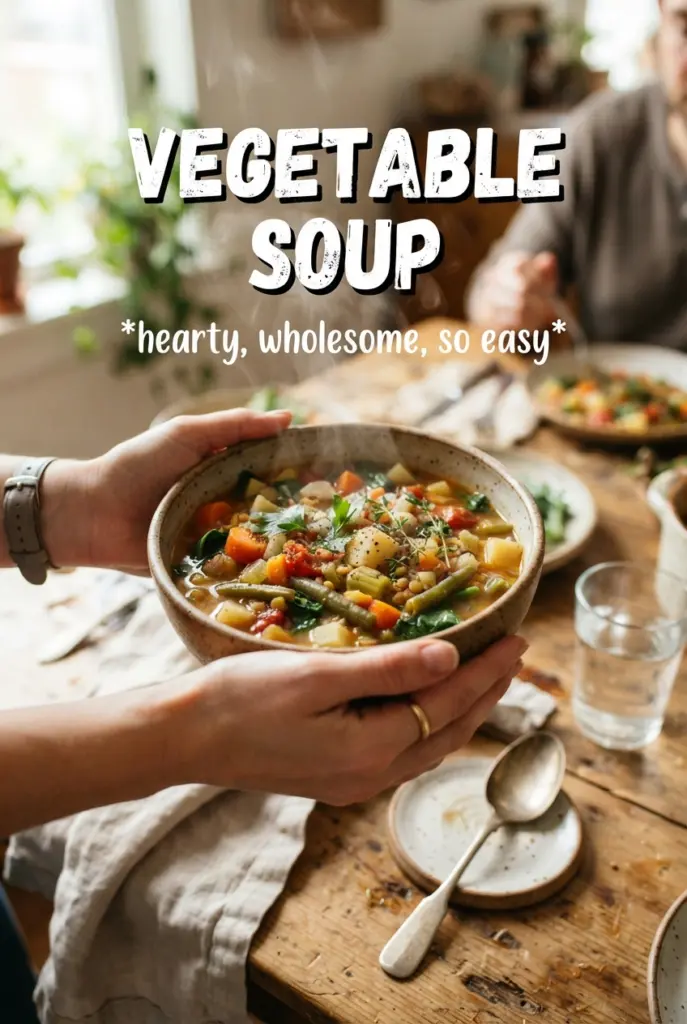
Clear broth, tender vegetables, and just enough herbiness to taste like the pot simmered all afternoon even though it comes together fast. This is the kind of vegetable soup that actually eats like a meal: potatoes for body, carrots and celery for sweetness, tomatoes for brightness, and peas and corn added at the end so they stay lively instead of turning dull. The result is brothy but not thin, comforting without feeling heavy.
The difference here is timing. The potatoes need enough simmering time to turn creamy at the edges, but the green beans, peas, and corn should go in late so they keep their shape and color. A lot of vegetable soups go soft and one-note because everything cooks too long together. This one stays clean and bright because each vegetable gets the amount of heat it needs, not a minute more.
Below, I’ve included the one step that keeps the broth balanced and a few easy ways to adapt the pot depending on what’s in your kitchen.
The broth stayed clear and the potatoes were tender without falling apart. I loved that the peas and corn still had some bite at the end, and the whole pot tasted fresh instead of mushy.
Love a brothy vegetable soup with tender potatoes and bright late-added peas? Save this one for the nights when you want a full pot of comfort with barely any cleanup.
The Trick to Keeping Vegetable Soup Bright Instead of Bland
Vegetable soup goes flat when every ingredient cooks for the same amount of time. Potatoes need time to soften and thicken the broth a little, while peas, corn, and green beans need a shorter stay so they keep their color and taste like themselves. If you toss everything in together at the start, the last vegetables in the pot end up dull and the whole soup tastes muddy.
The other thing that matters is the base. Sautéing the onion, carrots, and celery first gives the broth a sweeter, deeper backbone before the liquid goes in. That extra few minutes in the pot is what separates a soup that tastes boiled from one that tastes built.
What Each Ingredient Is Actually Doing in This Bowl
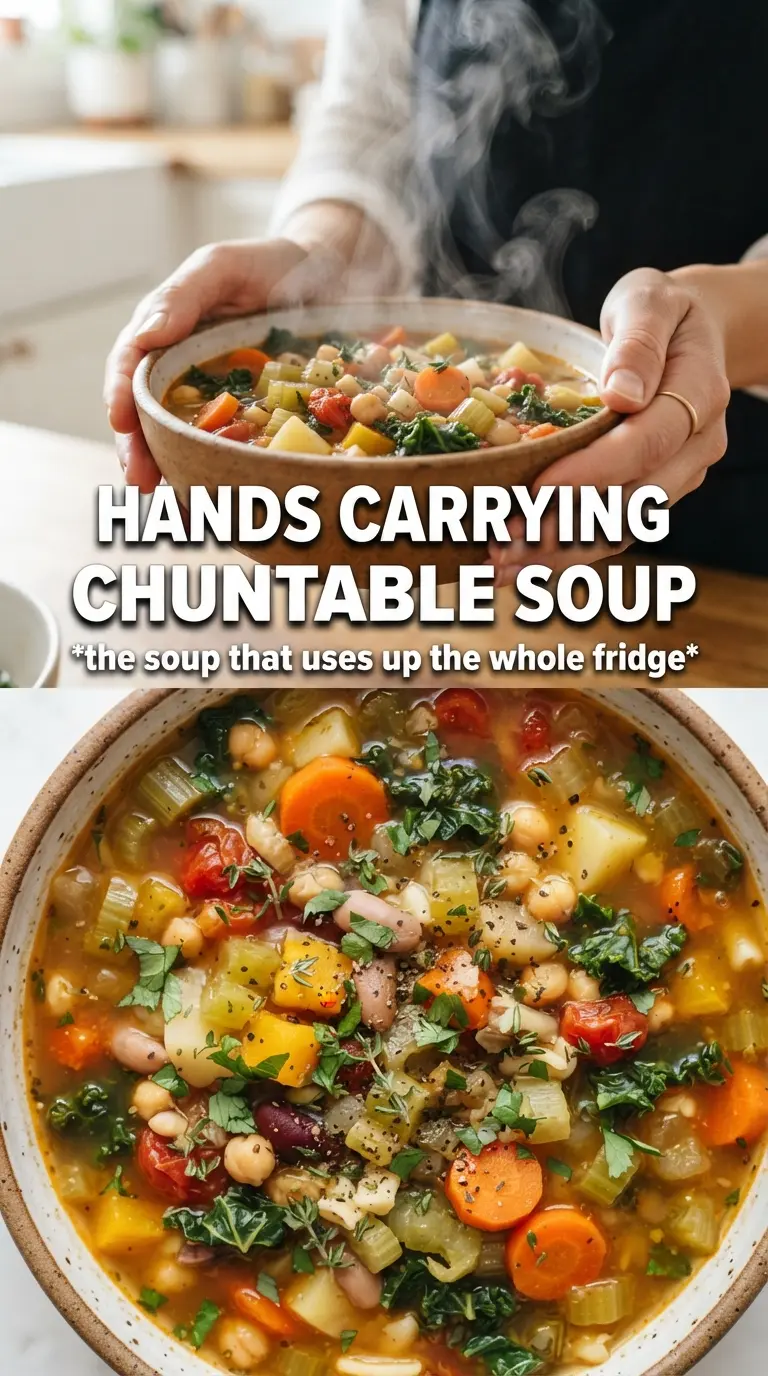
- Potatoes — They give the soup body and make the broth feel more filling. Waxy potatoes hold their shape a little better, but standard Yukon Golds or russets both work; just know russets will soften more and help thicken the soup.
- Carrots, celery, and onion — This is the flavor base. Cook them until the onion turns translucent and the carrots just start to soften; if you rush this step, the broth tastes thin no matter how long the soup simmers later.
- Garlic — It only needs a minute. Longer than that and it can taste harsh, especially once the broth reduces.
- Vegetable broth — This carries the whole soup, so use one you’d actually drink. A low-sodium broth gives you more control at the end, which matters because canned tomatoes can vary a lot in saltiness.
- Diced tomatoes — They add acidity and lift the broth so it doesn’t taste one-dimensional. Fire-roasted tomatoes work well if you want a little smokier edge.
- Green beans, peas, and corn — These go in late because they cook fast and lose their best texture if they simmer too long. Frozen vegetables are fine here and often better than older fresh ones because they’re picked at peak and hold their shape.
- Thyme and parsley — Thyme gives the soup its savory backbone, while parsley keeps it fresh. Dried herbs are fine in the pot; save the fresh parsley for the finish so the soup smells bright when it hits the bowl.
Building the Broth in the Right Order
Softening the Aromatics
Heat the olive oil in a large pot and cook the onion, carrots, and celery until the onion turns soft and the vegetables start to smell sweet, about 5 minutes. You’re not trying to brown them hard; you’re drawing out their flavor and giving the soup a better base. If the pot looks dry before the vegetables soften, lower the heat rather than adding more oil.
Letting the Broth Start the Work
Stir in the garlic for just a minute, then add the broth, tomatoes, potatoes, thyme, parsley, and bay leaf. Bring it to a boil first, then drop it to a steady simmer. That simmer matters because a rolling boil can break up the potatoes too fast and make the broth cloudy before the vegetables are tender.
Adding the Quick-Cooking Vegetables Late
Once the potatoes are nearly tender, add the green beans and cook until they’re just soft enough to bite cleanly, about 8 minutes. Then add the corn and peas for the last 3 minutes. This is the part that keeps the soup looking fresh; if the peas go in too early, they turn drab and lose their sweetness.
Finishing the Pot
Pull out the bay leaf before you season the soup with salt and pepper. Taste it at the end, not before, because the broth concentrates as it simmers and the tomatoes change the balance. A handful of fresh parsley right before serving wakes up the whole bowl.
How to Adapt This Soup for What You Have on Hand
Make It Heartier with Beans or Pasta
Add a can of drained white beans with the broth, or stir in small pasta near the end. Beans make the soup more filling without changing the flavor much, while pasta turns it into a thicker, starchier meal. If you add pasta, cook it just until al dente or it will soak up too much broth as it sits.
Dairy-Free and Naturally Vegetarian
This soup already fits a dairy-free and vegetarian table as written, as long as your broth is vegetarian. That’s one reason it works so well for mixed households: nobody needs a separate version. If you want more richness without dairy, add a drizzle of olive oil at the end instead of trying to thicken it with cream.
Swap in Different Vegetables Without Losing the Balance
Zucchini, cabbage, spinach, or chopped kale all work, but they need different timing. Add zucchini with the green beans, cabbage a little earlier, and leafy greens at the very end so they wilt without disappearing. The key is keeping the long-cooking vegetables separate from the quick ones.
Make It Gluten-Free Without Changing Anything
This soup is naturally gluten-free as long as the broth is certified gluten-free. That’s the only place hidden gluten usually sneaks in. Everything else in the pot is straightforward and doesn’t need a workaround.
Storage and Reheating
- Refrigerator: Store in an airtight container for up to 4 days. The potatoes will soften a little more as it sits, and the broth may thicken slightly.
- Freezer: It freezes well for up to 3 months. Cool it completely first and leave a little space at the top of the container for expansion.
- Reheating: Warm it gently on the stove over medium-low heat until steaming. Don’t boil it hard, or the potatoes can break apart and the peas will lose their color.
Answers to the Questions Worth Asking
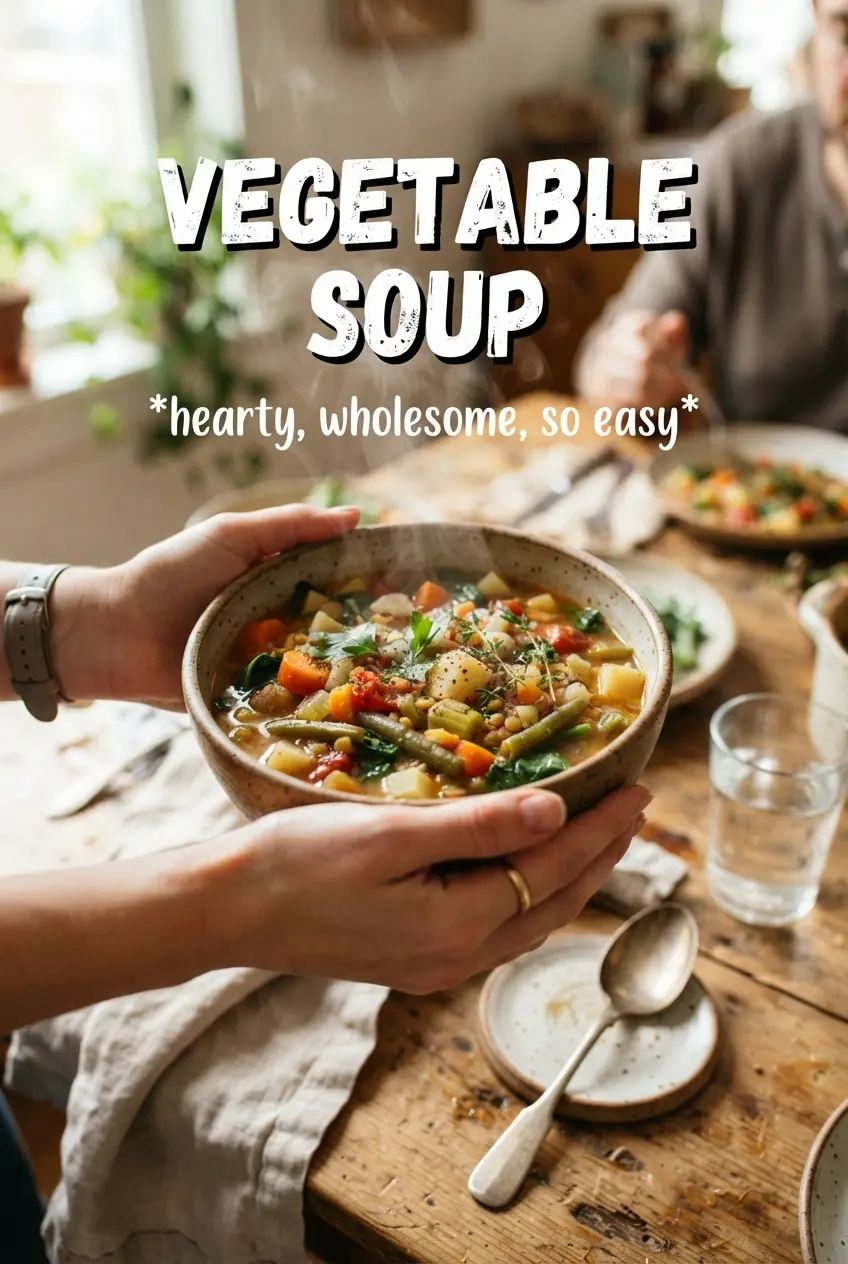
Vegetable Soup
Ingredients
Equipment
Method
- Heat olive oil in a large pot over medium heat and sauté onion, carrots, and celery for 5 minutes, stirring until slightly softened and fragrant.
- Add garlic and cook for 1 minute, stirring constantly so it doesn’t brown.
- Add vegetable broth, diced tomatoes, potatoes, thyme, dried parsley, and bay leaf, then stir to combine.
- Bring the pot to a boil, then reduce heat and simmer for 15 minutes until the potatoes begin to soften.
- Add green beans and simmer for 8 minutes, until the potatoes and beans are tender.
- Stir in corn and peas and cook for 3 more minutes, until heated through and bright.
- Remove the bay leaf and season with salt and black pepper to taste, then garnish with fresh parsley before serving.