
Rustic Tuscan chickpea soup is the kind of bowl that tastes like it simmered all afternoon, even though it comes together in under an hour. The broth turns savory and fragrant from garlic, rosemary, and fire-roasted tomatoes, while the chickpeas soften just enough to give the soup body without turning mushy. A handful of kale at the end keeps it hearty and fresh, and the finishing drizzle of olive oil plus parmesan brings everything into focus.
What makes this version work is the way the chickpeas are treated. Some stay whole for texture, and some get mashed or blended into the pot so the broth thickens naturally instead of relying on cream or flour. The parmesan rind is optional, but if you have one, it adds a deep, salty backbone that makes the soup taste fuller. I also like using fire-roasted tomatoes here because they add a little smokiness that regular diced tomatoes just don’t give you.
Below you’ll find the small details that make the soup better: when to add the kale so it stays green and tender, how to get the broth to thicken without making it heavy, and a few easy swaps if you’re cooking around what you already have.
The broth turned out rich and garlicky, and mashing part of the chickpeas made it feel much heartier without getting creamy. I added the lemon at the end like you said and it brightened the whole pot.
Love the way the chickpeas thicken the broth and the rosemary perfume settles into every spoonful? Save Tuscan Chickpea Soup to Pinterest for a hearty bowl that tastes even better with lemon and parmesan on top.
The Secret to a Brothy Soup That Still Eats Like a Meal
The trap with chickpea soup is either bland broth or a pot that turns heavy and pasty. This one avoids both by building flavor in layers: onion first, then garlic and red pepper flakes just long enough to bloom, then the broth gets anchored with rosemary, tomatoes, and chickpeas. That order matters. If you dump everything in at once, the garlic gets flat and the herbs never get a chance to season the broth properly.
The other smart move is mashing only part of the chickpeas after simmering. That gives you a naturally thicker soup without losing the spoonfuls of whole beans that make the texture interesting. If your soup looks thin at first, don’t rush it. The mashed chickpeas need a minute to disperse, and the kale will also soften the texture once it wilts in.
What Each Ingredient Is Doing in This Bowl
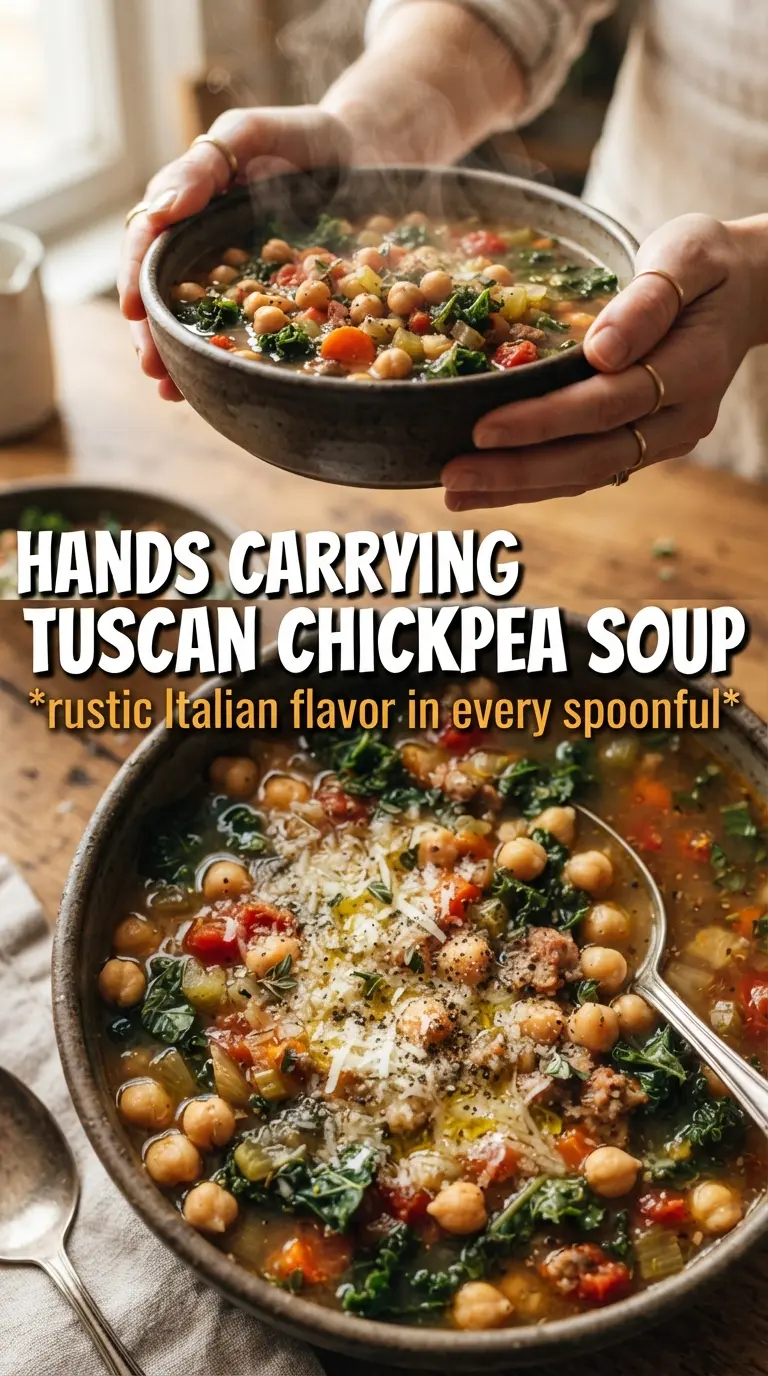
- Chickpeas — These are the body of the soup. Whole chickpeas give you bite, and a portion gets mashed to thicken the broth from the inside out. Canned chickpeas work well here because they soften fast and keep the recipe weeknight-friendly.
- Fire-roasted diced tomatoes — The fire-roasted version adds a deeper, slightly smoky edge that regular diced tomatoes don’t match. If you only have plain diced tomatoes, use them and add a pinch more red pepper flakes or a little extra parmesan at the end to rebuild some depth.
- Rosemary and garlic — These are the backbone of the flavor. Fresh rosemary is worth using if you have it because it infuses the broth with a clean, piney note. Garlic goes in after the onion has softened so it doesn’t burn and turn bitter.
- Kale — Add it at the end so it stays tender and green instead of cooking into drab ribbons. If you substitute spinach, stir it in during the last minute only; it collapses much faster than kale.
- Parmesan rind — Optional, but it adds a salty, rounded finish that makes the broth taste richer without extra cream. If you don’t have one, finish the soup with grated parmesan at the table and a little extra olive oil.
Building the Broth Without Losing the Texture
Sweating the Onion First
Warm the olive oil in a large pot and cook the diced onion until it’s soft, glossy, and just starting to turn translucent at the edges. You’re not looking for color here. If the onion browns too fast, the broth can taste a little sharp instead of sweet and rounded. Keep the heat at medium and let the onion give up its moisture before the garlic goes in.
Waking Up the Garlic and Red Pepper Flakes
Add the garlic and red pepper flakes and cook them for about 2 minutes, just until the garlic smells fragrant and the flakes start to smell warmer than spicy. The garlic should never turn deep brown. If it does, the soup will carry that bitter edge all the way through, and no amount of simmering will fix it. Stir constantly during this part because garlic can go from fragrant to scorched in a flash.
Simmering for Body
Add the chickpeas, tomatoes, broth, rosemary, Italian seasoning, and parmesan rind, then bring the pot to a boil before lowering it to a steady simmer. You want small bubbles, not a hard boil. A hard boil can break the chickpeas apart too aggressively and make the broth cloudy in a way that feels muddy rather than hearty. After 20 minutes, the broth should taste round and the chickpeas should be soft enough to mash easily.
Finishing the Pot
Remove the rosemary stems and parmesan rind before you mash or blend a third of the chickpeas. An immersion blender gives you control, but a potato masher works fine if you want a more rustic texture. Stir in the kale last and cook just until it turns tender and darker green, then season with salt, pepper, and lemon. The lemon matters more than people think. It wakes up the tomatoes, cuts through the chickpeas, and keeps the soup from tasting flat at the end.
Three Ways to Adjust It Without Losing the Point
Make It Dairy-Free
Skip the parmesan rind and finish with a generous drizzle of good olive oil plus extra lemon. You lose a little of the savory depth, but the soup still tastes complete because the rosemary, garlic, and tomatoes do the heavy lifting. If you want a little more richness, stir in a spoonful of white miso at the very end instead of parmesan.
Use Spinach Instead of Kale
Baby spinach works if that’s what you have, but add it in the last minute so it wilts without disappearing into the broth. The soup will feel lighter and less chewy than the kale version. That’s not a bad thing, just a different bowl.
Make It Thicker and More Filling
Mash closer to half the chickpeas if you want a thicker, stew-like texture. You can also simmer it uncovered for the last 5 to 10 minutes to reduce the broth a little more. That gives you a denser finish, but don’t overdo it or the soup loses the brothy quality that makes it so good.
Storage and Reheating
- Refrigerator: Store in an airtight container for up to 4 days. The soup thickens as it sits because the chickpeas keep softening and the starch settles into the broth.
- Freezer: Freezes well for up to 3 months. Cool it completely first, then freeze in portions so you can thaw only what you need. The kale will soften a bit more after freezing, but the soup still holds up.
- Reheating: Warm it gently on the stove over medium-low heat with a splash of broth or water if it has thickened too much. Don’t boil it hard again or the kale can turn dull and the chickpeas can go grainy.
The Questions That Come Up Before the Pot Hits the Table
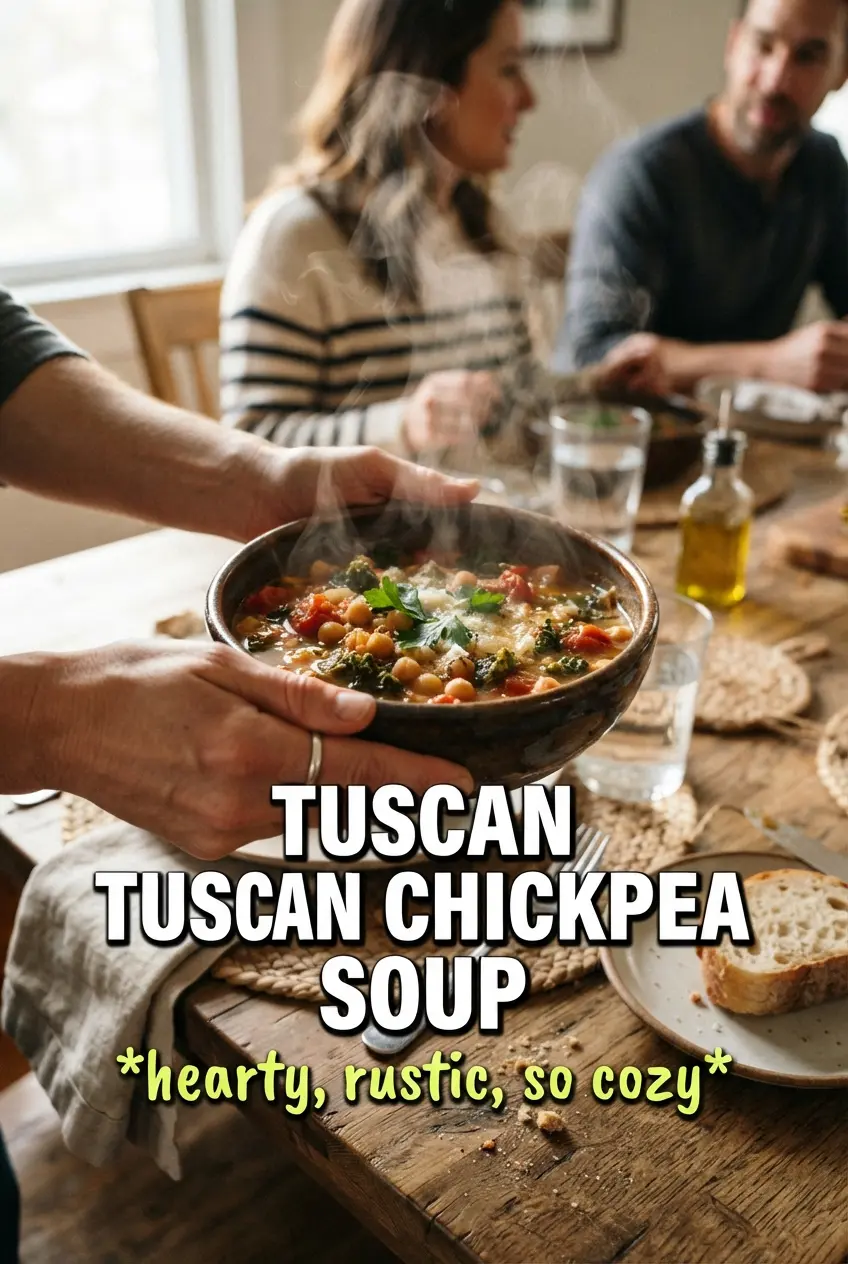
Tuscan Chickpea Soup
Ingredients
Equipment
Method
- Heat 2 tablespoons olive oil in a large pot over medium heat and sauté the diced onion for 5 minutes, until softened and translucent. The onions should look glossy with no visible raw pieces.
- Add the minced garlic and red pepper flakes and cook for 2 minutes, stirring frequently. The garlic should smell fragrant and turn slightly golden, without browning.
- Add the drained chickpeas, fire-roasted diced tomatoes, vegetable broth, fresh rosemary, Italian seasoning, and parmesan rind (optional) to the pot. Bring the mixture to a boil, then make sure it’s bubbling steadily.
- Simmer the soup for 20 minutes, keeping a gentle simmer rather than a hard boil. The chickpeas should be tender and the broth infused with rosemary aroma.
- Remove the rosemary and parmesan rind, then mash or blend about a third of the chickpeas for a thicker consistency. The soup should look slightly creamy with visible chickpea texture remaining.
- Add the chopped kale and cook for 5 minutes, stirring until wilted. The kale should turn bright green and soften but still hold some body.
- Season with salt and pepper to taste and add lemon to serve, then drizzle with olive oil and sprinkle parmesan. The finished soup should taste balanced and look glossy on top.