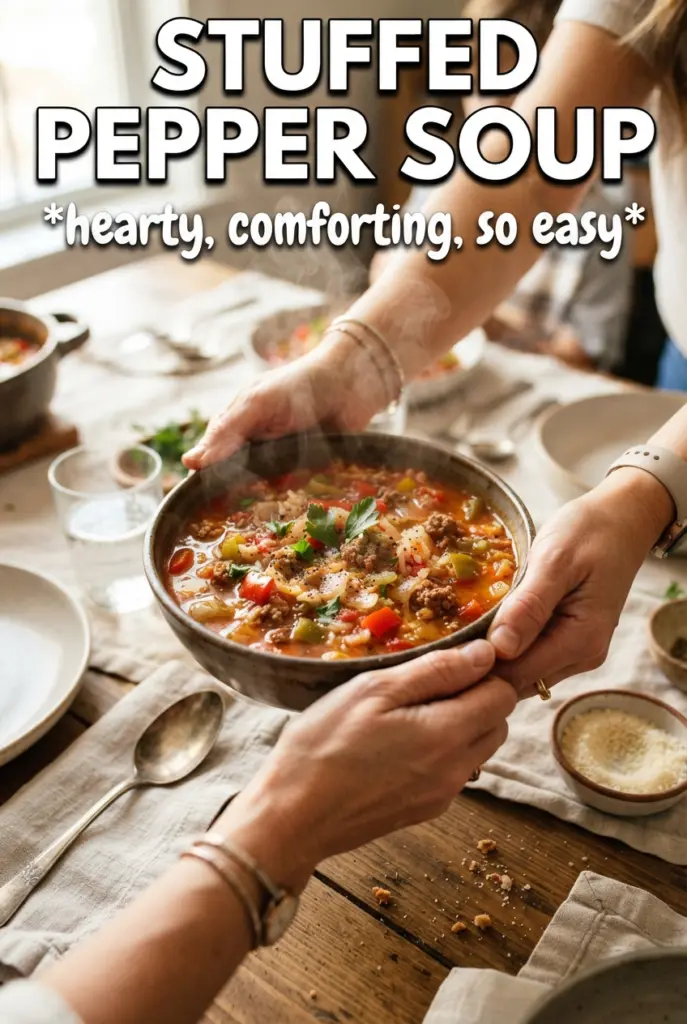
Stuffed pepper soup brings all the comfort of classic stuffed peppers into one pot, and it keeps the best parts: savory beef, sweet bell peppers, tender rice, and a tomato broth that tastes like it simmered all afternoon. The soup lands hearty enough to eat as a main dish, but it still has that clean, bright pepper flavor that keeps each bite from feeling heavy.
What makes this version work is the order. Browning the beef first builds a deeper base, and cooking the tomato paste with the onions and peppers takes away that raw, tinny edge. The rice goes in uncooked, so it soaks up the broth as it simmers and helps thicken the soup naturally instead of turning it into something thin and brothy.
Below, I’ve included the small details that matter most, like how to keep the rice from going mushy and what to swap if you want a lighter bowl or a different finish. There’s also a few practical variations and storage notes, because this is the kind of soup that usually earns a second round later in the week.
The rice cooked up tender without turning mushy, and the tomato broth had that stuffed-pepper flavor my mom used to make. I added the cheddar on top and it melted into the soup perfectly.
Save this stuffed pepper soup for the nights when you want a hearty one-pot dinner with beef, peppers, rice, and a tomato broth that tastes like comfort in a bowl.
The Reason the Rice Goes in Uncooked
Uncooked rice does two jobs here. It absorbs the seasoned broth as it simmers, and it gives the soup body without turning it into a stew that needs flour or cornstarch. That only works if you keep the simmer gentle. If the pot boils hard, the rice can split and go soft before the peppers have enough time to turn tender.
The other place people run into trouble is with the tomato paste. It needs a minute or two with the onions, peppers, and garlic so it darkens slightly and loses that sharp raw taste. Skip that step and the soup still works, but the broth tastes flatter and more one-note.
- The beef should be browned, not gray. You want some caramelized bits left in the pot because they deepen the broth.
- The peppers should soften at the edges before the liquids go in. They’ll keep cooking, but that early sauté keeps them from tasting raw.
- The rice needs a covered simmer so it cooks evenly. If the lid is off, too much liquid escapes and the grains can stay firm in the center.
What Each Ingredient Is Doing in the Bowl
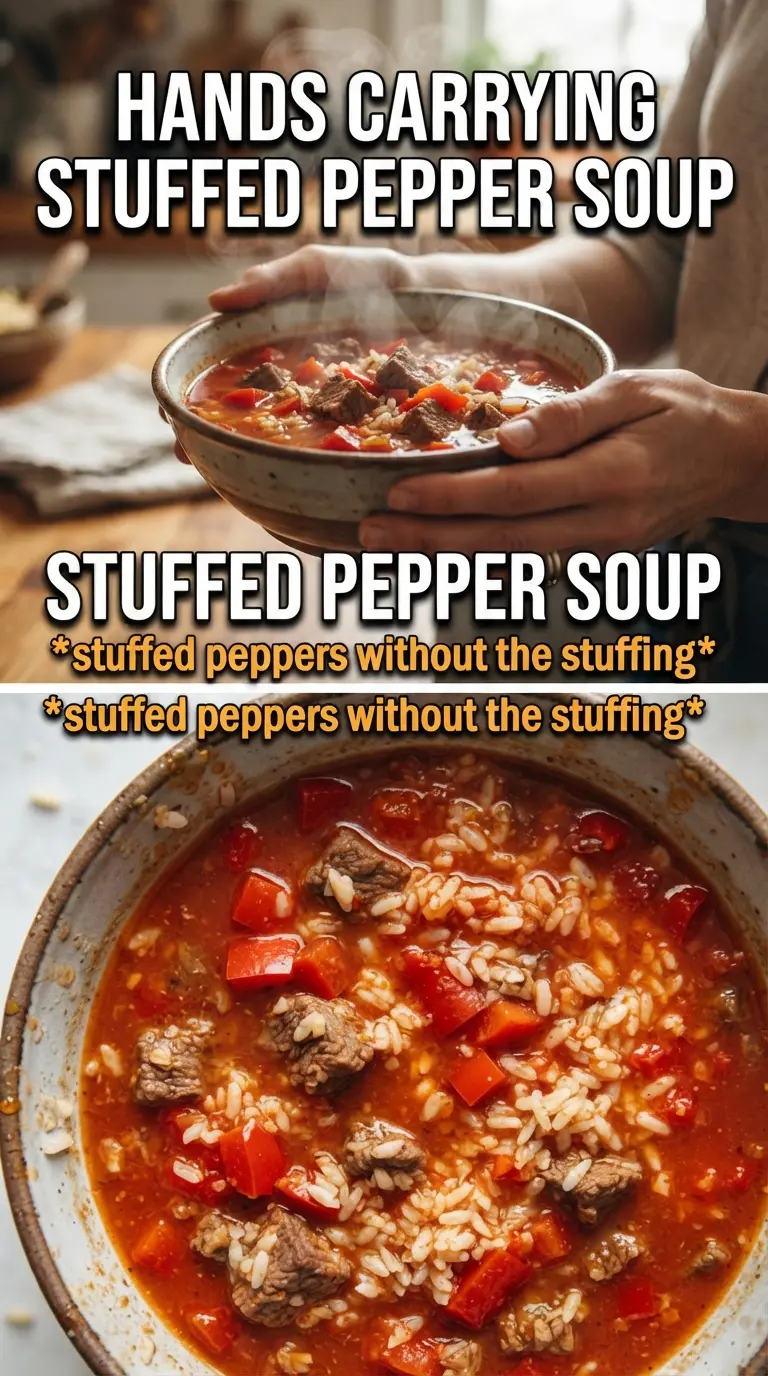
- Ground beef — This gives the soup its backbone and the savory flavor that makes it taste like stuffed peppers instead of plain tomato soup. An 85/15 or 80/20 blend works well because there’s enough fat for flavor, and you can drain the excess after browning.
- Green and red bell peppers — The green peppers bring the classic stuffed-pepper taste, while the red pepper adds a little sweetness to balance the tomatoes. Any color pepper works, but if you swap in all red or yellow peppers, the soup gets sweeter and less traditional.
- Tomato paste — This concentrates the broth and gives it a deeper tomato flavor than canned tomatoes alone can provide. Cooking it for a minute or two with the aromatics makes a noticeable difference.
- Long grain white rice — Long grain rice holds its shape better than short grain, which matters in a soup that simmers for nearly 20 minutes. If you use brown rice, it needs a longer cook time and more broth.
- Beef broth — This carries the whole pot. A good broth gives the soup richness, but if yours is salty, hold back on the seasoning until the end.
How to Build the Soup Without Overcooking the Rice
Browning the Beef First
Start with the beef in a large pot and cook it until it loses the pink color and picks up some browned bits. Drain the fat if there’s a lot of it, but leave behind enough to cook the vegetables. If you skip the browning and just simmer the meat, the soup tastes flat and the broth never gets that deep, savory base.
Softening the Peppers and Onion
Add the onion and diced peppers to the same pot and cook them for 4 to 5 minutes until the onion looks translucent and the peppers start to soften at the edges. Stir in the garlic and tomato paste and cook for another 2 minutes, just until everything smells richer and the paste darkens a shade. If the garlic starts to brown, the heat is too high and it will turn bitter.
Simmering the Broth
Pour in the crushed tomatoes, diced tomatoes, broth, Italian seasoning, garlic powder, and smoked paprika, then bring the pot to a boil before reducing it to a steady simmer. You want the liquid moving gently, not rolling hard. A hard boil is what makes the peppers fall apart too fast and can make the broth taste dull instead of concentrated.
Cooking the Rice Until Tender
Stir in the uncooked rice, cover the pot, and let it simmer for 18 to 20 minutes. Check near the end; the rice should be tender but still hold its shape, and the peppers should be soft without turning mushy. If the soup gets too thick before the rice finishes, add a splash of broth or water rather than cranking up the heat.
Finishing the Bowl
Season with salt and pepper after the rice is cooked, not before. The broth reduces as the rice absorbs liquid, so the final seasoning usually needs a last adjustment. Ladle the soup into bowls and top it with shredded cheddar and fresh parsley while it’s hot enough to melt the cheese into the top layer.
How to Adapt This for Different Diets and Leftovers
Make It Dairy-Free
Leave off the cheddar or use a dairy-free shred that melts well. The soup itself doesn’t need dairy to feel complete; the cheese is just a salty finish. The parsley still gives the bowl a fresh contrast.
Use Ground Turkey Instead of Beef
Ground turkey works well if you want something a little lighter, but it needs help from the seasonings and broth because it doesn’t bring the same depth as beef. Use a little oil in the pot if the turkey is very lean, and don’t skip the tomato paste step.
Swap in Brown Rice
Brown rice can work, but it needs more time and extra broth. Start checking it later than the recipe calls for and add liquid as needed so the soup doesn’t tighten up before the rice is tender.
Storage and Reheating
- Refrigerator: Store in an airtight container for up to 4 days. The rice will continue to absorb broth, so expect the soup to thicken.
- Freezer: It freezes, but the rice softens after thawing. For the best texture, freeze the soup without the rice and cook fresh rice when you reheat it.
- Reheating: Warm it gently on the stove over medium-low with a splash of broth or water. The common mistake is blasting it on high heat, which can make the rice break down and the bottom catch on the pot.
Answers to the Questions Worth Asking
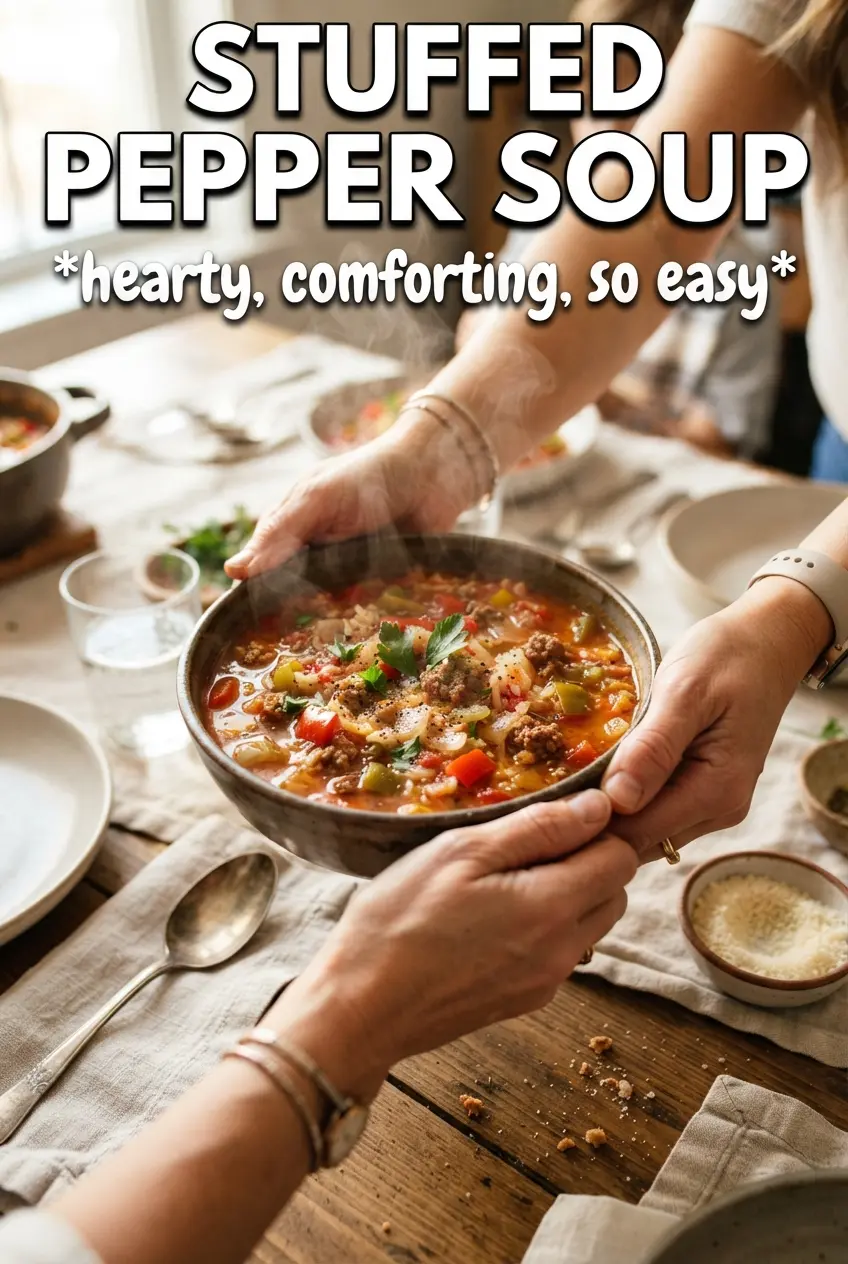
Stuffed Pepper Soup
Ingredients
Equipment
Method
- Brown the ground beef in a large pot over medium-high heat until cooked through, about 8-10 minutes. Drain excess fat so the soup doesn’t turn greasy.
- Sauté the onion and all bell peppers in the same pot until slightly softened, 4-5 minutes. Add the garlic and tomato paste and cook 2 minutes, stirring until fragrant.
- Add the crushed tomatoes, diced tomatoes, beef broth, Italian seasoning, garlic powder, and smoked paprika, then bring to a boil. Boil briefly, about 2 minutes, to fully combine the flavors.
- Add the uncooked long grain white rice, reduce heat to low, cover, and simmer 18-20 minutes until the rice is cooked. Stir once halfway through and keep the pot covered for even cooking.
- Season with salt and pepper to taste and turn off the heat. Serve immediately topped with shredded cheddar and fresh parsley so the cheese melts slightly from the hot broth.