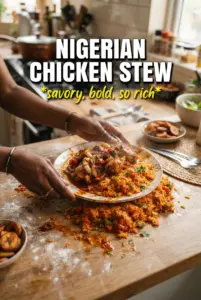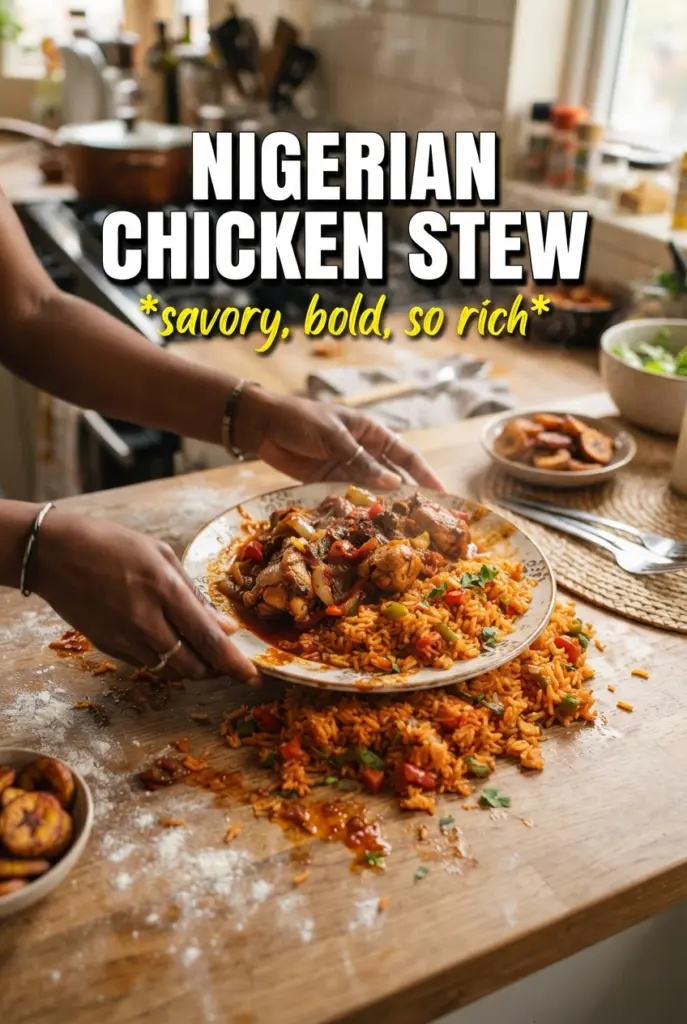
Deep red, glossy Nigerian chicken stew earns its place in the rotation because it lands on that perfect line between rich and bright. The tomatoes and peppers cook down until the sauce loses its raw sharpness and turns thick enough to cling to the chicken, while the fried pieces bring their own savory edge. Spoon it over steamed rice and you get a bowl that tastes layered, not heavy.
The part that makes this version work is patience with the pepper base. The blended tomatoes, red peppers, onion, and scotch bonnet need time in the pot long enough for the water to cook off and for the oil to separate and rise. If you rush that stage, the stew tastes flat and the sauce stays thin. Frying or oven-baking the chicken before it goes into the stew also helps keep the texture intact and gives the finished dish a deeper, more satisfying flavor.
Below, I’ll walk through the point where most people stop too soon, what each ingredient is actually doing, and how to adjust the heat without losing the character of the stew.
I let the pepper sauce cook until the oil came to the top like you said, and that was the difference. The stew turned out thick, deep red, and the chicken held up without getting soggy in the pot.
Keep this Nigerian Chicken Stew handy for the nights when you want a rich pepper sauce with golden chicken and rice.
The Reason the Pepper Sauce Has to Cook Down First
The stew gets its depth from reduction, not from dumping everything in and hoping the flavor shows up later. Fresh-blended tomatoes and peppers carry a lot of water, and that water has to leave the pot before the sauce can taste cooked instead of sharp. You’re waiting for the moment when the color darkens, the bubbling gets heavier, and tiny pools of oil appear on the surface. That’s when the raw edge is gone.
If the sauce still looks pale or foamy after 30 minutes, it needs more time. Keep the heat at medium-high and stir often enough to prevent scorching on the bottom, but not so constantly that you never let the moisture cook off. The goal is a thick, concentrated pepper base that can coat the chicken instead of thinning it out.
What Each Ingredient Is Actually Doing in This Dish
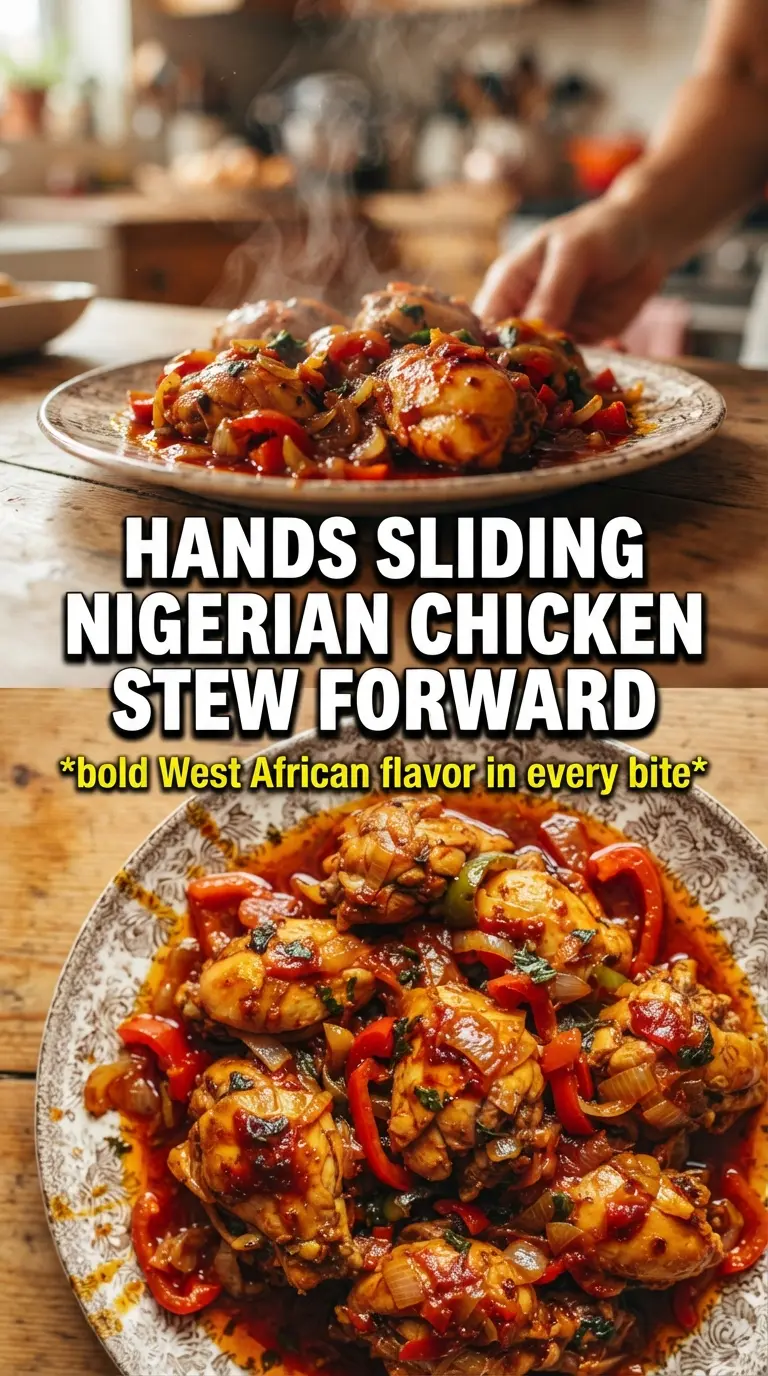
- Chicken pieces — Bone-in pieces hold up better in the stew and give the sauce more body. Thighs and drumsticks are the most forgiving, but mixed pieces work well as long as they’re browned first.
- Plum tomatoes — These give the stew structure without turning it watery. If your tomatoes are especially acidic, the long cook time will mellow them, but undercooking is what leaves the sauce tasting sharp.
- Red bell peppers — They soften the tomato edge and bring sweetness that rounds out the heat. Don’t swap in green bell pepper here unless you want a grassier, less balanced stew.
- Scotch bonnet or habanero — This is where the heat lives. Use one pepper for a gentler pot, or leave the seeds in if you want the stew to hit harder.
- Onion — Half goes into the chicken marinade and the rest goes into the blended sauce. That split matters because it seasons the meat from the inside while still giving the stew a savory base.
- Vegetable oil — The sauce needs enough oil to fry properly and separate from the tomatoes. Don’t cut this too far or the pepper base can catch before it fully cooks down.
- Bouillon cubes or stock powder — These boost the savory backbone of the stew. If you use stock powder, start with a little less salt and adjust at the end.
Building the Chicken and Pepper Base in the Right Order
Seasoning the Chicken First
Grate or finely blend the onion into the chicken with the thyme, curry powder, bouillon, salt, and pepper, then let it sit for about 30 minutes. That short marinade seasons the meat all the way through without turning it mushy. If you skip the rest time, the chicken will still taste fine, but the flavor won’t sink in the same way.
Frying or Baking Until Golden
Cook the chicken until it’s mostly done and the outside has color. The goal is not full cooking here; it’s building flavor and keeping the pieces from falling apart later in the stew. If you’re frying, drain the excess oil well. If you’re baking, roast at a hot temperature until the skin or surface picks up some browning.
Cooking the Pepper Sauce Until It Changes
Blend the tomatoes, red bell peppers, scotch bonnet, and remaining onion until smooth, then fry that puree in hot oil over medium-high heat. Stir often and watch for the color to deepen from bright red-orange to a darker brick red. When the sauce starts spitting less and oil floats on top, you’ve crossed from raw puree into stew base.
Finishing the Stew
Add the chicken and simmer long enough for the meat to absorb the sauce and for the flavors to settle together. This final simmer should be gentle, not a hard boil, or the chicken can toughen and the sauce can splatter away from the pot. Taste at the end and adjust salt only after the stew has reduced, since the seasoning concentrates as it cooks.
How to Adapt This for Heat, Protein, or a Longer Fridge Life
Milder Stew Without Losing the Pepper Flavor
Use one scotch bonnet or habanero instead of two, and remove the seeds if you’re sensitive to heat. You’ll still get the signature peppery taste, just with more room for the tomato and bell pepper sweetness to come through.
Oven-Baked Chicken for Less Mess
Bake the seasoned chicken until the outside looks bronzed and the juices run mostly clear. It won’t taste as intensely crisp as fried chicken, but it gives you a cleaner method and still holds up well once the stew simmers around it.
Using Turkey or Beef Instead of Chicken
Turkey works especially well if you want a leaner pot, while beef needs a longer simmer and a bit more liquid to turn tender. The pepper sauce stays the same, but the final texture changes: chicken gives you a lighter stew, while beef turns it into something heavier and more braised.
Storage and Reheating
- Refrigerator: Keeps well for 4 days. The sauce often tastes even better the next day as the seasoning settles in.
- Freezer: Freezes well for up to 3 months. Cool it completely first, then portion it into airtight containers so the chicken stays intact when you thaw it.
- Reheating: Reheat gently on the stove over low to medium-low heat with a splash of water if the sauce has thickened too much. The common mistake is blasting it over high heat, which can dry out the chicken and make the oil separate too aggressively.
Answers to the Questions Worth Asking
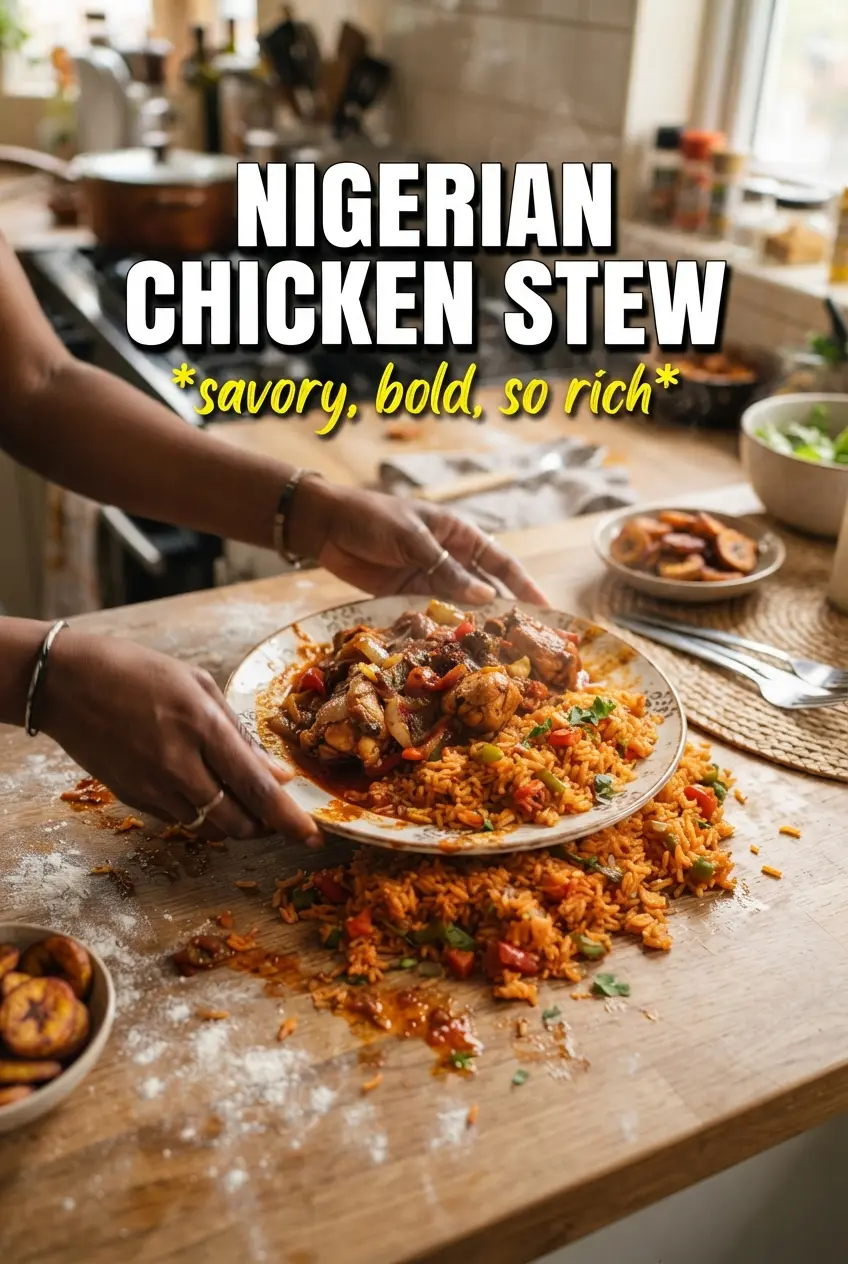
Nigerian Chicken Stew
Ingredients
Equipment
Method
- Grate half the onion and season the chicken with grated onion, thyme, curry powder, bouillon, salt, and pepper, then set aside to marinate for 30 minutes.
- Preheat your oven to 425°F if baking the chicken (or prep for frying); arrange chicken pieces on a sheet pan if using the oven.
- Fry the chicken in hot oil until golden and mostly cooked through (or oven-bake at 425°F until golden and mostly cooked through), then set aside.
- Blend plum tomatoes, red bell peppers, scotch bonnet (or habanero), the remaining onion, and garlic until smooth.
- Heat 1/2 cup oil in a large pot over medium-high heat and carefully fry the blended pepper sauce for 30-40 minutes, stirring frequently, until oil floats on top and the sauce darkens.
- Add the fried chicken to the pot and coat it in the sauce, then simmer for 15-20 minutes until the chicken is coated and the sauce thickens.
- Taste and adjust with salt and pepper, then serve hot over steamed rice and top with fresh parsley.