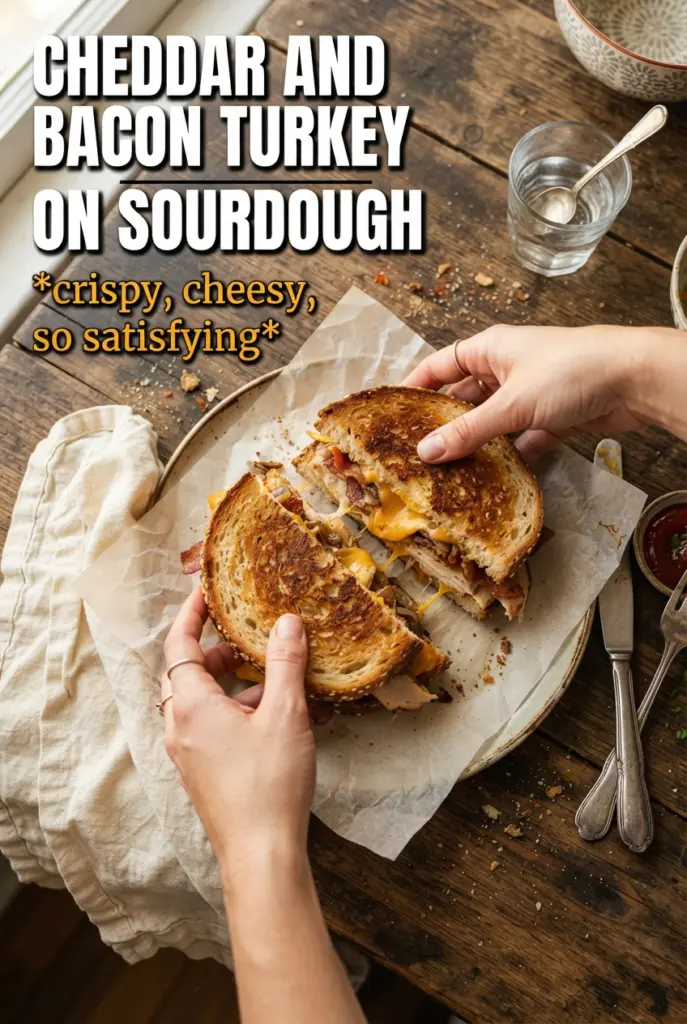
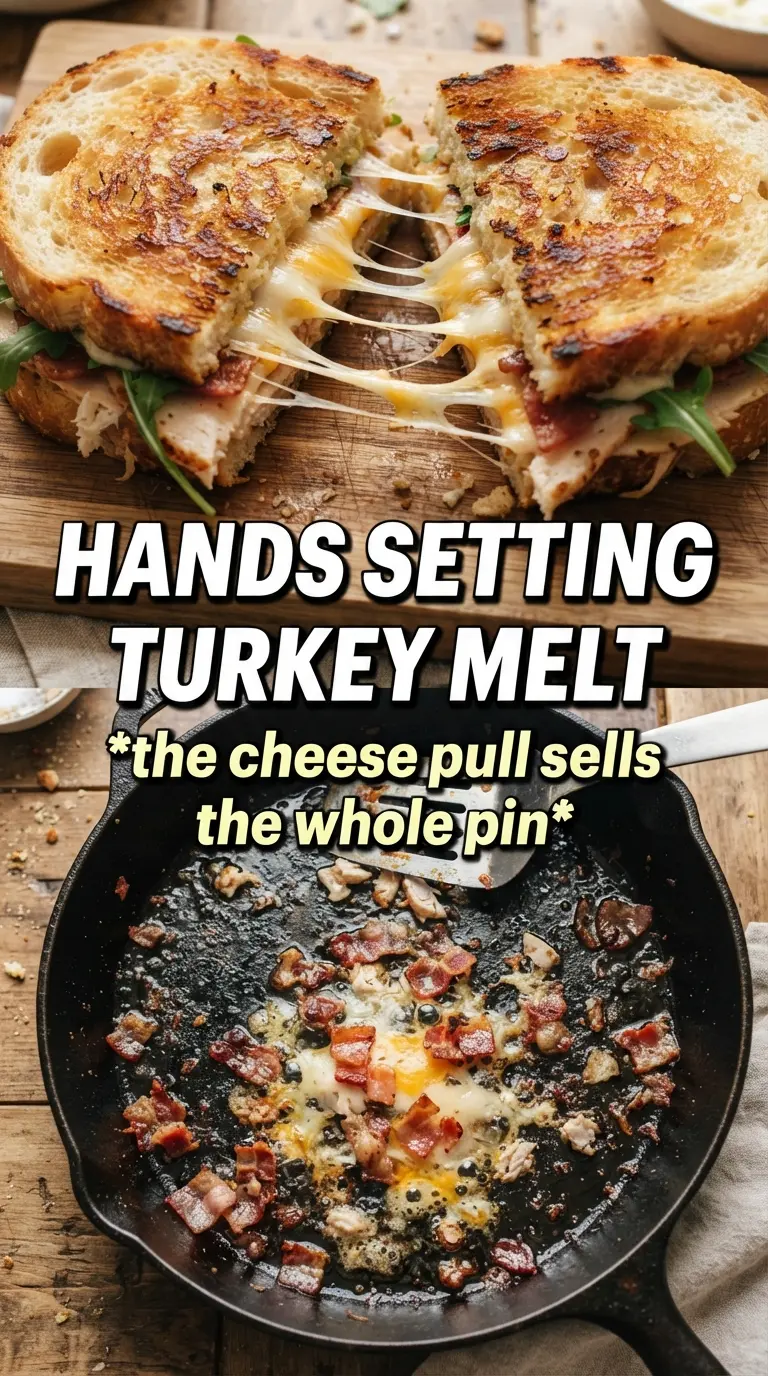
Golden sourdough, sharp cheddar, and crisp bacon turn a basic turkey sandwich into something that eats like a proper meal. The bread goes crackly and deeply toasted in the skillet while the cheese melts into the turkey and bacon, so every bite has crunch, salt, and just enough tang from the Dijon to keep it from feeling heavy.
What makes this melt work is the order of the layers. The Dijon sits against the turkey and cheddar, which gives the sandwich a little bite and helps cut through the richness of the bacon. The mayonnaise on the other half adds moisture and a softer, rounder finish, and the softened butter on the outside is what gives you that even golden crust without burning the bread before the cheese has time to melt.
You’ll also find the exact skillet timing that keeps the sourdough from going too dark before the center is hot, plus a few smart swaps if you want to change the greens, cheese, or bread without losing the texture that makes this sandwich so good.
The sourdough got perfectly crisp before the cheddar fully melted, and the Dijon with the bacon made it taste like a deli sandwich and a grilled cheese had the best kind of mashup. I added the tomato after cooking like you said and it stayed fresh instead of making the bread soggy.
Save this cheddar and bacon turkey melt for the days when you want a toasted sandwich with real crunch, melty cheese, and a tangy Dijon finish.
The Skillet Timing That Keeps the Bread Crisp and the Cheese Fully Melted
The biggest mistake with a melt like this is rushing the heat. If the pan is too hot, the sourdough browns before the cheddar has a chance to melt through the center, and you end up with a sandwich that looks done but still feels cold in the middle. Medium heat gives the butter time to toast the bread steadily while the cheese softens into the turkey and bacon.
Another thing worth paying attention to is the balance of fat on the outside and moisture on the inside. The butter belongs on the bread for even browning, but the fillings need to stay layered and contained until after the sandwich is cooked. Add the greens and tomato after the sandwich comes off the heat, or they’ll steam and turn the bread damp.
- Sourdough bread — The sturdy, tangy crumb holds up to the fillings and browns beautifully. Any good sandwich bread can work, but soft sandwich bread won’t give you the same crisp exterior or stay intact as well.
- Sharp cheddar cheese — Sharp cheddar gives the sandwich enough flavor to stand up to the bacon and turkey. Mild cheddar melts fine, but you lose some of the bite that makes this melt taste complete.
- Thick-cut bacon — Crisp bacon adds the smoky crunch that turns this from a plain turkey sandwich into a real melt. Thin bacon can work in a pinch, but it disappears more easily under the cheese and turkey.
- Dijon mustard and mayonnaise — Dijon brings sharpness, while mayonnaise adds a creamy, mellow layer. If you only have one, use Dijon on both sides for more punch or mayo on both for a softer sandwich, but the combo gives the best balance.
- Butter — Softened butter spreads evenly and helps the bread toast without tearing. Cold butter fights you and leaves patchy spots that brown unevenly.
What Each Ingredient Is Actually Doing in This Recipe
- Primary ingredient (the star) — Quality matters most. Choose the best you can find.
- Cooking medium (oil, butter, or broth) — This carries flavors and prevents dryness.
- Seasonings (salt, pepper, spices, herbs) — Layer flavors so nothing overpowers. Build depth gradually.
- Aromatics (garlic, onion, herbs) — Cook with fat to bloom flavors. Become the foundation.
- Supporting ingredients — Complement the main ingredient without overpowering it.
- Sauce or liquid (if applicable) — Brings flavors together. Balance richness with acid.
- Acid (lemon, vinegar, wine, or other) — Brightens and prevents flat-tasting results.
- Final finish (garnish, glaze, or sauce) — Prevents one-dimensional taste and adds visual appeal.
Building the Melt in the Right Order
Start with the Bacon and Cheese Layer
Cook the bacon until it’s crisp enough to snap, then drain it well so it doesn’t leak grease into the sandwich. Build the turkey, bacon, and cheddar on the Dijon side of the bread, which puts the strongest flavors closest together and helps the cheese start melting from both the pan heat and the filling heat. If the bacon is still soft, it can go chewy instead of crisp once it’s enclosed, so let it drain properly before you stack it.
Toast First, Then Melt Through
Heat the skillet or griddle over medium, not high. Place the sandwiches butter-side down and let them sit until the first side is deep golden and releases cleanly from the pan. Flip once and cook the second side until the cheddar is visibly melted at the edges and the sandwich feels hot all the way through. If you press too hard with the spatula, you’ll squeeze out the filling and can tear the bread, so use gentle pressure only near the end.
Add the Fresh Finish Last
Open the sandwich just enough to tuck in the arugula and tomato after cooking. That keeps the greens bright and the tomato juicy without watering down the bread. A light pinch of salt and pepper on the tomato is enough; the bacon and cheddar already bring plenty of salt to the plate.
How to Adapt This Turkey Melt Without Losing the Good Part
Gluten-Free Bread That Still Browns Well
Use a sturdy gluten-free sandwich bread with a firm crumb, not a soft, airy one that falls apart when flipped. Gluten-free bread usually needs a touch more patience in the pan, and it benefits from medium-low heat so the center warms before the crust gets too dark.
Dairy-Free Version
Swap the cheddar for a good melting dairy-free cheese and use a plant-based butter. You’ll lose a little of the sharp cheddar tang, so keep the Dijon in place and don’t skimp on the mustard if you want the sandwich to still taste balanced.
Turkey Melt Without Bacon
Leave out the bacon and add a little extra cheddar plus a few thin tomato slices for moisture. The sandwich will be lighter and less smoky, so a little black pepper on the turkey helps replace some of that savory edge.
Storage and Reheating
- Refrigerator: Store cooked sandwiches for up to 2 days, wrapped tightly. The bread will soften a bit from the fillings.
- Freezer: This sandwich freezes poorly once assembled with tomato and greens, but the cooked turkey, bacon, and cheese filling can be frozen separately for up to 1 month.
- Reheating: Reheat in a skillet over medium-low heat or in a toaster oven until the bread crisps back up and the center is hot. A microwave makes the bread chewy, which is the fastest way to lose the texture that makes this melt worth making.
Answers to the Questions Worth Asking
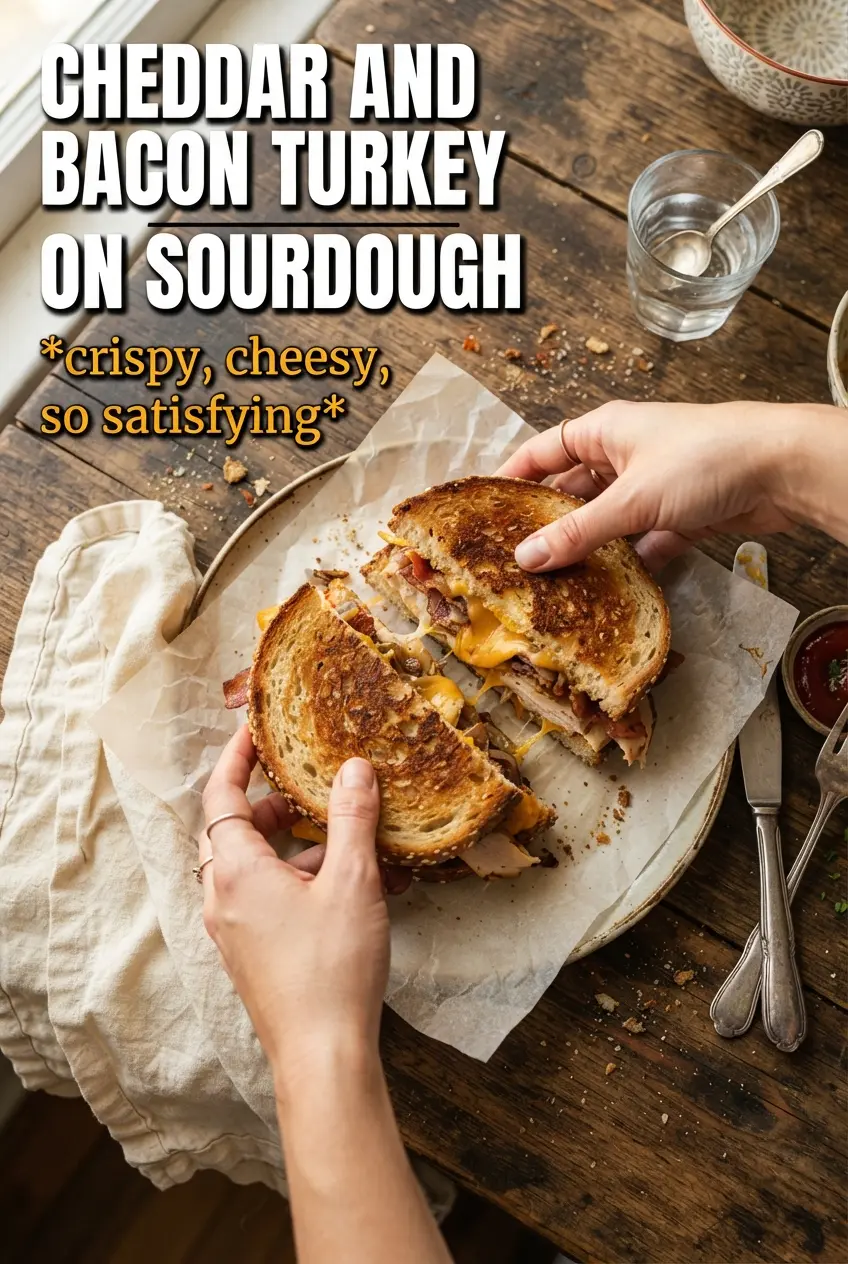
Cheddar And Bacon Turkey Melt On Sourdough
Ingredients
Equipment
Method
- Cook thick-cut bacon until crispy, then drain and set aside.
- Spread one side of each sourdough bread slice with softened unsalted butter.
- Flip the bread over, then spread Dijon mustard on half the slices and mayonnaise on the other half.
- Layer sliced deli turkey breast, crispy thick-cut bacon, and sharp cheddar cheese on the Dijon mustard side.
- Heat a cast iron skillet or griddle over medium heat, then place sandwiches butter-side down.
- Top with the mayonnaise-spread slices butter-side up.
- Cook 3-4 minutes per side until golden and cheddar is fully melted.
- Open each sandwich and add arugula or mixed greens and ripe tomato slices.
- Press closed, then season with salt and pepper to taste and serve.