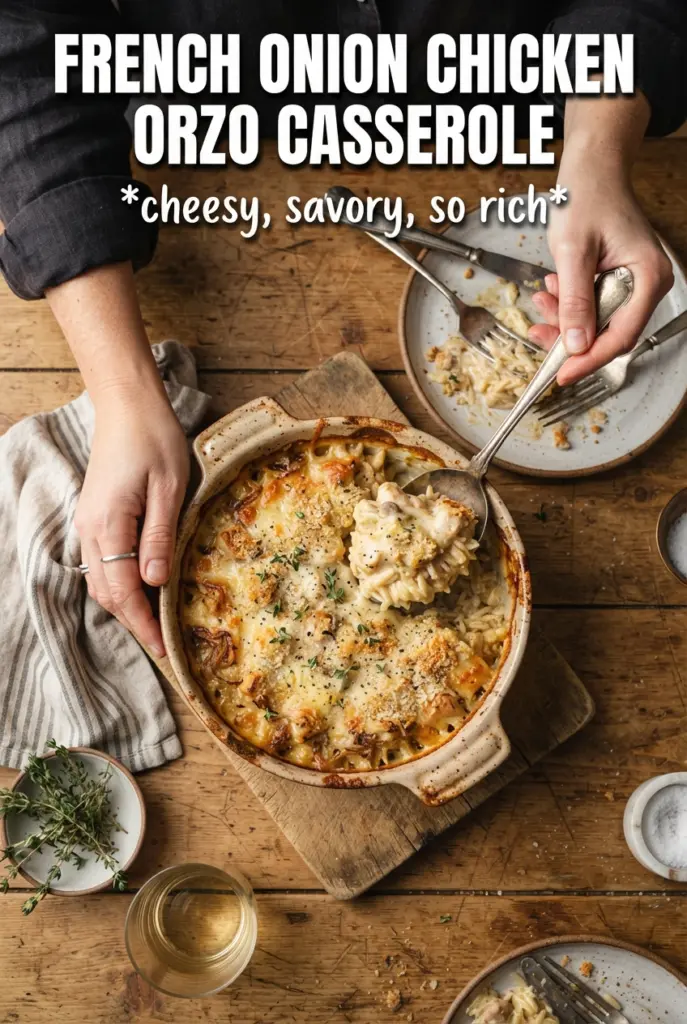
Deeply caramelized onions are what turn this French onion chicken orzo casserole from a simple baked pasta into a full dinner worth repeating. The onions melt down into something sweet, savory, and almost jammy, then the Gruyère bakes into a golden top that cracks slightly when you spoon through it. Underneath, the orzo cooks right in the broth and wine, so every bite comes out creamy without feeling heavy.
The method matters here. The onions need enough time to lose their sharp edge and build that brown fond at the bottom of the pan, because that’s where the flavor lives. Using uncooked orzo means the pasta absorbs the broth as it bakes, which gives you a casserole that feels cohesive instead of saucy on the outside and dry in the middle. A little cream cheese helps the filling stay silky, while Worcestershire and thyme give it that savory French onion depth without needing a long braise.
Below you’ll find the timing trick that keeps the orzo tender, the cheese from turning oily, and the chicken from going bland. It’s the kind of casserole that looks like you worked harder than you did, which is usually the best kind to keep in your back pocket.
The onions cooked down into this sweet, savory base and the orzo came out perfectly creamy without getting mushy. My husband went back for seconds and asked if I could make it again next week.
Save this French Onion Chicken Orzo Casserole for a creamy, onion-packed baked dinner with a crisp Gruyère top.
The Caramelized Onion Step Is the Whole Casserole
Most baked pasta casseroles lean on broth and cheese alone, but this one gets its backbone from the onions. If you rush them, the dish tastes flat and a little sweet in the wrong way. If you give them the full 30 to 35 minutes, they turn deep brown and savory, and that flavor carries through the whole pan.
The other place people usually go wrong is with the orzo. It goes in uncooked, which sounds risky until you remember it’s sitting in hot liquid in the oven, where it can slowly absorb flavor instead of boiling separately and then getting drained. That’s what keeps the texture creamy and tight. If the pan looks dry before baking, the orzo will never finish properly, so the broth should come up around the pasta before it goes into the oven.
What Each Ingredient Is Actually Doing in This Dish

- Yellow onions — These are the entire flavor base. Slice them thin and give them time, because fast-cooked onions stay sharp instead of turning sweet and jammy. If you’re tempted to crank the heat, don’t; you’ll scorch the edges before the whole pan develops that deep onion sweetness.
- Gruyère — Gruyère gives you that nutty, French onion-style melt and a browned top that tastes more complex than plain mozzarella. If you need a swap, use Swiss or provolone, but expect a milder finish and less of that signature savory edge.
- Beef broth and white wine — The broth brings body, while the wine cuts through the richness and helps lift the browned bits from the skillet. If you don’t cook alcohol, use extra broth plus a splash of white wine vinegar at the end, but add it gradually so the dish stays balanced.
- Cream cheese — This is what gives the sauce its silky finish without needing a separate roux. Cube it so it melts evenly, and lower the heat before stirring it in; high heat can make the sauce look grainy before it comes back together.
- Orzo — Orzo works here because it cooks quickly and catches the sauce in every spoonful. Don’t substitute a larger pasta shape unless you also increase the liquid and baking time, or you’ll end up with undercooked noodles and a dry pan.
- Chicken breast — Diced chicken breast cooks quickly and stays tender as long as the pieces are cut evenly. If you use thigh meat, the casserole gets a little richer and more forgiving, which is useful if you tend to bake toward the longer end of the timing window.
The Part Where the Casserole Goes From Skillet to Oven
Caramelizing the onions without scorching them
Melt the butter over medium heat and cook the onions slowly until they collapse, turn amber, and start leaving brown streaks on the pan. That browning is what you want, not dark black edges or a dry skillet. If the onions start sticking too hard, lower the heat and stir more often; the pan should smell sweet and savory, not bitter.
Building the broth before the pasta goes in
Add the garlic and thyme for just a minute or two, then pour in the wine and let it bubble so the harsh alcohol cooks off. After that, add the broth and Worcestershire, then stir in the uncooked orzo and chicken. The mixture should look loose and soupy at this stage, because the pasta will drink up liquid in the oven.
Finishing with cream cheese and Gruyère
Once the orzo has come to a simmer, stir in the cream cheese until the sauce looks smooth and pale. If it resists melting, pull the skillet off the burner for a moment and stir again; high heat is what causes the sauce to break or look speckled. Scatter the Gruyère over the top and bake until the cheese is blistered and the orzo is tender with just a little bite in the center.
How to Adapt This for a Different Pantry
Make it gluten-free without losing the creamy texture
Swap the orzo for a gluten-free small pasta that holds shape well, then watch the liquid closely because some gluten-free pastas drink more broth than others. Start with the same amount of liquid, but be ready to add a splash more if the pan looks tight before baking. The goal is tender pasta, not a casserole that dries out around the edges.
Use chicken thighs for a richer, more forgiving bake
Boneless chicken thighs work well if you want a little more flavor and a cushion against overbaking. They stay juicier than breast meat, especially if your oven runs hot. The casserole will taste deeper and a touch richer, though the final dish will be slightly less lean.
Go dairy-light with a sharper, less creamy finish
You can reduce the cream cheese or swap part of it for a little extra broth if you want a looser sauce. The dish won’t be as plush, but the onions and Gruyère will still carry the flavor. If you remove too much dairy, though, the casserole loses the thick, clingy texture that makes it feel like a proper baked dinner.
Make it vegetarian with one smart swap
Use vegetable broth and skip the chicken, then add sautéed mushrooms or white beans for more substance. You’ll lose the chicken’s savory depth, so the mushrooms matter here because they give the casserole a meaty edge and help the dish feel complete. Keep the Gruyère unless you need a vegetarian cheese, since it’s a big part of the classic onion flavor.
Storage and Reheating
- Refrigerator: Store leftovers in an airtight container for up to 4 days. The orzo will firm up as it chills, but it stays flavorful.
- Freezer: It freezes reasonably well, though the cream cheese sauce can turn a little less silky after thawing. Freeze in portions and thaw overnight in the fridge for the best texture.
- Reheating: Reheat covered in the oven at 325F with a splash of broth stirred in, or warm smaller portions on the stove over low heat. The most common mistake is blasting it in the microwave until the chicken gets tough and the sauce dries out.
Answers to the Questions Worth Asking
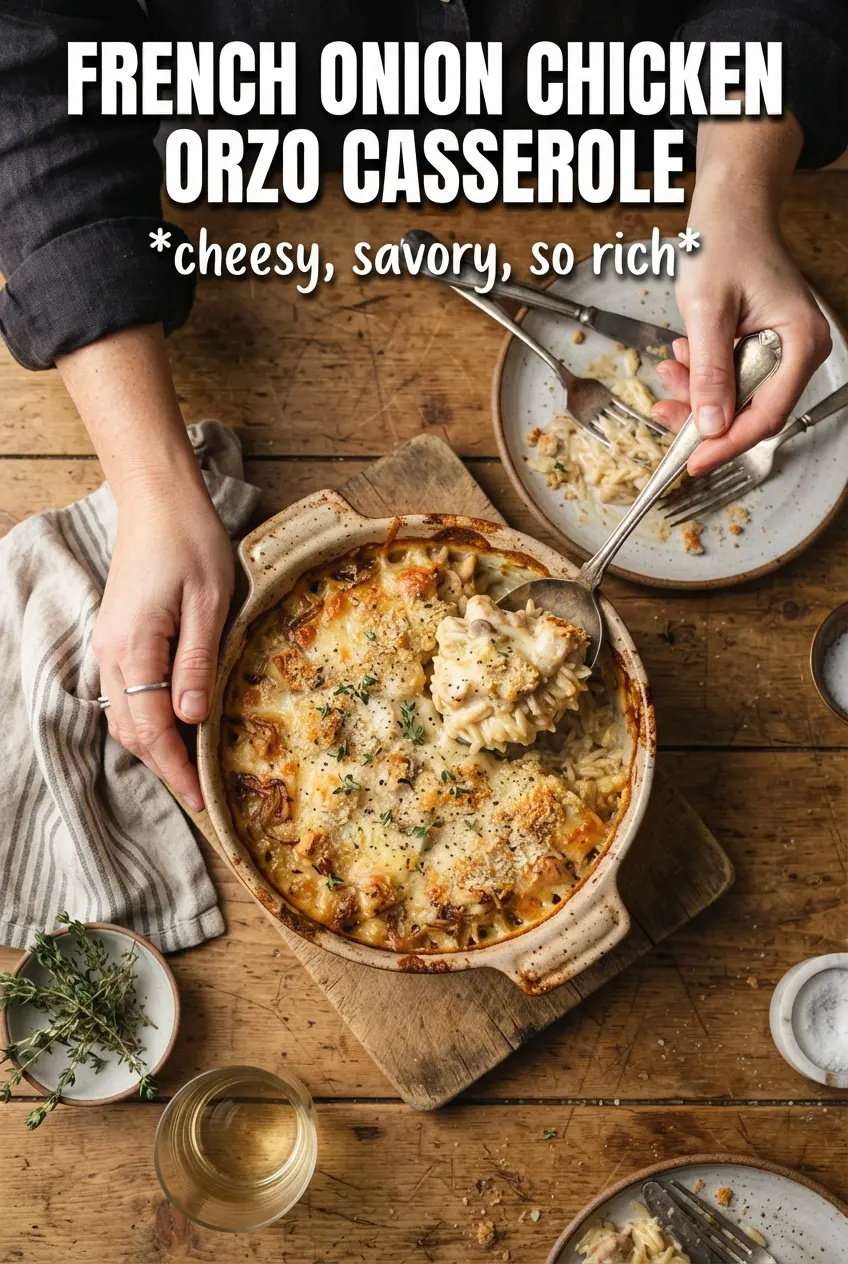
French Onion Chicken Orzo Casserole
Ingredients
Equipment
Method
- Preheat the oven to 375F. Arrange ingredients so you can add them quickly as the onions finish caramelizing.
- Melt the butter in a large oven-safe skillet over medium heat, then add the sliced onions. Cook for 30-35 minutes, stirring occasionally, until deeply caramelized and dark golden at the edges.
- Add the garlic and dried thyme to the caramelized onions. Cook for 2 minutes, stirring, until fragrant.
- Pour in the white wine and cook for 2 more minutes. Stir to loosen browned bits from the pan so the mixture looks glossy.
- Add the beef broth, Worcestershire sauce, and uncooked orzo to the skillet, then stir in the diced chicken. The liquid should spread evenly and the orzo should be submerged.
- Bring the mixture to a simmer, then stir in the cubed cream cheese until fully melted. The sauce should thicken slightly and look creamy.
- Season with salt and pepper to taste, then scatter the shredded Gruyère over the top. The cheese should form an even golden layer.
- Bake at 375F for 25-30 minutes, until the orzo is cooked, the chicken is done, and the cheese is golden. Look for bubbling around the edges and a browned top surface.
- Rest for 5 minutes after baking, then garnish with fresh thyme. The casserole should set slightly so it slices and serves cleanly.