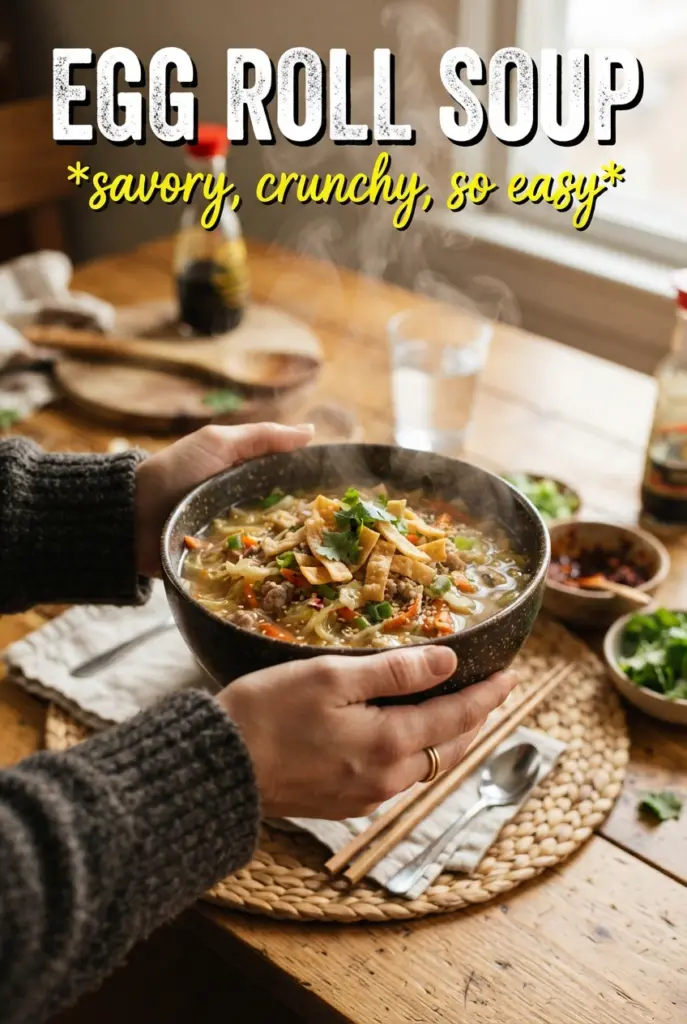
Egg roll soup has the same savory, ginger-sesame comfort as the classic takeout appetizer, but in a bowl you can actually eat on a weeknight without fussing over wrappers or frying oil. The broth turns rich and aromatic, the cabbage softens just enough to taste sweet, and the pork gives it that unmistakable egg roll filling flavor. With crispy wonton strips on top, you still get the crunch that makes the original so satisfying.
The part that makes this version work is building the flavor in layers. Browning the pork first gives the broth a deeper base, and the garlic and ginger need that brief hit of heat before the liquid goes in so they taste round, not raw. Soy sauce, sesame oil, rice vinegar, and a little sriracha create the balance you want: salty, savory, bright, and just a little warm at the back of the throat. The cabbage and carrots cook straight in the broth, which keeps the soup simple and lets the vegetables carry some of the seasoning.
Below, you’ll find the best way to keep the broth from tasting flat, plus a few smart swaps if you want to use chicken, make it gluten-free, or stretch it into a bigger batch for leftovers.
The broth had that takeout-style ginger and soy flavor, and the cabbage stayed tender without going mushy. I used the wonton strips on top and my husband said it tasted like egg rolls in soup form.
Save this egg roll soup for the nights when you want all the savory takeout flavor without the frying.
The Secret to Keeping the Broth Bold Instead of Bland
Egg roll soup can taste thin fast if you treat it like plain broth with vegetables floating in it. The flavor needs a base, and that base starts with the meat browning well enough to leave little caramelized bits in the pot. Those browned bits dissolve into the broth and give the soup its depth.
The other place people lose flavor is in the timing of the soy sauce and sesame oil. If the soup tastes flat, it usually needs salt first, not more heat. Sesame oil should go in with the broth or at the end, not cooked hard for a long time, because its aroma is what makes the whole bowl smell like egg roll filling.
What Each Ingredient Is Actually Doing in This Bowl

- Ground pork — Pork gives the soup the closest flavor to a classic egg roll filling, but ground chicken works if you want something lighter. If you use chicken, add an extra drizzle of sesame oil at the end because it doesn’t bring the same richness on its own.
- Cabbage — This is the backbone of the soup. Thin shreds soften quickly and sweeten the broth without falling apart, but thick chunks stay a little stubborn and make the soup feel more like stew than an egg roll bowl.
- Fresh ginger and garlic — These need the brief sauté in oil before the broth goes in. That quick cooking takes away the sharp raw edge and turns them fragrant, which is what gives the soup its familiar takeout flavor.
- Soy sauce, sesame oil, rice vinegar, and sriracha — This is the balance point. Soy sauce brings salt and depth, sesame oil adds aroma, vinegar brightens the broth, and sriracha gives a little heat without taking over. If you skip the vinegar, the soup tastes heavier and less defined.
- Wonton strips — They’re the crunchy finish that makes this taste like egg rolls instead of cabbage soup. Add them right before serving so they stay crisp; if they sit in the bowl too long, they soften fast.
The 20 Minutes That Matter Most
Brown the Pork First
Warm the oil in a large pot over medium-high heat, then add the ground pork and break it up as it cooks. Let it sit long enough to pick up some browned edges before stirring again; that’s where the deeper flavor comes from. If the pan looks crowded and the meat steams instead of browning, give it another minute before moving it around.
Wake Up the Ginger and Garlic
Once the pork is cooked and excess fat is drained, add the garlic and ginger and cook just until fragrant, about a minute or two. They should smell sharp and warm, not dark or bitter. If they start browning hard, the heat is too high and the soup will pick up a burnt edge that sits in the background of every bite.
Build the Broth and Simmer the Vegetables
Stir in the broth, soy sauce, sesame oil, rice vinegar, and sriracha, then bring the pot to a boil before adding the cabbage and carrots. Drop the heat to a steady simmer so the vegetables soften without turning silky and dull. You want the cabbage tender but still a little structured, because overcooked cabbage makes the soup taste tired.
Finish With the Fresh Stuff
Stir in the green onions at the end and taste before adding salt and pepper. The broth should taste savory first, bright second, and gently spicy at the finish. Serve it hot and top each bowl with wonton strips and sesame seeds right at the table so the crunch stays intact.
How to Adapt This for Lighter, Gluten-Free, or Bigger-Batch Cooking
Use Ground Chicken for a Lighter Bowl
Ground chicken makes the soup leaner and a little softer in flavor. It still works well, but you’ll want the sesame oil and ginger to do more of the heavy lifting, because chicken doesn’t bring as much built-in richness as pork.
Make It Gluten-Free Without Losing the Egg Roll Flavor
Use tamari or a certified gluten-free soy sauce in place of regular soy sauce, and swap the wonton strips for gluten-free crispy toppings or toasted sesame seeds alone. The broth stays just as savory, and the change is mostly in the topping texture.
Stretch It for More Servings
Add another 2 cups of broth and an extra handful of cabbage if you want to serve more people. The soup handles a bigger batch well, but don’t double the sesame oil blindly — increase it in small amounts so the broth doesn’t turn heavy or perfumed.
Skip the Topping and Keep It Lower Carb
Leave off the wonton strips and use extra green onions and sesame seeds instead. You lose the crunch of the classic egg roll finish, but the soup itself stays hearty and satisfying because the cabbage carries the bowl.
Storage and Reheating
- Refrigerator: Store in an airtight container for up to 4 days. The cabbage softens a bit more each day, but the flavor holds up well.
- Freezer: It freezes well for up to 2 months, though the cabbage will be softer after thawing. Freeze without the wonton strips and add fresh toppings when serving.
- Reheating: Warm it gently on the stove over medium-low heat until steaming. Boiling it hard can make the vegetables fall apart and can dull the sesame oil aroma.
Answers to the Questions Worth Asking
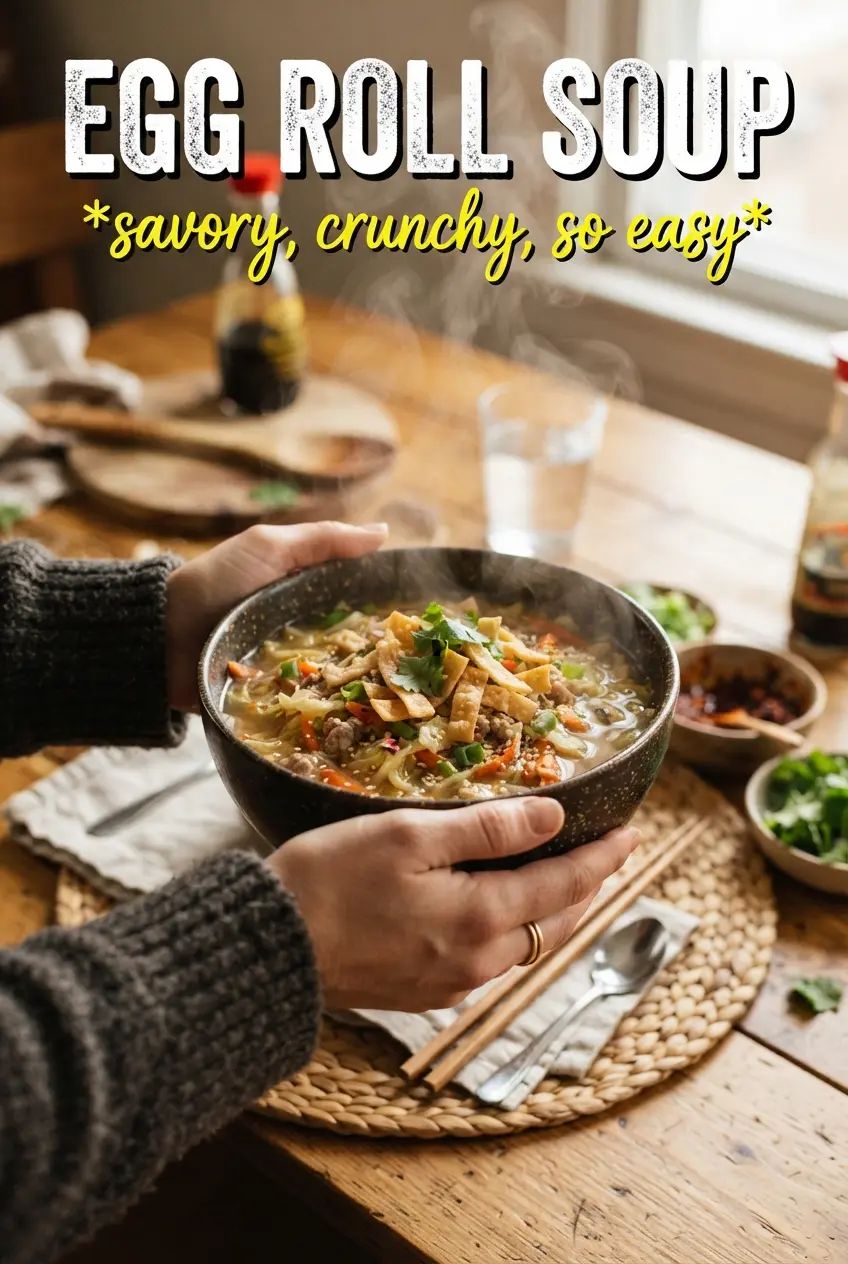
Egg Roll Soup
Ingredients
Equipment
Method
- Heat a large pot over medium-high heat and add the vegetable oil. Brown the ground pork (or chicken) for 4-6 minutes, breaking it up, then drain excess fat.
- Add the minced garlic and grated ginger to the pot. Cook for 1-2 minutes, stirring, until fragrant.
- Pour in the chicken broth, soy sauce, sesame oil, rice vinegar, and sriracha. Bring to a boil over high heat, then keep it bubbling.
- Add the shredded cabbage and carrots. Simmer for 8-10 minutes, until the vegetables are tender and bright.
- Stir in the sliced green onions. Season with salt and pepper to taste, then simmer 1 minute so the onion flavor softens.
- Ladle the soup into bowls and top each serving with crispy wonton strips and sesame seeds. Finish with extra green onions for serving.