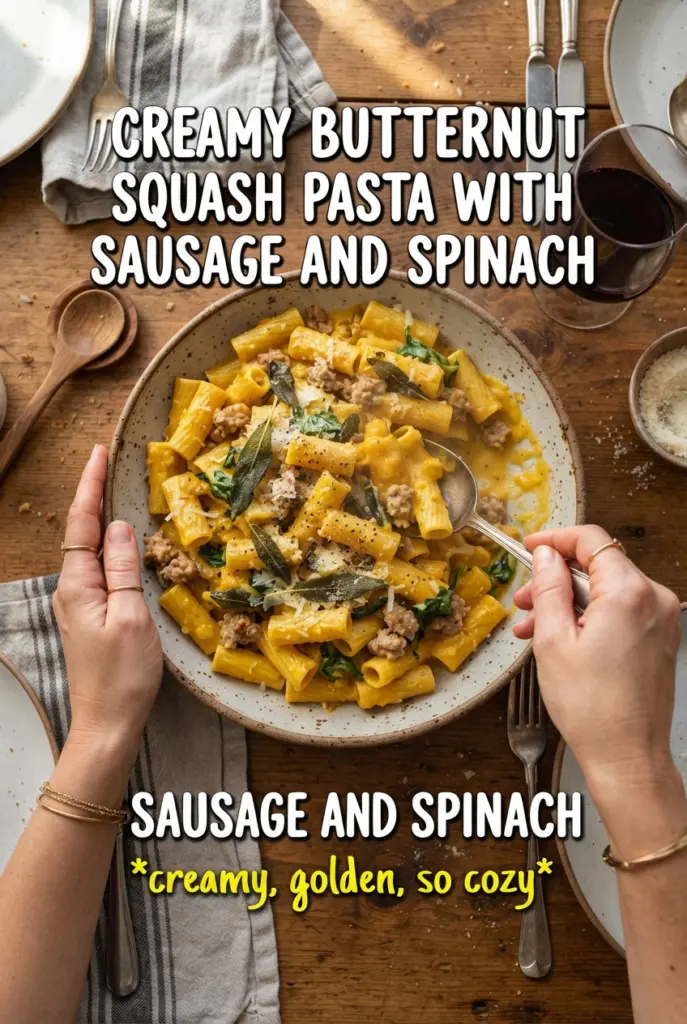
Creamy butternut squash pasta gets its best version when the sauce tastes rich without feeling heavy, and the sausage brings enough savory depth to keep every bite from leaning sweet. This one lands exactly there. The squash turns silky with cream and parmesan, the pasta water loosens it just enough to cling to every ridge of rigatoni, and the spinach folds in at the end so it stays bright instead of disappearing into the sauce.
The part that makes this work is building the sauce in the same skillet you used for the sausage. Those browned bits left behind carry a lot of flavor, and the onion softens them into the base of the whole dish. I also like adding nutmeg sparingly here; it doesn’t announce itself, but it quietly makes the squash taste rounder and more finished. The red pepper flakes do the same kind of job on the savory side.
Below you’ll find the small details that keep the sauce smooth, the pasta properly coated, and the spinach from turning limp and dull. There’s also a note on the best swaps if you need to work with what’s already in your kitchen.
The sauce turned out silky and coated the rigatoni instead of pooling in the bottom of the pan. My husband kept going back for “just one more bite” because the sausage and squash balanced each other so well.
Save this creamy butternut squash pasta with sausage and spinach for the night you want a velvety sauce, browned sausage, and one pan of cozy dinner.
The Sauce Breaks When You Rush the Cream
This dish only looks like a standard pasta-skillet dinner until you taste how the sauce behaves. Butternut squash puree can go grainy or gluey if it gets hot too fast, and cream can split if you hammer it over high heat. The fix is simple: build the sauce over moderate heat, then let the parmesan melt in gradually so the whole mixture turns smooth instead of greasy.
The pasta water matters just as much as the cream. It doesn’t just thin the sauce; it helps the starches bind everything together so the sauce clings to the pasta instead of sliding off. If the sauce looks too thick when the pasta goes in, that reserved water is the right way to loosen it. Plain broth won’t give you the same silky finish.
What Each Ingredient Is Actually Doing in This Dish
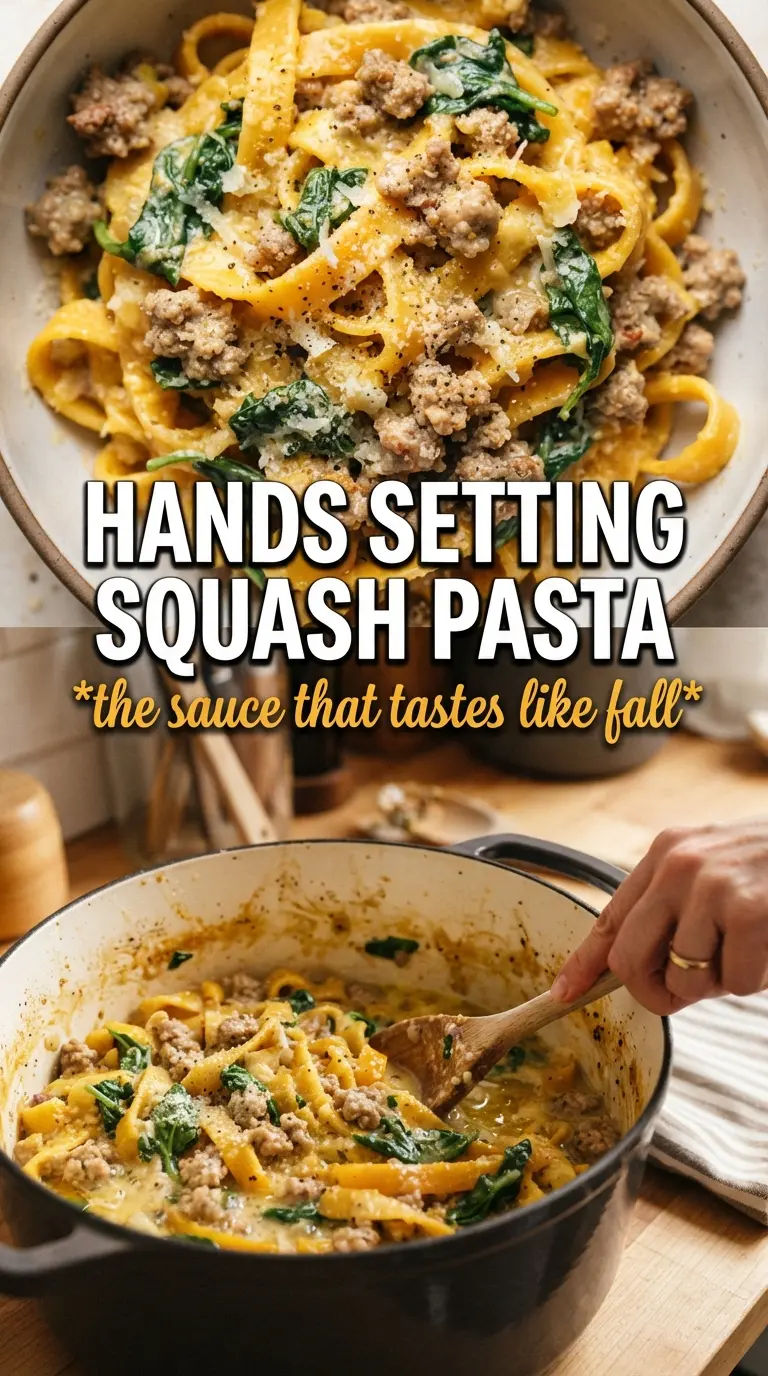
- Butternut squash puree — This is the body of the sauce, giving it sweetness, color, and a naturally thick texture. Use canned puree if that’s what you have; just check that it’s plain squash and not a pre-sweetened pie filling. Homemade puree works too, but it should be very smooth before it goes in.
- Italian sausage — The sausage gives the dish its backbone. It brings salt, fat, and enough spice to keep the squash from tasting one-note. If you want a lighter version, use turkey Italian sausage, but keep the seasoning strong because leaner sausage doesn’t carry as much flavor.
- Heavy cream — Cream softens the squash and turns it from a puree into a proper pasta sauce. Half-and-half works in a pinch, but the sauce will be thinner and less luxurious. If you use it, simmer a little longer before adding the cheese.
- Parmesan — Freshly grated parmesan melts into the sauce and sharpens the sweetness of the squash. Pre-grated cheese usually has anti-caking agents that can make the sauce a little sandy, so grate your own if you can. It melts cleaner and tastes better.
- Rigatoni or penne — Tubular pasta holds the sauce in the center and around the ridges. Long noodles work, but they don’t trap the sausage and sauce as well. If all you have is ziti or rotini, those will still do the job.
- Spinach — The spinach balances the rich sauce and keeps the finished bowl from feeling too heavy. Baby spinach is best because it wilts fast and disappears neatly into the pasta. If you use regular spinach, remove the tough stems first.
The 20 Minutes That Actually Matter
Brown the sausage first
Cook the sausage in a large skillet until it’s deeply browned and no longer pink, breaking it into crumbles as it cooks. You’re looking for actual color here, not just cooked-through meat, because that browning gives the finished sauce its savory edge. Drain off excess fat if the pan looks greasy, but leave the browned bits stuck to the skillet.
Build the squash sauce in the same pan
Sauté the onion in the sausage drippings until it turns soft and translucent, then stir in the garlic and Italian seasoning just until fragrant. Add the squash puree and cream next, then the nutmeg and red pepper flakes. Let it simmer until the sauce looks glossy and unified, not thin and separated.
Finish with pasta water, cheese, and spinach
Stir the parmesan into the hot sauce off the worst of the heat so it melts smoothly. Add the drained pasta and a splash of reserved pasta water, then toss until every piece is coated. The spinach goes in last and only needs a minute or two to wilt; if you add it too early, it loses its color and gets stringy.
Bring the sausage back at the end
Return the browned sausage to the pan and toss everything together until the skillet looks full and glossy. Taste before you salt, because the sausage and parmesan may already bring plenty. If the sauce seems too thick at this point, add another spoonful of pasta water instead of more cream so it stays balanced.
What to Change When You Need a Different Version
Dairy-Free But Still Creamy
Use full-fat coconut milk or an unsweetened dairy-free cooking cream in place of the heavy cream, then finish with nutritional yeast or a dairy-free parmesan alternative. The sauce won’t taste identical, but it will still be rich and spoon-coating. Keep the heat gentle so the swap stays smooth.
Gluten-Free Without Losing the Texture
Use a sturdy gluten-free pasta shape like penne or rigatoni and pull it from the water when it’s still slightly firm. Gluten-free pasta softens fast once it hits the sauce, so undercooking it by a minute helps it hold up. The sauce itself is naturally gluten-free as written.
Turkey Sausage for a Lighter Bowl
Turkey Italian sausage works well if you want the dish a little lighter, but it doesn’t leave as much fat in the pan. Add a tablespoon of olive oil before cooking the onion if the skillet looks dry. That extra fat helps the onions soften and keeps the sauce tasting full.
More Veg, Less Pasta
Cut the pasta back to 12 ounces and add sautéed mushrooms or roasted cauliflower for more bulk without making the dish heavier. The squash sauce handles extra vegetables well as long as they don’t release too much water. If they do, simmer the sauce a minute longer before tossing everything together.
Storage and Reheating
- Refrigerator: Store in an airtight container for up to 4 days. The sauce will thicken as it chills.
- Freezer: It freezes, but the cream sauce can separate a little when thawed. Freeze in portions for up to 2 months if you don’t mind a softer texture.
- Reheating: Warm gently on the stove over low heat with a splash of water or milk. High heat is the fastest way to make the sauce break, so go slow and stir often.
Answers to the Questions Worth Asking
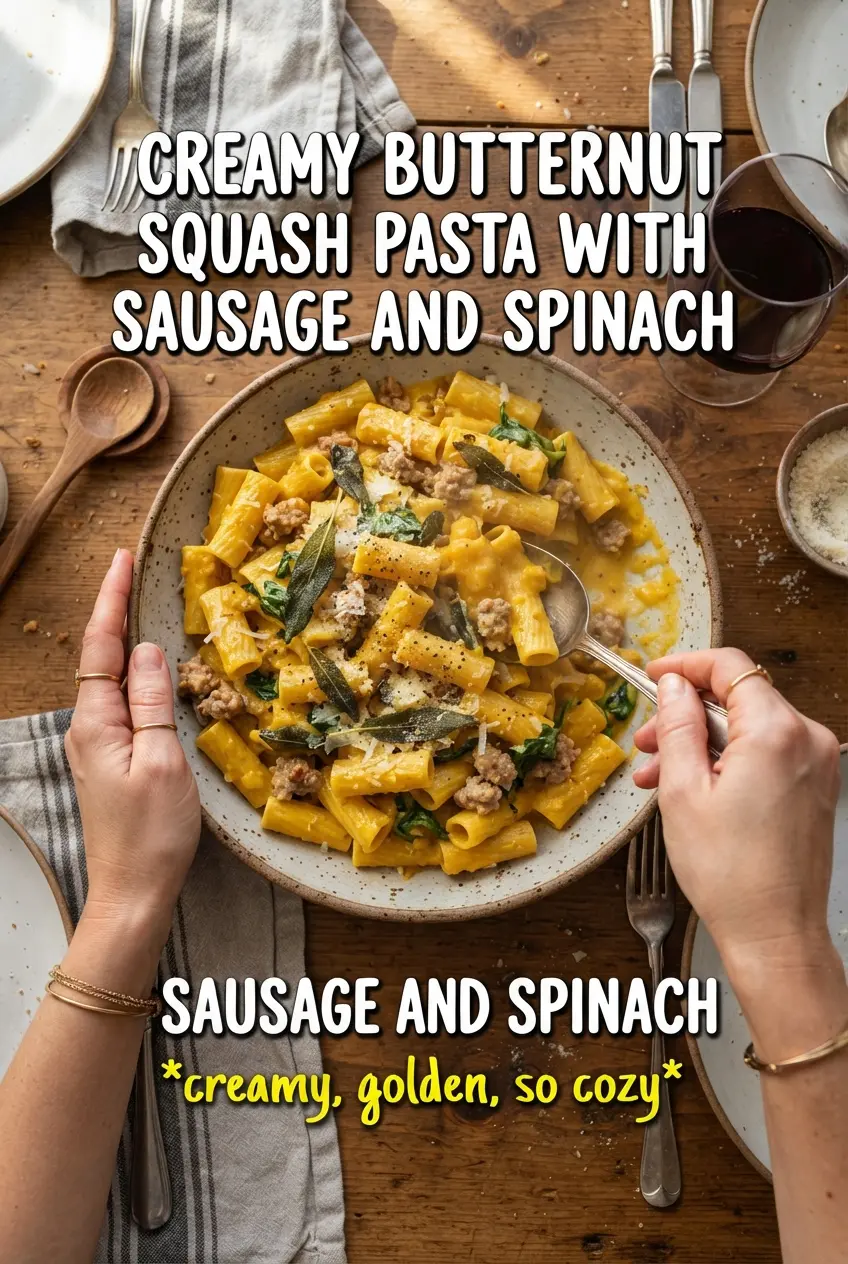
Creamy Butternut Squash Pasta With Sausage And Spinach
Ingredients
Equipment
Method
- Bring a large pot of salted water to a boil and cook rigatoni or penne until al dente, then reserve 1/2 cup pasta cooking water before draining. Visual cue: pasta should still have a firm bite when cut.
- Brown Italian sausage in a large skillet over medium-high heat until fully cooked, then drain the fat and set the sausage aside. Visual cue: sausage should be browned with darker crumbles and no pink remaining.
- In the same skillet, sauté the diced onion over medium heat for 4 minutes until softened. Visual cue: onion pieces turn translucent and slightly golden.
- Add minced garlic and Italian seasoning, then cook for 2 minutes while stirring. Visual cue: garlic becomes fragrant but does not brown.
- Stir in butternut squash puree and heavy cream, then add nutmeg and red pepper flakes. Visual cue: sauce turns a uniform orange color.
- Simmer the sauce for 5 minutes, stirring occasionally, then add parmesan and stir until smooth. Visual cue: the sauce thickens into a glossy, creamy consistency.
- Toss the drained pasta with the sauce, adding reserved pasta cooking water as needed to loosen. Visual cue: sauce clings to the pasta and looks creamy rather than dry.
- Add baby spinach and toss until wilted, turning off the heat if needed to prevent overcooking. Visual cue: spinach collapses quickly into dark green ribbons.
- Return the browned sausage to the pan, then season with salt and pepper to taste and toss to combine. Visual cue: sausage is evenly distributed through the creamy pasta.