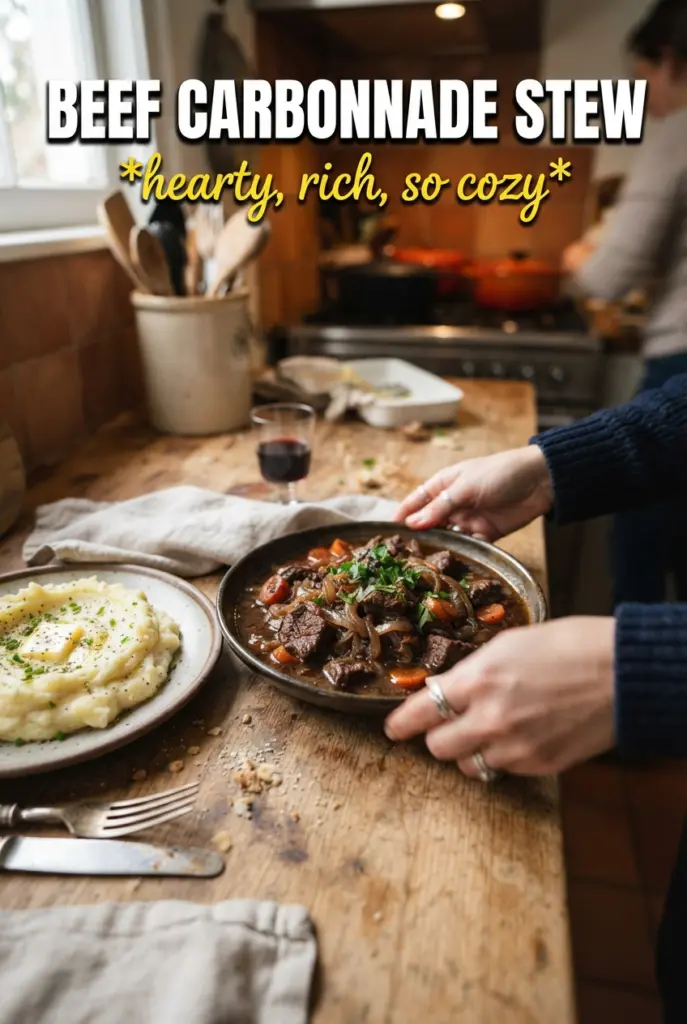
Deep mahogany beef carbonnade stew is the kind of dinner that gets more appealing the longer it sits on the stove. The beef turns spoon-tender, the onions melt into the broth, and the Belgian ale leaves behind a malty depth that tastes layered instead of heavy. It’s rich, but not flat. Every bite has a little sweetness from the onions, a little tang from the vinegar and mustard, and enough savory backbone to keep you going back for another spoonful.
What makes this version work is the patient onion base and the way the beer is used after the flour has had a chance to cook. That keeps the stew from tasting chalky or raw. The ale doesn’t just add liquid; it becomes part of the braise, which is why the broth ends up glossy and dark instead of thin and one-note. Chuck roast is the right cut here because it has enough connective tissue to break down into those soft, shreddable edges that make carbonnade feel like a true stew, not just beef in sauce.
Below, I’ve broken down the part that matters most: how to get the onions where they need to be, how to keep the braising liquid balanced, and what to do if you want to make it ahead for an even deeper flavor.
The onions cooked down into the broth beautifully and the sauce got that deep, almost glossy finish after the long simmer. I served it with crusty bread and there wasn’t a drop left.
Save this beef carbonnade stew for the kind of night when you want tender braised beef, dark Belgian ale, and crusty bread doing all the work.
The Onion Base That Keeps Carbonnade From Tasting Flat
The onions are not a background note here. They’re the backbone of the stew, and they need time enough to soften, sweeten, and pick up color before anything else goes into the pot. If you rush this part, the broth can taste sharp and thin no matter how long it simmers. Once the onions turn deep gold and collapse into themselves, they start doing the work that tomato paste, mustard, and beer can only build on.
The other mistake people make is adding the beef back in before the bottom of the pot has been scraped clean. Those browned bits are concentrated flavor, and they disappear into the sauce the second the ale goes in. If the fond is dark but not burnt, you’re in the right place. If it smells acrid, the heat was too high and the stew will carry that bitterness all the way through.

What Each Ingredient Is Actually Doing in This Stew
- Beef chuck — This is the right cut because it has enough connective tissue to turn silky during the long braise. Smaller cubes would dry out faster, and leaner cuts won’t give you the same spoon-tender texture.
- Dark Belgian ale or stout — The beer is the signature flavor here, so use one you’d actually drink. A dark ale gives malt depth without too much bitterness; stout works too, but if it tastes aggressively roasted in the glass, it will taste that way in the stew.
- Onions — Three large onions may look like a lot, but they collapse down and thicken the braising liquid. This is what gives carbonnade its sweet, savory body.
- Red wine vinegar and Dijon mustard — These keep the stew from reading heavy. The vinegar sharpens the beefiness, and the mustard rounds out the sauce with a little bite and emulsifying power.
- Tomato paste — Just enough to deepen the color and add a concentrated savory note. Cook it for a minute with the onions and garlic so it loses that raw, tinny edge.
- Flour — This helps the stew thicken gently during the braise. If you skip it, the broth stays looser; if you add too much, the sauce turns pasty instead of glossy.
Building the Braise So the Sauce Turns Dark and Glossy
Seared Beef, Not Steamed Beef
Season the beef well, then sear it in a hot Dutch oven in batches if needed. The goal is a deep brown crust on the outside, not gray meat crowded in its own moisture. If the pan starts filling with liquid, the heat is too low or the pot is too full. Pull the pieces out as soon as they’ve browned on several sides, because the beef will finish cooking later in the braise.
Onions That Melt Into the Pot
Once the beef is out, cook the onions over medium heat until they’re soft, golden, and reduced by nearly half. This usually takes 20 to 25 minutes, and it’s worth every minute. Stir often enough to prevent scorching, but not so much that they never pick up color. When they start to cling lightly to the bottom of the pot, that’s flavor building, not failure.
The Flour, Beer, and Braising Liquid
Add the garlic briefly, then whisk in the flour and let it cook for a minute before pouring in the beer. That short cook time removes the raw flour taste and keeps the stew from tasting dusty. Scrape the bottom well when the ale goes in, then add the broth, tomato paste, vinegar, brown sugar, mustard, thyme, bay leaves, and beef. The liquid should come up around the meat, not drown it.
Long Simmer, Soft Finish
Bring the pot just to a boil, then drop it to a low simmer and cover. You want only a gentle burble, not a hard boil, because a violent simmer tightens the beef instead of relaxing it. After about 2 hours, the meat should yield easily to a fork and the onions should have disappeared into the sauce. Remove the herbs, taste for salt and pepper, and let the stew sit off the heat for a few minutes before serving.
Three Ways to Adjust Beef Carbonnade Without Losing the Character of the Dish
Use stout for a deeper, roastier stew
If you don’t have Belgian ale, a stout works well and gives the sauce a darker, more roasted edge. The tradeoff is a slightly more assertive beer note, so choose one that isn’t sharply bitter. The stew will still be rich and balanced, but the malt character will lean a little toastier.
Make it gluten-free with a flour swap
Use a gluten-free all-purpose flour blend in place of the regular flour, or thicken the stew with a cornstarch slurry near the end if that’s what you have on hand. The flour-in-the-pot method gives a more integrated texture, while cornstarch will thicken faster and look slightly shinier. Just remember that cornstarch needs a brief simmer to lose its raw texture.
Skip the bread and serve it over mashed potatoes
Crusty bread is classic, but mashed potatoes work beautifully if you want something more filling. The sauce should be a little loose if you’re spooning it over potatoes, since the mash will absorb some of the liquid. This swap turns the dish into something closer to a full plated dinner without changing the stew itself.
Make it ahead for a deeper flavor
Carbonnade tastes even better the next day because the onions, beer, and beef have time to settle into each other. Cool it completely, refrigerate it overnight, and reheat it slowly the next day. The sauce thickens as it sits, so loosen it with a splash of broth if needed.
Storage and Reheating
- Refrigerator: Store in an airtight container for up to 4 days. The sauce will thicken as it chills and the flavor gets richer.
- Freezer: This freezes well for up to 3 months. Cool it completely first, then freeze in portions so it thaws evenly.
- Reheating: Warm it gently on the stovetop over low heat with a splash of broth if needed. Don’t boil it hard or the beef can tighten up and the sauce can split at the edges.
Answers to the Questions Worth Asking
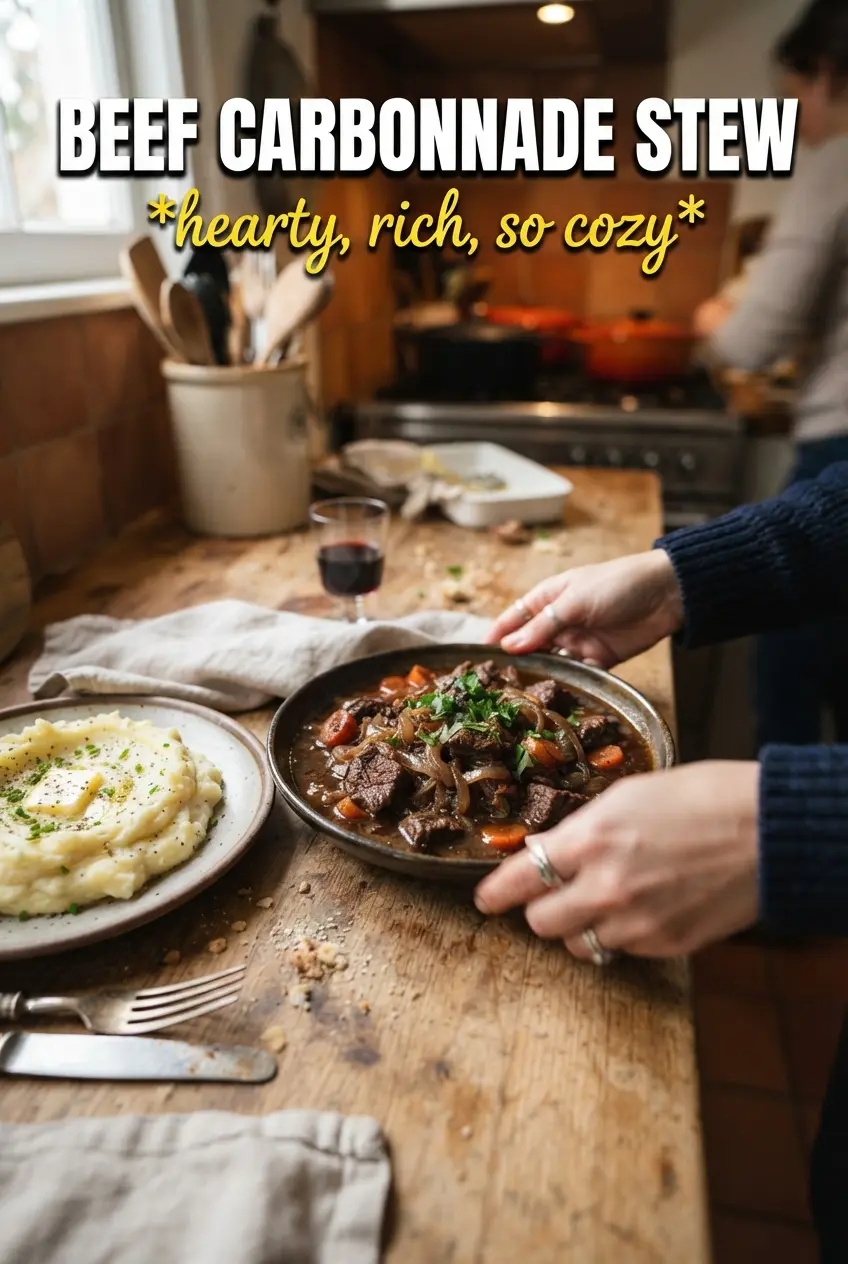
Beef Carbonnade Stew
Ingredients
Equipment
Method
- Season beef chuck cubes with salt and pepper. Sear in vegetable oil in a Dutch oven over high heat until deeply browned, then remove to a plate.
- Cook sliced onions in the Dutch oven over medium heat for 20 to 25 minutes until very soft and golden. Stir occasionally so the onions caramelize evenly.
- Add minced garlic and cook for 1 minute. Keep it moving to avoid browning too far.
- Whisk in the all-purpose flour and cook for 1 minute. Stir until the flour is lightly cooked and no longer raw.
- Deglaze with dark Belgian ale or stout beer. Scrape up all browned bits from the bottom so they melt into the sauce.
- Add beef broth, tomato paste, red wine vinegar, brown sugar, Dijon mustard, fresh thyme, bay leaves, and the seared beef to the pot. Stir to combine and coat the beef.
- Bring the stew to a boil, then reduce heat to maintain a gentle simmer. Cover and braise for 2 hours, stirring once or twice if needed for even cooking.
- Finish and serve the carbonnade stew. Remove bay leaves and thyme, then season to taste and serve hot with crusty bread.