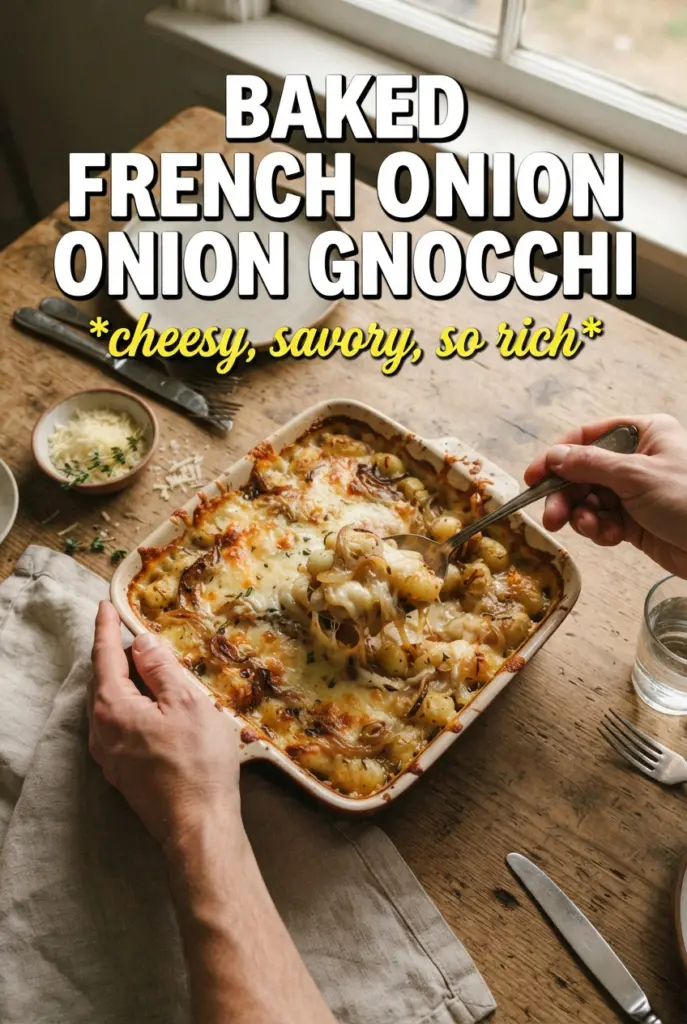
Deeply caramelized onions, a rich broth, and a browned Gruyere lid turn baked French onion gnocchi into the kind of dinner that eats like it took all day, even though most of the work is just giving the onions enough time to do their thing. The gnocchi bake right in the sauce, so they come out tender and plush instead of boiled and drained, and every bite gets coated in that savory onion base.
The key is patience with the onions. They need medium-low heat and a wide pan so the moisture can cook off before the sugars start to brown. Once they’re dark amber and sweet, the wine deglazes the pan and pulls up all the good browned bits, then the broth and cream build a sauce that stays brothy enough for the gnocchi to finish cooking without turning heavy.
Below, I’ll walk you through the moment when the onions are actually ready, why the gnocchi go in uncooked, and how to get that cheese on top browned without drying out the dish underneath.
The onions cooked down into the sweetest, deepest base and the gnocchi stayed pillowy instead of getting mushy. That Gruyere top was golden in about 15 minutes and my husband went back for a second bowl before I even sat down.
Save this baked French onion gnocchi for a bubbling, cheesy dinner with caramelized onions and a pillowy gnocchi bake.
The Onion Panade That Keeps This Gnocchi From Turning Flat
The biggest mistake with a dish like this is rushing the onions until they’re merely soft and calling it good. Soft onions taste sweet, but they don’t give you the deep, almost jammy backbone that makes the broth taste like French onion soup instead of onion cream sauce. You want a true caramelization: the onions should collapse, pick up color, and turn glossy brown in the pan with enough time for their sharp edge to disappear.
The other trap is adding too much heat once the dairy goes in. Heavy cream doesn’t need a hard boil to thicken, and a rolling simmer can make the sauce feel greasy or separated. Keep it at a gentle bubble, then let the gnocchi finish in that sauce so they absorb flavor without overcooking.
- The wide skillet matters because crowded onions steam instead of browning.
- The wine or sherry pulls flavor off the pan and gives the sauce a little lift, so it doesn’t taste heavy.
- The broth keeps the base loose enough for the gnocchi to cook through in the oven.
- The Gruyere brings the nutty, savory finish that makes this taste like French onion soup in bake form.
What Each Ingredient Is Actually Doing in This Dish
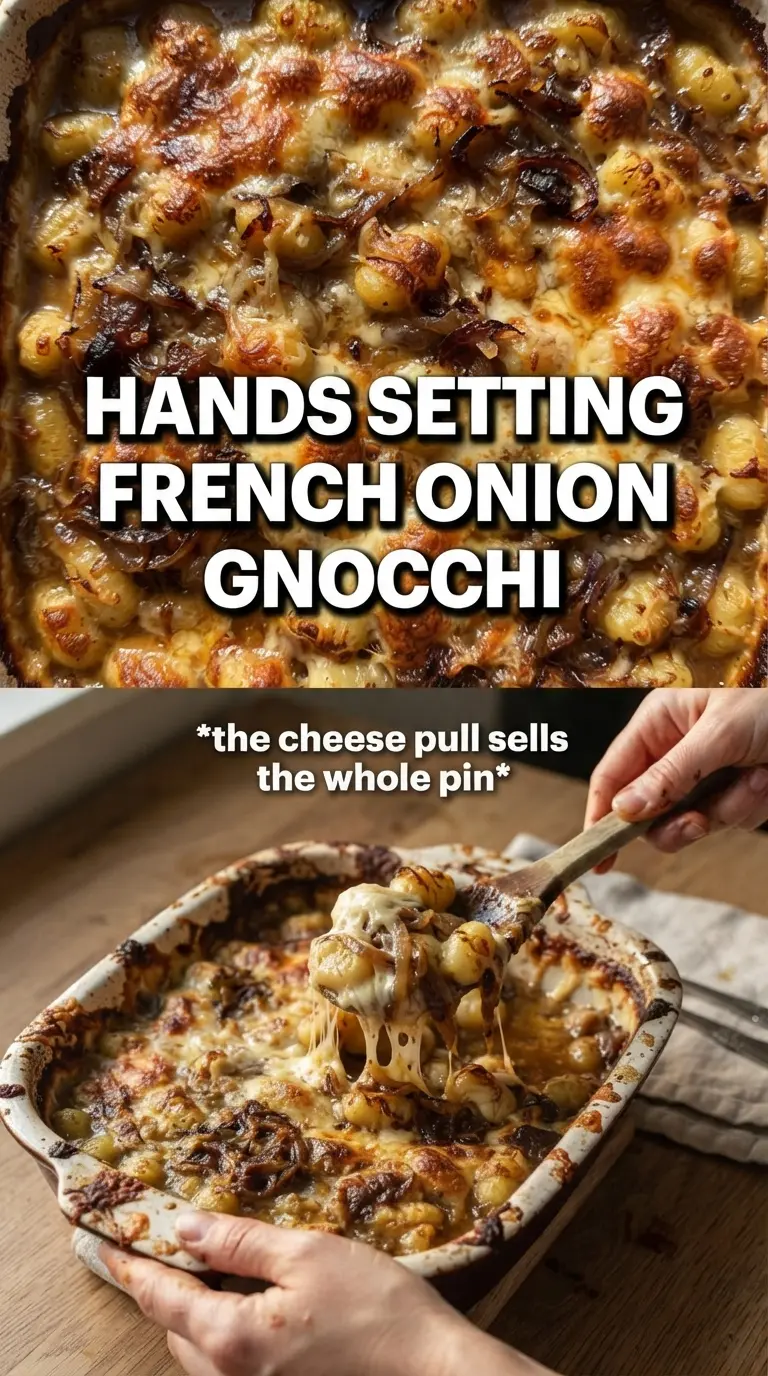
- Potato gnocchi — Use shelf-stable or refrigerated gnocchi straight from the package. They go in uncooked, which lets them finish in the sauce and stay tender instead of waterlogged from boiling first.
- Onions — Three large onions sounds like a lot, but they cook down to the amount you need. Yellow onions are ideal here because they caramelize well and taste balanced, though sweet onions also work if that’s what you have.
- Dry white wine or dry sherry — This is the deglazing step that gives the dish its French onion depth. If you skip it, the sauce still works, but it loses that sharp, savory edge that keeps the cream from tasting flat.
- Beef broth — Beef broth gives the dish its signature French onion flavor. Vegetable broth can stand in, but the result will be lighter and less brothy.
- Worcestershire sauce — A small amount adds umami and makes the onion base taste fuller. Don’t overdo it; you want background savoriness, not a sauce that tastes like steak sauce.
- Gruyere — This is the cheese that makes the top worth waiting for. It melts smoothly and browns beautifully, and its nutty flavor is what ties the whole dish to French onion soup.
The 20 Minutes That Actually Matter
Cooking the Onions Until They Turn Sweet
Melt the butter with the olive oil in a large oven-safe skillet, then add the onions and let them cook over medium-low heat. Stir often enough to keep them from sticking, but not so often that they never get a chance to color. Around the 35- to 40-minute mark, they should be deep golden brown, soft enough to collapse at the touch of a spoon, and fragrant in a way that smells almost sweet. If they start scorching before they’ve softened, your heat is too high and the pan is too crowded.
Building the Brothy Sauce
Pour in the wine or sherry and let it bubble for about 2 minutes, scraping the bottom of the pan as you go. That step matters because the browned residue is where the flavor lives. Stir in the garlic and thyme for just a minute so the garlic loses its raw bite without browning, then add the broth, Worcestershire, and cream. Bring it to a gentle simmer, not a boil, so the cream stays smooth.
Letting the Gnocchi Finish in the Pan
Add the uncooked gnocchi and stir gently so every piece gets coated. You’re not trying to cook them through on the stove; you’re giving them a head start in the sauce before the oven finishes the job. Once the Gruyere is scattered over the top, bake or broil until the sauce is bubbling around the edges and the cheese is bronzed in spots. If the top colors too fast, move the pan lower in the oven so the gnocchi underneath have time to soften.
Three Ways to Make This Baked Gnocchi Fit Your Kitchen
Make It Vegetarian Without Losing Body
Swap the beef broth for a rich vegetable broth and use a vegetarian Worcestershire sauce. The dish will still be savory and deeply oniony, though it will taste a little lighter and less steakhouse-like. If you want to build more depth, let the onions cook until they’re a shade darker before you add the liquid.
Dairy-Free Version That Still Bakes Well
Use olive oil instead of butter and replace the cream with full-fat unsweetened coconut cream or an unsweetened oat-based cooking cream. The sauce won’t have the same classic finish, but it will still feel rich enough to coat the gnocchi. Skip the Gruyere and top with a dairy-free meltable cheese if you want a browned lid.
Gluten-Free Notes
Most potato gnocchi are not automatically gluten-free, so check the package carefully. Use a certified gluten-free gnocchi and confirm your broth and Worcestershire sauce are gluten-free as well. The method stays exactly the same, and the finished dish still bakes up with the same bubbling, cheesy top.
Add Mushrooms for a Meatier Pan
Brown sliced mushrooms after the onions have started to caramelize, before the wine goes in. They add a darker, more earthy flavor and make the sauce feel a little more substantial. The pan will need a few extra minutes to cook off the moisture, but the payoff is worth it.
Storage and Reheating
- Refrigerator: Store leftovers covered for up to 3 days. The sauce thickens as it chills, and the gnocchi will soften a little more.
- Freezer: It’s not the best freezer dish. The cream sauce can separate and the gnocchi texture gets softer after thawing.
- Reheating: Warm leftovers in a covered skillet over low heat with a splash of broth to loosen the sauce. The biggest mistake is microwaving it too long, which can make the cheese greasy and the gnocchi chewy at the edges.
Answers to the Questions Worth Asking
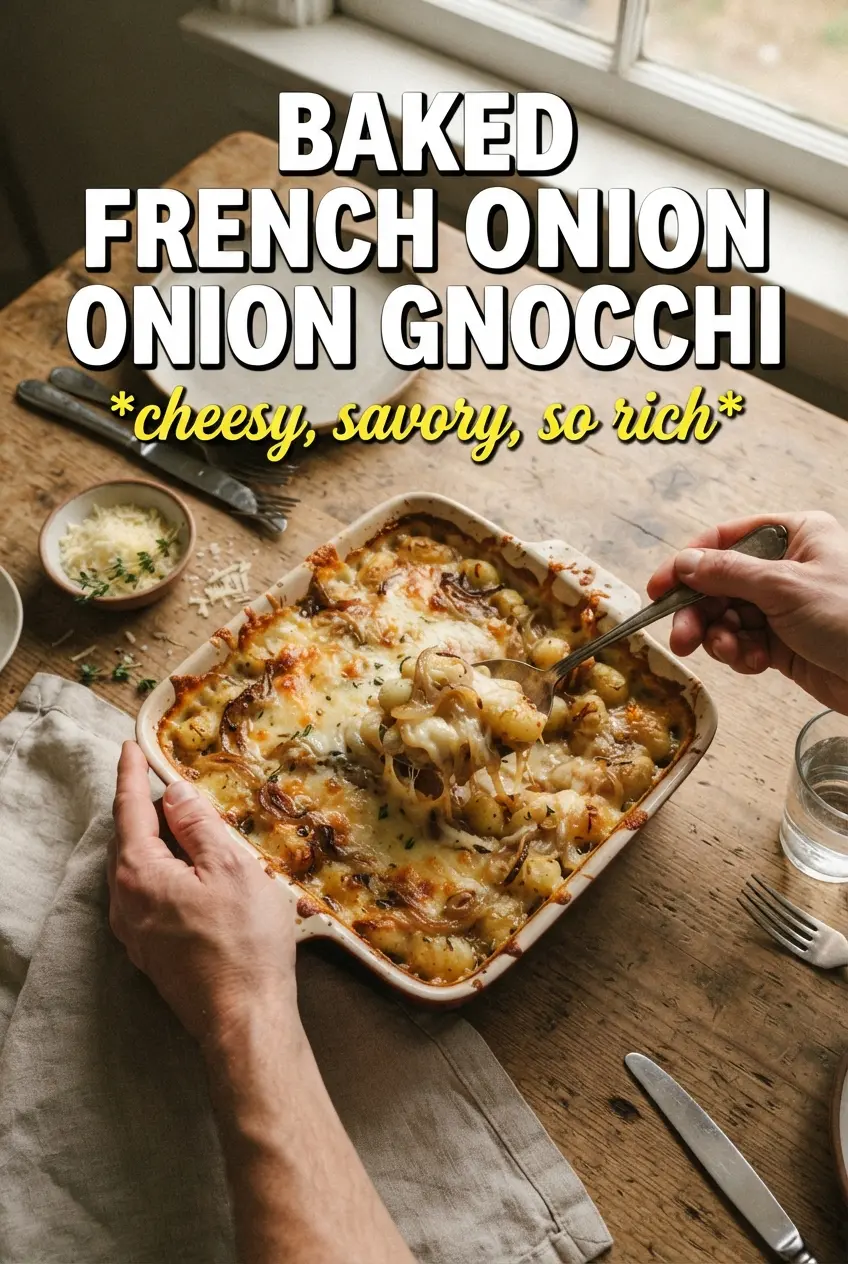
Baked French Onion Gnocchi
Ingredients
Equipment
Method
- Melt the butter with the olive oil in a large oven-safe skillet, then add the sliced onions and cook over medium-low heat for 35-40 minutes until deeply caramelized. Stir occasionally so the onions turn dark golden and jammy.
- Deglaze the skillet with the white wine or dry sherry and cook for 2 minutes, scraping up browned bits from the bottom. The liquid should reduce slightly.
- Stir in the minced garlic and fresh thyme, then cook for 1 minute until fragrant. Keep the heat steady so the garlic doesn’t brown.
- Add the beef broth, Worcestershire sauce, and heavy cream, then bring the mixture to a simmer. You should see steady bubbling around the edges.
- Add the potato gnocchi to the simmering sauce and stir to coat. Spread them into an even layer so they cook through consistently.
- Scatter the shredded Gruyere cheese over the top in an even layer. Season with salt and pepper to taste for balance.
- Broil or bake at 425°F for 15-18 minutes until the gnocchi are cooked through, the sauce is bubbling, and the cheese is golden. Look for a browned, set cheese top and visible bubbling in the onion broth.