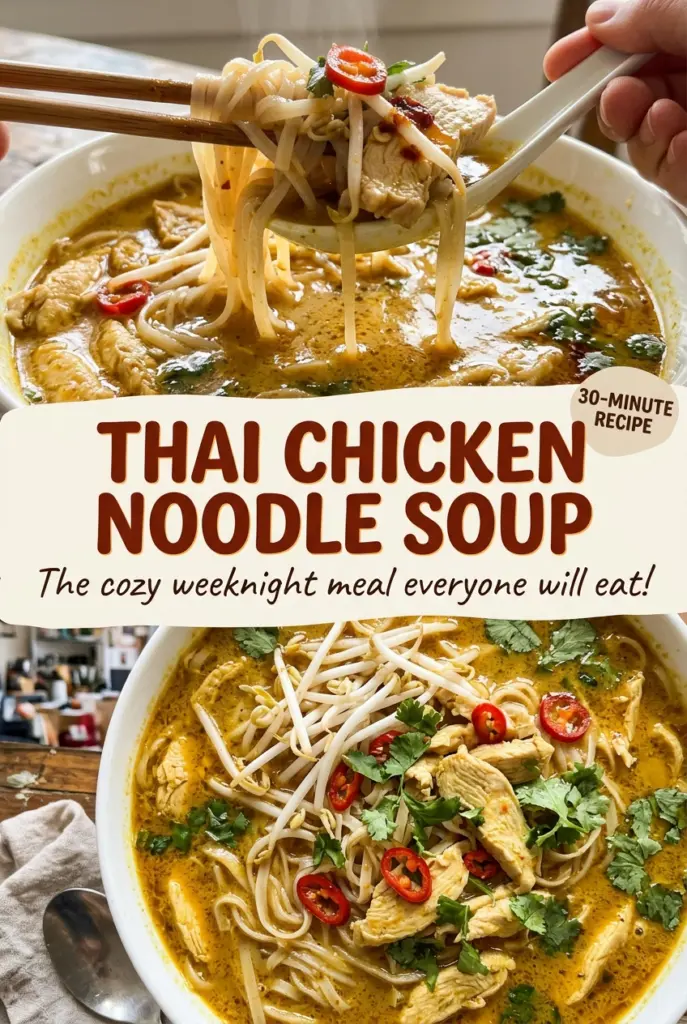
Golden coconut broth clinging to tender rice noodles is the kind of bowl that disappears fast. The curry base brings heat and depth, the lime wakes everything up, and the chicken stays tender because it poaches gently in the simmering broth instead of being blasted in a hard boil. What you end up with is rich without feeling heavy, bright without tasting thin, and just substantial enough to work as dinner on its own.
This version leans on a few ingredients that do the heavy lifting: red curry paste for spice and color, coconut milk for body, fish sauce for savoriness, and lime juice at the end so the soup tastes fresh instead of flat. The noodles are cooked separately in warm water first, which keeps them springy instead of bloated and gummy. That one small step makes a big difference in the bowl.
Below you’ll find the trick to building the broth in layers, plus the swaps that still keep the soup balanced if you need to work with what’s in the pantry.
The coconut curry broth came together fast, and the noodles stayed silky instead of turning mushy. I added the lime and basil right at the end like you said, and that made the whole pot taste bright and fresh.
Save this Thai Chicken Noodle Soup for the nights when you want a coconut-curry broth that tastes layered, not just spicy.
The Reason This Broth Tastes Deep Instead of Flat
A lot of curry soups go wrong because every ingredient gets dumped in at the same time, then the cook expects the broth to sort itself out. It doesn’t. Red curry paste needs a minute in hot oil before the liquid goes in, because that’s when the aromatics bloom and the paste loses its raw edge. If you skip that step, the soup can taste muddy instead of rounded.
The other place people lose flavor is at the end. Lime juice and fresh herbs don’t belong in the simmer for long. Heat dulls them fast. Add them after the noodles are hot and the chicken is cooked, and the bowl gets that bright lift that keeps you going back for another spoonful.
What Each Ingredient Is Actually Doing in This Soup

- Red curry paste — This is the backbone of the soup’s flavor. Brands vary a lot in heat and salt, so taste yours before adding extra fish sauce or chili. If yours is especially hot, start with 1 1/2 tablespoons and build from there.
- Coconut milk — Use full-fat coconut milk for the creamiest broth. Light coconut milk makes the soup thinner and less satisfying, and it won’t carry the curry as well.
- Lemongrass and galangal — These are what make the soup taste like it came from an actual Thai kitchen instead of a generic curry noodle bowl. If you can’t find galangal, fresh ginger works, though the flavor gets warmer and less sharp.
- Rice noodles — Soaking them first keeps them from overcooking once they hit the hot broth. Thin rice noodles only need a short soak, and they should still feel a little firm before they go into the pot.
- Chicken breast or thighs — Thighs stay a little juicier, but breast works fine here because it cooks gently in the broth. Slice it thin so it cooks quickly and stays tender.
- Fish sauce and lime juice — Fish sauce gives the broth depth; lime gives it lift. The two together are what stop the soup from tasting one-note.
How to Build the Soup So the Noodles Stay Springy
Blooming the Curry Paste
Heat the oil first, then stir in the curry paste and let it sizzle for a minute or two until it smells fragrant and the color darkens slightly. That quick fry cooks off the harsh raw taste and pulls the fat-soluble flavor into the oil. If the paste sticks or starts to scorch, the heat is too high, so lower it before adding the aromatics.
Building the Broth
Add the garlic, lemongrass, and galangal after the paste has bloomed, then pour in the coconut milk and broth. The soup should look creamy and evenly colored, not separated or greasy. Stir in the fish sauce, lime juice, and brown sugar, then let the pot simmer gently; a hard boil can make the coconut milk look split and coarse.
Cooking the Chicken Without Drying It Out
Add the sliced chicken to the simmering broth and cook just until it turns opaque and cooked through. Thin slices only need about 8 to 10 minutes, and if the broth is boiling hard the chicken tightens up fast. Pull out the lemongrass and galangal before you add the noodles so nobody bites into a woody piece later.
Finishing With Noodles and Fresh Herbs
Drain the soaked noodles, then warm them in the broth for just 2 to 3 minutes. You want them supple and glossy, not soft enough to collapse. Finish with bean sprouts, green onions, Thai basil, cilantro, lime wedges, and sliced chili right before serving so the bowl still tastes bright and textured.
How to Adapt This for What’s in Your Kitchen
Make It Dairy-Free and Naturally Gluten-Free
This soup already lands in both categories as written, as long as your curry paste and fish sauce are labeled gluten-free. The coconut milk gives the broth body without any dairy, and rice noodles keep the texture light and slurpable.
Swap the Chicken for Shrimp
Shrimp works well if you want something faster, but it needs only a few minutes at the end. Add it after the noodles are hot and cook just until it turns pink and curled. Overcooking turns it rubbery fast, so this swap makes the soup feel a little lighter and more delicate.
Use Ginger When You Can’t Find Galangal
Fresh ginger gives the broth warmth and bite, though it won’t taste exactly the same. Use the same amount, sliced thin so it can perfume the broth while it simmers. It’s the best practical substitute and still gives the soup enough backbone to stand up to the coconut milk.
Storage and Reheating
- Refrigerator: Store the soup for up to 3 days. The noodles soften as they sit, so the broth and noodles are best kept together only if you plan to eat it soon.
- Freezer: The broth freezes well, but the noodles don’t. Freeze the soup base without noodles, then cook fresh noodles when you reheat it.
- Reheating: Warm it gently on the stove over low heat until steaming. A hard boil can toughen the chicken and make the coconut milk look separated, so keep the heat modest and add a splash of broth if it has thickened too much.
Questions I Get Asked About This Recipe
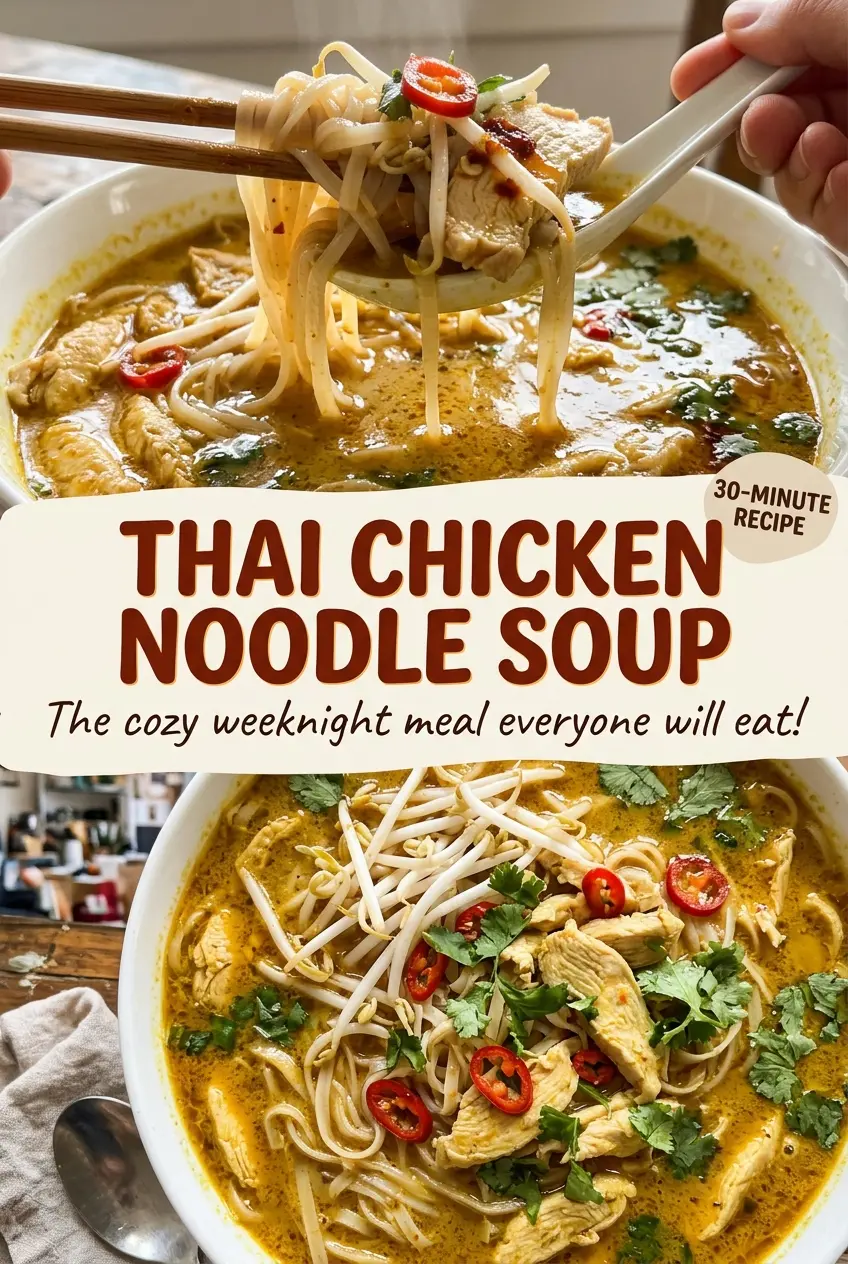
Thai Chicken Noodle Soup
Ingredients
Equipment
Method
- Soak the rice noodles in warm water for 15 minutes, then drain and set aside. Visual cue: noodles should turn pliable but still keep their shape.
- Heat oil in a large pot and cook the red curry paste for 1-2 minutes until fragrant. Visual cue: the paste darkens slightly and smells toasty.
- Add the garlic, lemongrass, and galangal, then cook for 1 minute. Visual cue: aromatics become fragrant without burning.
- Pour in the coconut milk and chicken broth, then add the fish sauce, lime juice, and brown sugar. Visual cue: the broth turns golden and smooth.
- Simmer for 10 minutes. Visual cue: gentle bubbles collect around the edges of the pot.
- Add the sliced chicken and cook for 8-10 minutes until cooked through. Visual cue: chicken turns opaque and no longer looks pink.
- Remove the lemongrass and galangal, then add the drained rice noodles and heat through for 2-3 minutes. Visual cue: noodles are tender and evenly coated with broth.
- Serve the soup topped with bean sprouts, green onions, Thai basil, cilantro, lime wedges, and sliced red chili. Visual cue: bright fresh herbs and sprouts sit on top of the golden broth.