
Stuffed peppers soup gives you all the comfort of classic stuffed peppers without the fussy assembly or the extra pan. You still get the savory beef, soft bell peppers, tomato-rich broth, and tender rice, but everything cooks together in one pot until the broth turns hearty and spoonable. The finished soup tastes familiar in the best way, with the kind of homey depth that makes a second bowl feel inevitable.
What makes this version work is the order of the cooking. The beef gets browned first so the broth has a meaty base, then the onions and peppers are cooked long enough to soften before the tomatoes go in. Tomato paste gets a quick cook too, which takes away that raw, sharp edge and gives the soup a fuller, rounder flavor. The rice goes in uncooked, so it soaks up the broth and helps thicken the pot as it simmers.
Below, I’m walking through the small details that keep the rice from turning mushy and the broth from tasting flat. There’s also a smart way to handle leftovers, since this soup thickens as it sits and that’s easy to work around.
The rice cooked up tender but not mushy, and the broth had that same stuffed-pepper flavor without all the work of filling peppers. I added a little extra cheddar on top and my husband went back for seconds immediately.
Save this stuffed peppers soup for the nights when you want that classic pepper-and-beef comfort without standing over the stove for hours.
The Trick to Keeping the Rice Tender Instead of Starchy
The biggest mistake in stuffed peppers soup is rushing the rice or letting it overcook in a hard boil. Long-grain white rice needs a gentle simmer so the grains stay separate and soak up broth evenly. If the pot is boiling too aggressively, the rice can break down and turn the soup cloudy and heavy instead of brothy and spoonable.
The other thing that matters is when the rice goes in. It belongs after the broth has come to a boil and the heat has dropped to a steady simmer. That gives the grains enough time to cook through without being beaten up by constant bubbling. If you plan to hold the soup for a while, stop cooking the rice just as it turns tender, because it will keep softening in the hot liquid.
- Brown the beef well — Let it pick up some color before draining the fat. Those browned bits add depth to the broth later.
- Cook the tomato paste briefly — A minute or two in the pot takes away the raw tomato edge and makes the soup taste fuller.
- Keep the simmer gentle — A hard boil can split the rice and make the texture dull. Small bubbles are what you want.
- Don’t walk away near the end — Rice goes from tender to soft fast in soup, especially if the pot stays hot after the burner is off.
What Each Ingredient Is Doing in This Bowl
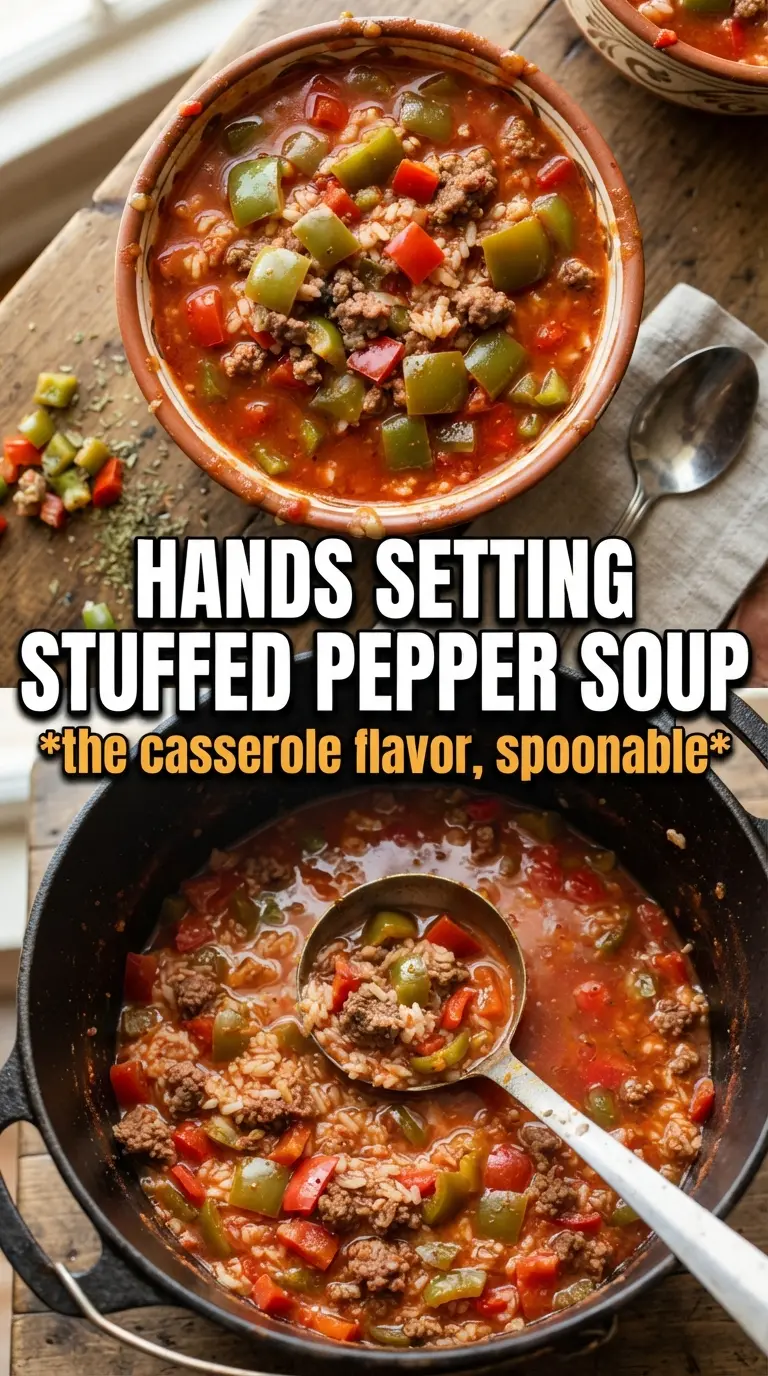
The ground beef gives the soup its backbone. It brings the savory flavor that makes this taste like stuffed peppers instead of just tomato soup with rice. If you want to use lean beef, that works fine; just keep an eye on the pot and add a little extra seasoning if the broth tastes thin after draining the fat.
The peppers, onion, and garlic do the heavy lifting on the vegetable side. Dicing the peppers small matters because they need to soften into the soup rather than stay crunchy like a garnish. Crushed tomatoes and diced tomatoes work together here: the crushed tomatoes build body while the diced tomatoes leave a little texture in the bowl.
Long-grain white rice is the right choice because it stays fairly distinct while still thickening the broth as it cooks. Brown rice can work, but it needs more liquid and a longer simmer, so the timing changes. The cheddar and parsley at the end aren’t decorative extras; the cheese adds salt and richness, and the parsley keeps the bowl from tasting heavy.
Building the Pot in the Right Order
Brown the Beef First
Start with a large pot and cook the beef until it loses its pink color and picks up some browned spots. Don’t stir constantly or it’ll steam instead of brown. If there’s a lot of grease in the pot, drain most of it off, but leave a little behind so the onion and peppers have something to cook in.
Softening the Vegetables
Add the onion and both bell peppers and cook them for 4 to 5 minutes, just until they start to soften and smell sweet. You’re not trying to fully caramelize them; you just want to take the raw edge off so they melt into the soup. Stir in the garlic and tomato paste and cook for about 2 minutes, until the paste darkens slightly and coats the vegetables.
Turning It Into Soup
Pour in the crushed tomatoes, diced tomatoes, broth, Italian seasoning, garlic powder, and smoked paprika, then bring everything to a boil before dropping the heat. Add the uncooked rice and cover the pot. Let it simmer gently for 18 to 20 minutes, stirring once or twice so the rice doesn’t settle and stick on the bottom. If the soup looks too thick before the rice is done, add a splash more broth rather than cranking up the heat.
The Finish and the Bowl
When the rice is tender and the peppers are soft, taste the soup and season it with salt and pepper. If it tastes flat, it usually needs a little more salt, not more spices. Ladle it into bowls and top with shredded cheddar and fresh parsley while it’s still hot enough to melt the cheese into the broth.
How to Adapt This for Different Eaters and Different Leftovers
Make It Gluten-Free Without Losing the Texture
This soup is naturally gluten-free as written, as long as your beef broth is certified gluten-free. The rice gives it the same cozy body people usually look for in a flour-thickened soup, so you don’t need any extra starch.
Use Ground Turkey for a Lighter Bowl
Ground turkey works if you want something leaner, but it has a milder flavor than beef. Add a little extra salt and don’t skip the tomato paste, since that concentrated step helps replace some of the richness you lose with the swap.
Skip the Dairy and Keep the Comfort
Leave off the cheddar and finish with parsley only, or add a spoonful of dairy-free sour cream if you want a creamy note. The soup itself doesn’t rely on dairy, so the flavor still lands hard even without the topping.
How to Handle Leftovers Without Losing the Rice
This soup thickens as it sits because the rice keeps absorbing liquid. If you know you’ll have leftovers, set aside a little extra broth and stir it in when reheating. The result will be closer to the original texture instead of a heavy, spoon-sticking stew.
Storage and Reheating
- Refrigerator: Store in an airtight container for up to 4 days. The rice will continue to swell, so the soup gets thicker by the next day.
- Freezer: It freezes, but the rice softens more after thawing. For the best texture, freeze it in portions and plan to add a splash of broth when reheating.
- Reheating: Warm it gently on the stove over medium-low heat, stirring often. A hard boil can break the rice apart and make the broth taste overcooked.
Answers to the Questions Worth Asking

Stuffed Peppers Soup
Ingredients
Equipment
Method
- Brown the ground beef in a large pot over medium-high heat until browned, then drain the fat.
- Keep the heat at medium-high so the pot stays hot for the next step.
- Sauté the onion and all diced bell peppers for 4-5 minutes, stirring occasionally until slightly softened.
- Add the minced garlic and tomato paste and cook for 2 minutes, stirring until fragrant.
- Add the crushed tomatoes, diced tomatoes, beef broth, Italian seasoning, garlic powder, and smoked paprika, then bring the mixture to a boil.
- Add the uncooked long grain white rice, cover, and simmer for 18-20 minutes until the rice is cooked and tender.
- Season the soup with salt and pepper to taste, then give it a final stir to distribute seasoning evenly.
- Serve hot with shredded cheddar melting on top and fresh parsley sprinkled over.