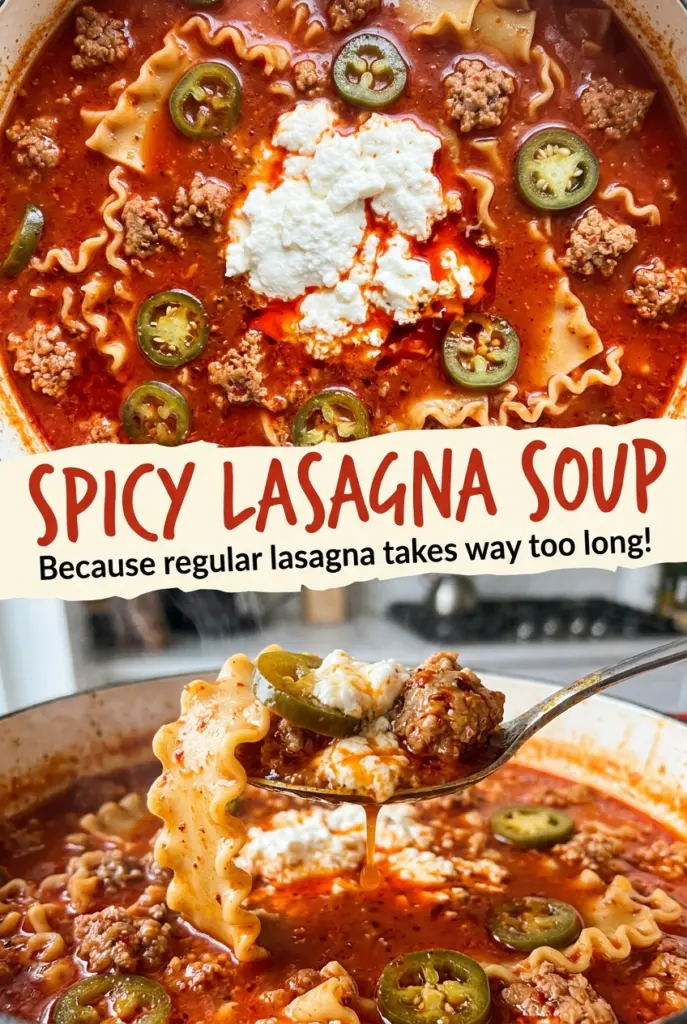
Spicy lasagna soup hits the bowl with everything people love about baked lasagna, but faster and with a little more attitude. The broth is deep red and savory, the sausage brings heat and richness, and the broken noodles turn just tender enough to catch the tomato base without going mushy. That cool ricotta dollop on top matters just as much as the heat — it softens the whole bowl in the best way.
What makes this version work is the layering. Hot Italian sausage starts the pot with built-in seasoning, then tomato paste cooks briefly with the aromatics so it loses that raw edge and turns darker and sweeter. The jalapeño, red pepper flakes, cayenne, and chili oil each do a different job, so the heat tastes rounded instead of one-note. If you’ve ever had soup that tasted flat even with plenty of tomatoes, this one fixes that by building flavor at every stage.
Below, I’ll show you how to keep the noodles from overcooking and why the ricotta topping is worth the extra bowl. There’s also a simple way to dial the heat up or down without losing the lasagna feel.
The noodles stayed perfectly tender and the ricotta on top cooled down the spice just enough. I used a little extra jalapeño and the broth still had a nice balance instead of just heat.
Save this spicy lasagna soup for the nights when you want lasagna flavor in a bowl with a little extra heat.
The Heat Lives in Layers, Not Just the Pepper Flakes
Spicy soup can go wrong fast if all the heat comes from one ingredient. One big hit of cayenne tastes sharp and thin. A pile of red pepper flakes without enough fat or tomato tastes harsh. This recipe avoids that by spreading the heat across sausage, jalapeño, pepper flakes, cayenne, and the final chili oil drizzle, so every spoonful has depth instead of burn.
The other thing that matters here is timing. Tomato paste needs a minute or two in the pot before the liquids go in, or it can taste raw and metallic. The noodles also need the right window: too short and they stay chalky at the center, too long and they collapse into the broth. That middle ground is what gives this soup its lasagna feel.
What Each Ingredient Is Actually Doing in This Soup
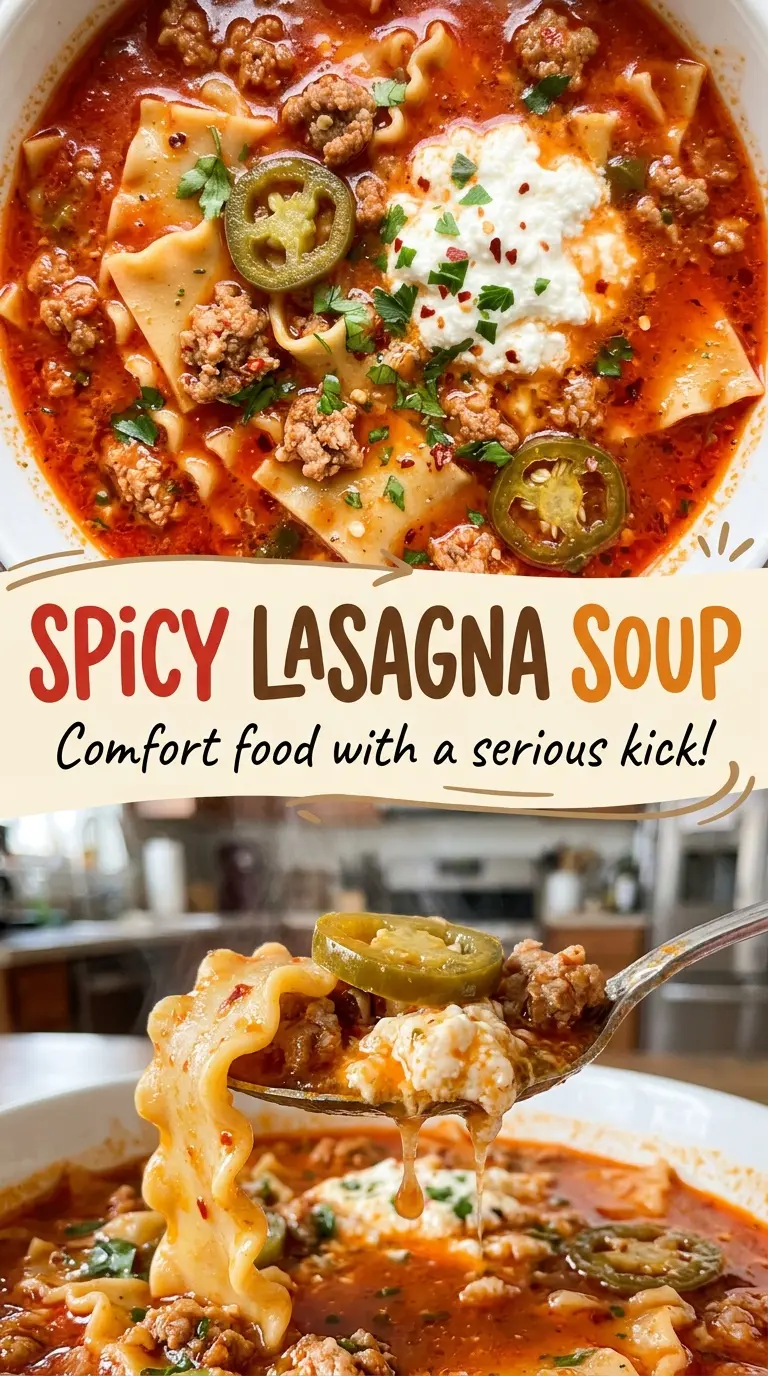
- Hot Italian sausage — This is the backbone of the soup. It seasons the broth from the start and brings enough fat to carry the spices. If you use mild sausage instead, you’ll need to lean harder on red pepper flakes and cayenne to get the same kick.
- Tomato paste — Don’t skip the quick cook in the pot. It deepens the tomato flavor and gives the broth a richer, darker color. That short step keeps the soup from tasting like plain canned tomatoes in broth.
- Crushed tomatoes and fire-roasted diced tomatoes — The crushed tomatoes make the broth smooth and full, while the fire-roasted tomatoes add little pockets of charred sweetness. If you only have one or the other, the soup still works, but the combo gives it more dimension.
- Ricotta, mozzarella, parmesan, and basil — This topping is the cooling, creamy part that makes the bowl feel like lasagna instead of just tomato soup with pasta. Full-fat ricotta gives the best texture. Part-skim works, but it can taste a little drier and less lush.
- Broken lasagna noodles — These should go in near the end so they stay tender but still have bite. If they sit too long, they’ll soak up too much broth and turn the soup thick and heavy. Break them into uneven pieces for a more natural, rustic feel.
Building the Broth Before the Noodles Go In
Brown the Sausage First
Cook the sausage until it’s deeply browned, not just no longer pink. Those browned bits on the bottom are where a lot of the savory flavor comes from, and draining off excess fat keeps the soup from turning greasy. If the sausage is crowded in the pot, it steams instead of browns, so give it enough room to color.
Cook the Aromatics and Tomato Paste Together
Add the onion first and let it soften until it looks glossy and a little translucent. Then stir in the garlic, jalapeño, and tomato paste and let them cook for about two minutes. The paste should darken slightly and smell sweeter; if it still smells sharp and raw, it needs another minute.
Wake Up the Spices
Red pepper flakes, smoked paprika, and cayenne go in before the broth. That short toast in the hot pot pulls their oils into the sausage fat and makes the spice taste rounder. If you add them only after the liquid, the broth can taste flat and the heat sits on the tongue instead of blending in.
Simmer the Noodles at the End
Once the tomatoes and broth are boiling, add the broken noodles and drop the heat to a steady simmer. Stir now and then so they don’t clump or stick to the bottom. Pull the pot when the noodles are tender with a slight bite in the center, because they’ll keep softening in the hot broth while you finish the bowls.
Three Ways to Adjust the Soup Without Losing the Point
Make It Milder Without Making It Bland
Use mild Italian sausage, cut the cayenne in half, and start with one jalapeño with the seeds removed. Keep the chili oil on the table instead of drizzling it over the whole pot. That way the soup still tastes layered and savory, but each person can decide how much heat they want in the bowl.
Make It Gluten-Free
Swap in a sturdy gluten-free pasta shape and cook it just to tender, since many gluten-free noodles soften fast and can break apart if they sit too long. You may need a splash more broth because some GF pastas absorb liquid aggressively. Add the noodles late and serve right away for the best texture.
Make It Creamier
Stir a spoonful of the ricotta mixture into each bowl before adding the broth, or finish the soup with a little extra mozzarella on top. This softens the heat and gives the soup a richer, more lasagna-like finish. I wouldn’t stir all the cheese directly into the pot unless you want a thicker, heavier broth.
Storage and Reheating
- Refrigerator: Store for up to 4 days. The noodles will keep absorbing broth, so the soup gets thicker by the next day.
- Freezer: It freezes well if you leave the noodles out and add freshly cooked pasta when reheating. Freezing it with noodles already in the pot usually gives you soft, broken pasta later.
- Reheating: Warm it gently on the stove over medium-low heat with a splash of broth or water. Boiling it hard can make the noodles bloated and the tomato base too thick.
Answers to the Questions Worth Asking
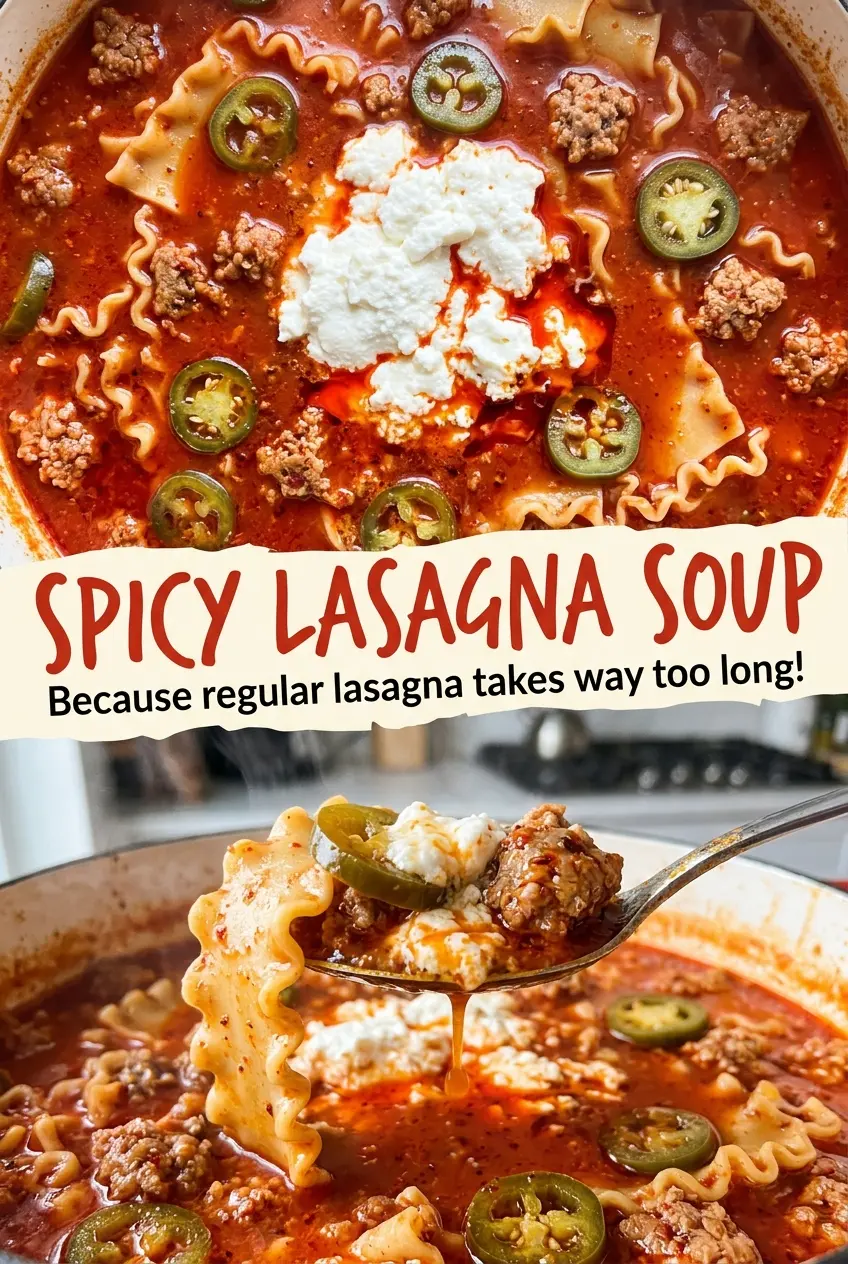
Spicy Lasagna Soup
Ingredients
Equipment
Method
- Brown the hot Italian sausage in a large pot over medium-high heat until cooked through, then drain the fat (about 8-10 minutes). Visual cue: the meat should be crumbled and no longer pink.
- Sauté the diced onion for 4 minutes, then add the minced garlic, minced jalapeños, and tomato paste and cook for 2 minutes. Visual cue: the onion turns translucent and the tomato paste darkens slightly.
- Stir in the red pepper flakes, smoked paprika, and cayenne and cook for 1 minute. Visual cue: the mixture becomes fragrant and looks glossy from the spices.
- Add the crushed tomatoes, diced fire-roasted tomatoes, chicken broth, and Italian seasoning, then bring the mixture to a boil. Visual cue: bubbles rapidly cover the surface.
- Add the broken lasagna noodles and simmer for 10-12 minutes until tender. Visual cue: noodles soften and the soup thickens slightly.
- Season with salt and pepper to taste. Visual cue: the broth flavor becomes balanced and fully seasoned.
- Mix the ricotta, mozzarella, and parmesan (with fresh basil) to create the cooling cheese dollop. Visual cue: a thick, creamy mixture forms.
- Serve the soup with a drizzle of chili oil and spoon the cooling ricotta dollop on top. Visual cue: the red broth contrasts with the pale, cool cheese center.