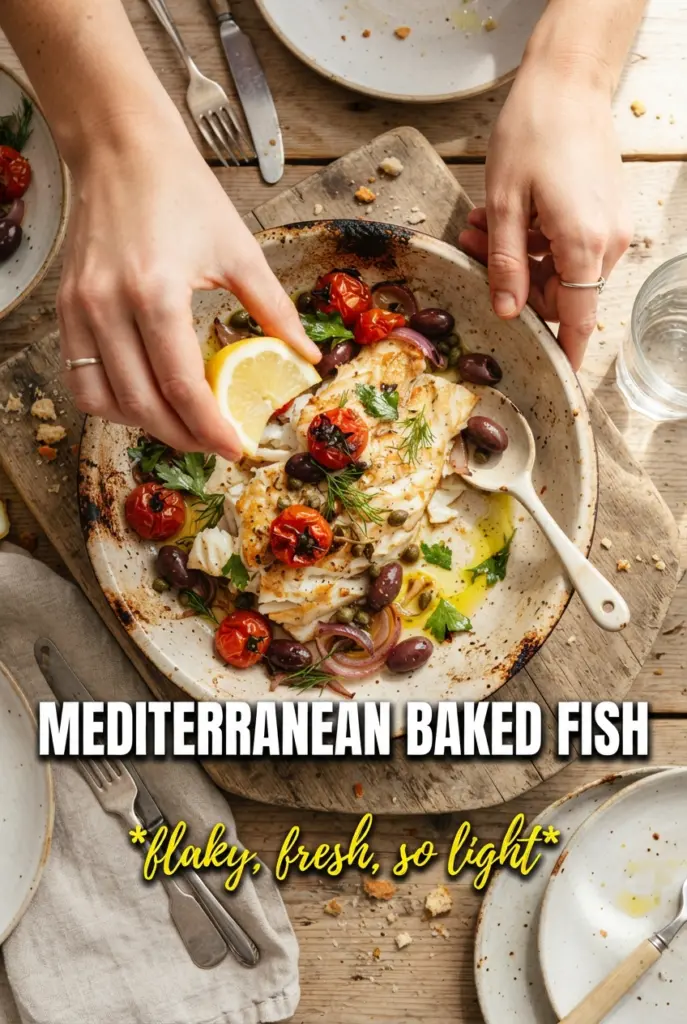
Flaky white fish, sweet tomatoes, briny olives, and capers bake together into a pan sauce that tastes like it took much longer than 35 minutes. The fish stays tender because it goes into the oven only after the vegetables have already started collapsing and releasing their juices, so the whole dish finishes in a glossy, savory broth instead of drying out. A squeeze of lemon at the end wakes everything up and keeps the flavors bright.
The trick here is simple but important: roast the tomato mixture first. That head start softens the garlic, concentrates the peppers, and gives the capers and olives time to season the pan before the fish goes in. I also like using dry white wine if I have it, because it adds a clean edge that broth alone can’t quite match, but broth works fine when that’s what you have.
Below you’ll find the timing that keeps the fish from overcooking, the best substitutions for the fish and vegetables, and a few answers to the questions that usually come up with baked white fish.
The tomatoes broke down into the best little sauce and the fish stayed perfectly flaky. I used cod and it was done right at 13 minutes, which was a relief because I always overcook baked fish.
Save this Mediterranean Baked Fish for the nights when you want a bright, briny dinner with almost no cleanup.
The Shortcut That Keeps White Fish Tender Instead of Dry
White fish dries out fast when it spends too long in the oven on its own. The reason this pan method works is that the vegetables start first, so the fish lands in a bed of hot, juicy tomatoes and peppers instead of on an empty baking dish. That moisture buffers the heat and gives you a saucy finish without steaming the fillets into blandness.
The other thing that matters is thickness. Cod, halibut, and sea bass all work here, but thin fillets will cook faster and can go from just-done to chalky in a couple of minutes. If your fillets are uneven, tuck the thinner ends under a little so they stay from overcooking before the center is ready.
- Cherry tomatoes — They collapse into the sauce and give the dish its juiciness. Grape tomatoes work too, but choose the sweetest ones you can find.
- Kalamata olives and capers — These bring the briny backbone. You need both for that punchy Mediterranean flavor; swapping in plain green olives changes the balance a lot, so expect a sharper, less round taste.
- Jarred roasted red peppers — They add sweetness and a little smokiness without extra work. Drain them well so the dish doesn’t turn watery.
- Dry white wine or broth — Wine gives the pan sauce a cleaner, more layered flavor. Broth is the easy substitute and still keeps the vegetables from drying out while they roast.
- White fish fillets — Thick, even fillets give you the best texture. If you’re using frozen fish, thaw it fully and pat it dry before seasoning or the pan will collect too much water.
What Each Ingredient Is Actually Doing in This Recipe

- Primary ingredient (the star) — Quality matters most. Choose the best you can find.
- Cooking medium (oil, butter, or broth) — This carries flavors and prevents dryness.
- Seasonings (salt, pepper, spices, herbs) — Layer flavors so nothing overpowers. Build depth gradually.
- Aromatics (garlic, onion, herbs) — Cook with fat to bloom flavors. Become the foundation.
- Supporting ingredients — Complement the main ingredient without overpowering it.
- Sauce or liquid (if applicable) — Brings flavors together. Balance richness with acid.
- Acid (lemon, vinegar, wine, or other) — Brightens and prevents flat-tasting results.
- Final finish (garnish, glaze, or sauce) — Prevents one-dimensional taste and adds visual appeal.
Building the Pan Sauce Before the Fish Goes In
Roasting the vegetables first
Spread the tomatoes, olives, capers, peppers, garlic, wine, oil, oregano, and red pepper flakes in the baking dish and roast them for the first 10 minutes. You want the tomatoes just starting to wrinkle and burst, and the garlic softened without browning hard. If the dish looks dry before the fish goes in, the vegetables were probably packed too tightly; give them a little space so they can roast instead of steam.
Nestling in the fish
Season the fillets with salt and pepper, then lay them right into the hot vegetable mixture. Spoon some of the juices over the top so the surface of the fish picks up flavor immediately. Don’t bury the fish under the vegetables or it will cook unevenly; it should sit partially exposed so the heat can reach it evenly.
Finishing until just flaky
Bake for 12 to 15 minutes, depending on thickness, until the fish flakes easily with a fork and the center is opaque. Pull it as soon as it separates in clean layers. If you wait for it to look dry on top, it’s already gone too far. Finish with parsley and lemon wedges, then serve from the dish while the sauce is still glossy.
What to Change When You Want a Different Version
Dairy-Free and Naturally Gluten-Free
This recipe already lands in both camps as written, which is part of why it works so well for a mixed crowd. Just keep an eye on your broth if you use that instead of wine, since some packaged broths carry hidden wheat-based additives. The flavor and texture stay the same.
If You Don’t Have White Wine
Use broth in the same amount. You lose a little acidity and brightness, so add an extra squeeze of lemon at the end to bring the sauce back into focus. Don’t replace the wine with vinegar straight from the bottle or the pan sauce will taste sharp instead of balanced.
Make It Spicier or Milder
The red pepper flakes are easy to adjust, but don’t remove them completely unless you want a flatter sauce. A small amount doesn’t make the dish hot; it just keeps the tomatoes and olives from tasting one-note. Add more if you like a little burn, or halve it if you’re serving kids.
Swap the Fish
Any sturdy white fish works here, but adjust the baking time to the thickness of the fillets, not the clock. Halibut takes a little longer, while thinner cod fillets can be done early. Salmon can work in a pinch, but it shifts the dish into a richer direction and doesn’t need quite as much oven time.
Storage and Reheating
- Refrigerator: Store leftovers covered for up to 2 days. The fish will firm up a little, but the tomato mixture stays flavorful.
- Freezer: I don’t recommend freezing this dish. The fish texture changes too much once thawed, and the tomatoes turn soft in a way that doesn’t work well here.
- Reheating: Warm gently in a 300F oven just until heated through, or use short bursts in the microwave at low power. High heat is the mistake that turns the fish dry and tough.
Answers to the Questions Worth Asking
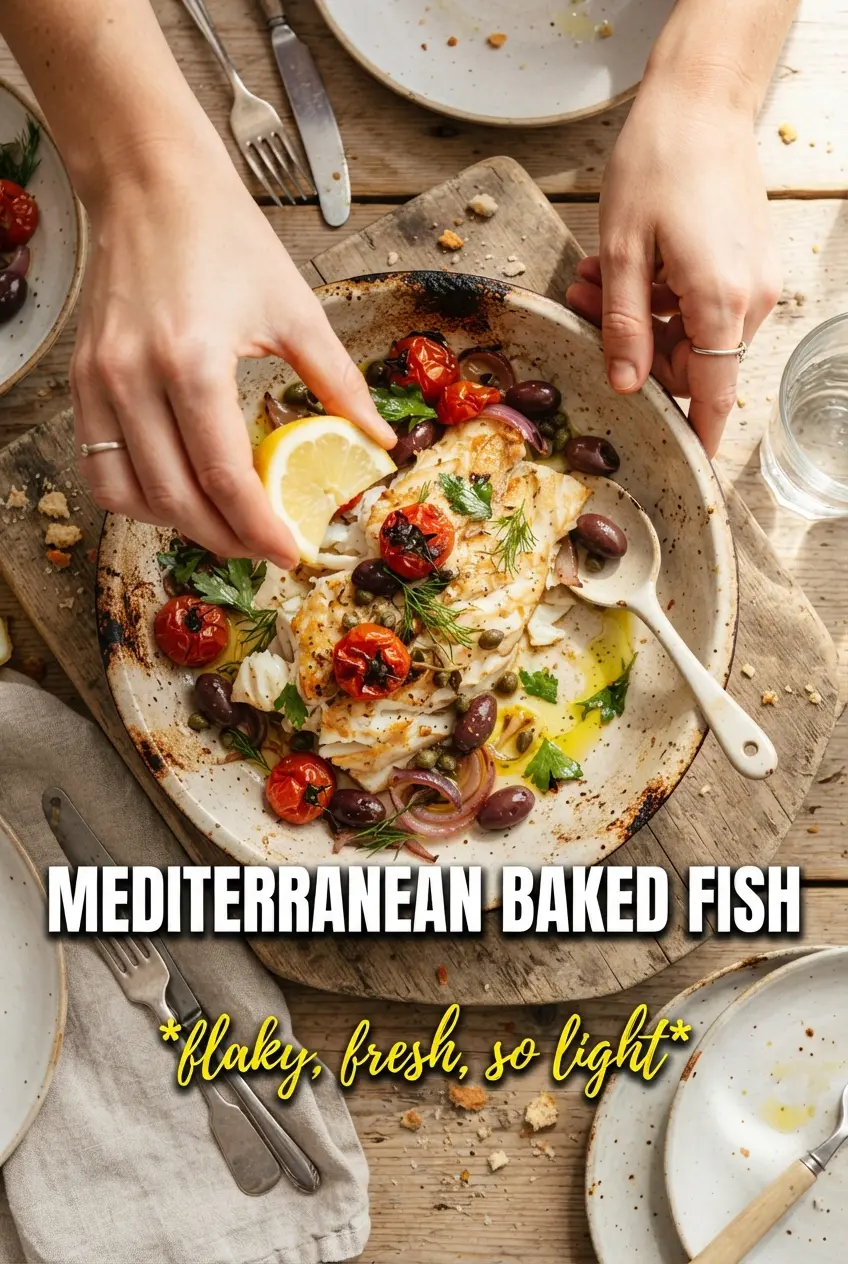
Mediterranean Baked Fish
Ingredients
Equipment
Method
- Preheat oven to 400F and grease a 9x13 baking dish.
- Combine cherry tomatoes, olives, capers, roasted red peppers, garlic, wine, olive oil, oregano, and red pepper flakes in the baking dish.
- Roast the vegetable mixture at 400F for 10 minutes, until it looks slightly blistered.
- Season fish fillets with salt and pepper, then nestle them into the hot vegetable mixture.
- Bake at 400F for 12-15 more minutes until the fish flakes easily with a fork, with the vegetables bubbling around the fillets.
- Garnish with fresh parsley and serve with lemon wedges, squeezing over the top just before eating.