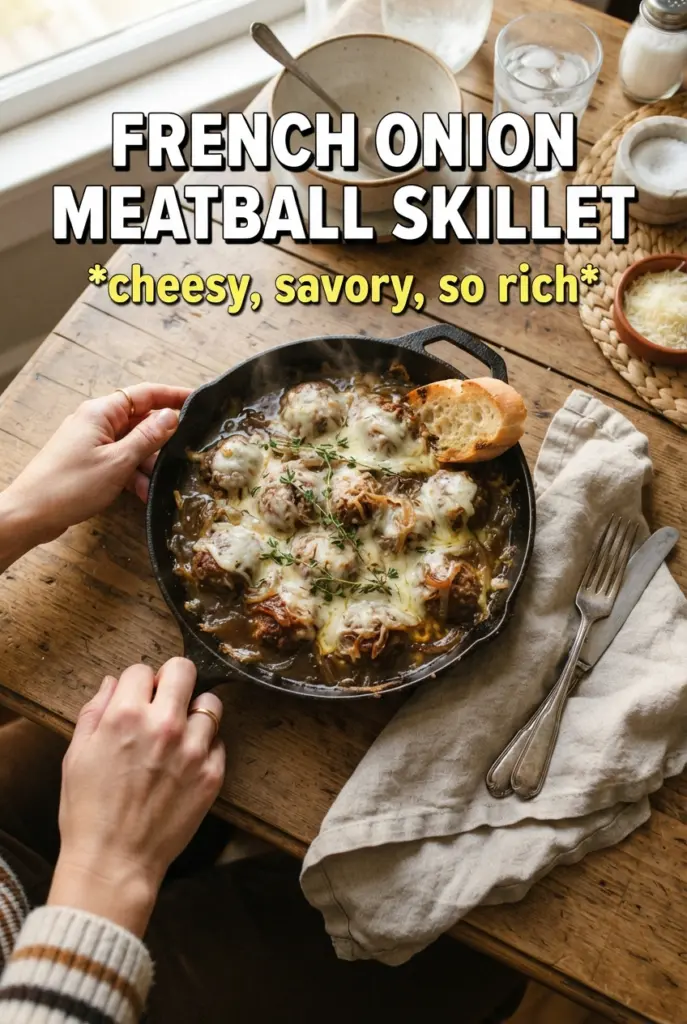
Deeply caramelized onions turn this meatball skillet into something much richer than a basic weeknight pan dinner. The onions melt down into a glossy, savory broth that clings to the browned meatballs, and the Gruyere on top gives you that familiar French onion finish without needing a separate soup course. It lands in the sweet spot between cozy and impressive, with enough sauce to spoon over bread, potatoes, or rice.
The part that makes this work is patience with the onions and restraint with the heat. If you rush them, you get pale onions that taste flat; if you push them too hard, they scorch before they soften. Cooking the meatballs first gives the pan enough browned bits to build the sauce, and the wine loosens those bits into the broth instead of leaving them stuck to the skillet. That’s where the deep flavor comes from.
Below, I’ve broken down the exact points that matter most: how to get the onions properly caramelized, what the Gruyere is doing in the final minute, and the small adjustments that keep the sauce from turning thin or greasy.
The onions took their time, but that sauce was worth it. It got glossy and rich, and the meatballs stayed tender even after simmering. My husband kept going back for more bread to soak up the broth.
Save this French Onion Meatball Skillet for the night you want caramelized onion flavor, bubbling Gruyere, and a pan sauce that tastes like it took hours.
The Onion Pan Sauce Needs Time, Not Heat
The biggest mistake with a dish like this is trying to brown the onions quickly. French onion flavor comes from slow caramelization, which means the onions need enough time to release their moisture and turn sweet and jammy before they ever meet the broth. If the heat is too high, they’ll take on color before they soften, and you end up with bitter edges instead of a deep, savory base.
The skillet matters too. Those browned bits from the meatballs are not a problem to scrub away. They’re the backbone of the sauce once the wine goes in, and deglazing lifts them straight into the onions. That’s what gives the broth the round, beefy finish that makes the whole dish taste built, not dumped together.
- Onions — Three large onions may look excessive at first, but they cook down to the amount you need for a rich pan sauce. Yellow onions are the best choice here because they turn sweet and soft without going mushy.
- Dry white wine — This adds acidity and helps loosen the fond from the pan. If you don’t cook with wine, use extra beef broth plus a small splash of white wine vinegar or lemon juice to keep the sauce from tasting heavy.
- Gruyere — Gruyere melts smoothly and gives you that nutty, classic French onion finish. Swiss cheese works in a pinch, but it won’t taste as deep or melt as silkily.
- Fresh thyme — Fresh thyme brings the dish back toward French onion soup territory. Dried thyme will work, but use less because the flavor concentrates fast.
How to Keep the Meatballs Tender While the Onions Cook Down

- Ground beef — An 80/20 blend gives you enough fat for flavor without making the skillet greasy. Leaner beef works, but the meatballs won’t be as juicy.
- Breadcrumbs and egg — These are the structure. They hold the meatball together while keeping the texture soft instead of dense. If you need a gluten-free version, use gluten-free breadcrumbs in the same amount.
- Worcestershire — This is doing a lot of the savory work in both the meatballs and the sauce. It adds a fermented, beefy depth that salt alone can’t copy, so keep it in if at all possible.
- Butter — Butter helps brown the meatballs and gives the onions a richer base as they cook. You can swap in olive oil, but the finished skillet loses some of that French onion-style richness.
Building the Skillet in the Right Order
Brown the Meatballs First
Roll the meatballs just until the mixture holds together. Overworking the beef makes them compact, and compact meatballs turn dry after simmering. Brown them in the oven-safe skillet until they have a real crust on the outside, then pull them out before they’re cooked through. They finish later in the onion broth, which keeps the center tender.
Slow Down for the Onions
Add the sliced onions to the same skillet and lower the heat. They should soften first, then slowly turn amber and glossy over 30 to 35 minutes. Stir often enough that they don’t stick, but not so often that they never catch color. If the pan looks dry, add a small splash of broth or water to keep the fond from burning.
Deglaze, Simmer, and Broil
Once the onions are deeply caramelized, stir in the garlic and thyme for just a minute, then pour in the wine. It should sizzle and release the browned bits from the bottom of the pan. Add the broth and Worcestershire, nestle the meatballs back in, and let everything simmer until the meatballs are cooked through and the sauce has thickened slightly. Finish with Gruyere under the broiler until the top is melted, bubbling, and spotted with golden brown edges.
How to Adapt This for a Lighter Pan Dinner or a Bigger Batch
Gluten-Free Meatballs
Swap the breadcrumbs for certified gluten-free breadcrumbs or crushed gluten-free crackers. The texture stays nearly the same, as long as you don’t add extra liquid to compensate. Keep the rest of the method unchanged.
Dairy-Free Skillet
Use olive oil instead of butter and skip the Gruyere, or top the skillet with a dairy-free meltable cheese if you have one you trust. You’ll lose the classic French onion finish, but the onions and broth still carry the dish.
Make It Ahead for Busy Nights
You can brown the meatballs and caramelize the onions a day ahead, then store them separately. Reheat the onion base, add the meatballs, and finish with cheese just before serving so the top stays bubbly instead of rubbery.
Storage and Reheating
- Refrigerator: Store leftovers in an airtight container for up to 4 days. The sauce thickens as it sits, and the onions get even softer.
- Freezer: Freeze the meatballs and onion sauce together for up to 2 months. Thaw overnight in the refrigerator before reheating.
- Reheating: Warm gently on the stove over low heat with a splash of broth to loosen the sauce. The common mistake is blasting it over high heat, which can tighten the meatballs and make the cheese separate if you’ve already added it.
Questions I Get Asked About This Recipe
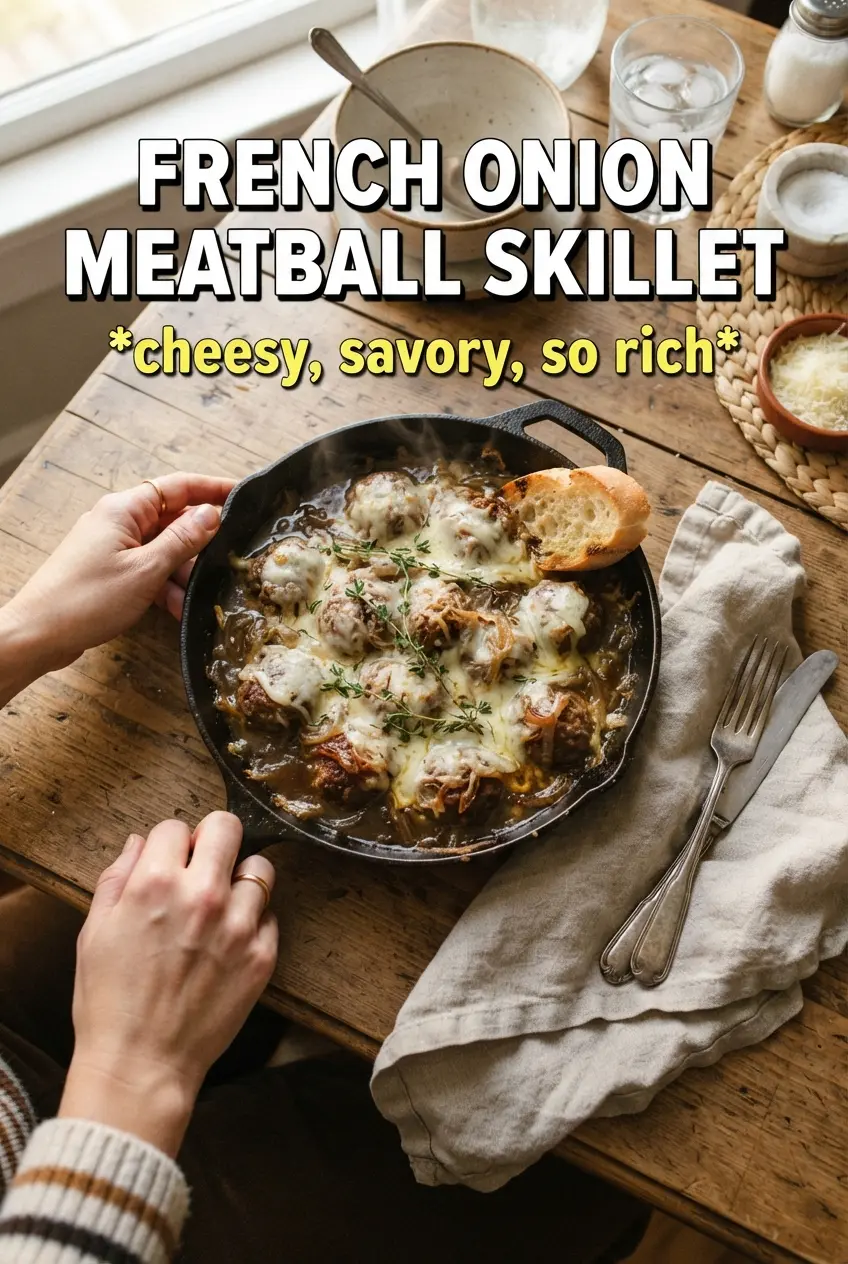
French Onion Meatball Skillet
Ingredients
Equipment
Method
- Preheat the oven to 400°F while you mix the meatballs ingredients until just combined and roll into bite-size balls. Brown the meatballs in butter in an oven-safe skillet, turning as needed, until golden on the outside; remove to a plate.
- Cook the onions in the same skillet over medium-low heat for 30-35 minutes, stirring occasionally, until deeply caramelized and jammy. Add the garlic and fresh thyme for the final 1-2 minutes until fragrant.
- Pour in the white wine and scrape up the browned bits from the skillet. Stir in the beef broth and Worcestershire until the mixture looks smooth and simmer-ready.
- Nestle the browned meatballs into the caramelized onion sauce and simmer for 10 minutes until heated through. Keep the sauce gently bubbling so the onions stay silky.
- Scatter the shredded Gruyère evenly over the top and broil for 3-5 minutes until golden and bubbly. Serve straight from the skillet while the cheese is at its stretchiest.