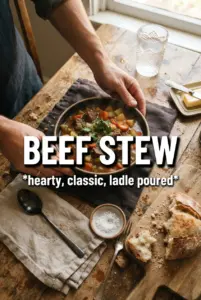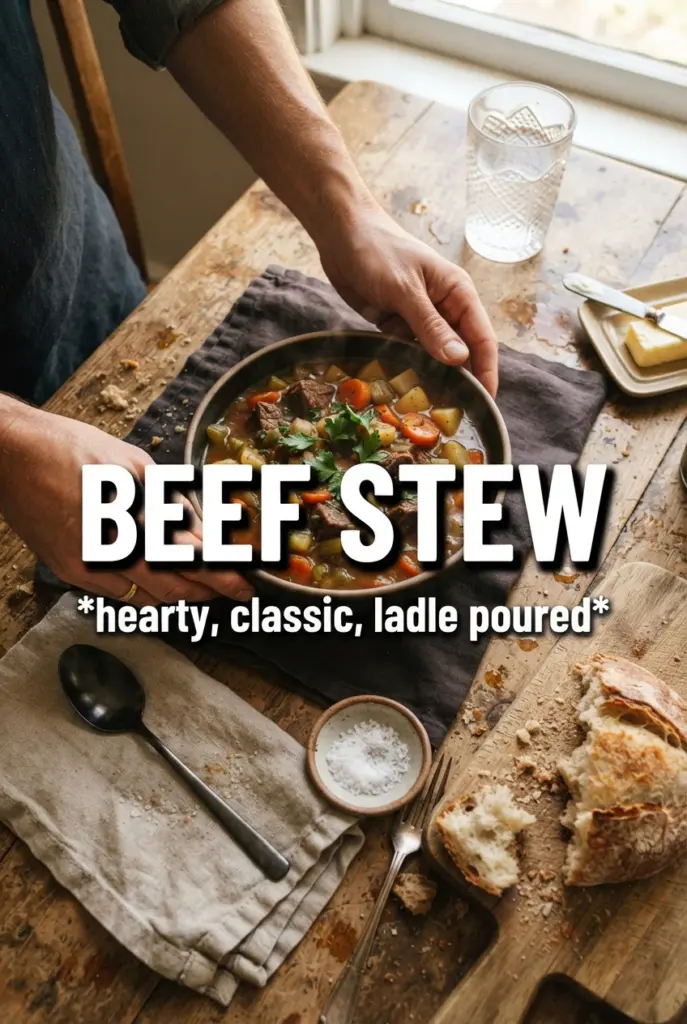
Deep, mahogany beef stew is one of those meals that smells like patience and tastes like you kept your cool the whole way through. The beef turns spoon-tender, the broth gets glossy and rich, and the potatoes catch just enough of that savory wine-and-tomato base to hold their shape without going chalky. It’s the kind of pot that settles in and feeds people well, with enough body to feel substantial and enough brightness from the tomatoes and peas to keep every bite from tasting flat.
The part that makes this version worth keeping is the layering. The beef gets floured and seared hard before anything else, which builds the browned bits that give the broth its backbone. Then the onions, carrots, celery, garlic, and tomato paste go in the same pot, so nothing gets lost. Red wine does the heavy lifting when it comes to depth, but it cooks down with broth and Worcestershire into something round and savory instead of sharp. That’s what keeps this stew tasting homemade in the best way.
Below, I’ve included the reason the sear matters, what each ingredient is doing, and the small timing details that keep the potatoes intact and the beef tender instead of dry or stringy. If you’ve ever had stew that tasted thin or ended with mushy vegetables, the process here fixes both of those problems.
The broth turned out thick and rich, and the beef was fall-apart tender after the full simmer. I loved that the potatoes held their shape and the peas stayed bright at the end instead of turning dull and overcooked.
Pin this classic beef stew for a rich, slow-simmered dinner with tender beef, Yukon gold potatoes, and a deeply savory broth.
The Sear Is What Gives This Stew Its Real Beef Flavor
If the beef goes into the pot pale, the stew will taste like boiled meat with vegetables floating in broth. The sear is not about cooking the beef through; it’s about building a dark crust that turns into flavor once the liquid goes in. Brown the meat in batches so the pan stays hot and the cubes actually sear instead of steam. Crowding the pot is the fastest way to lose that deep, savory base.
Flouring the beef before searing does two jobs here. It helps the crust form, and it gives the broth a little body later on without needing a separate thickener. The trick is to shake off the excess, because too much flour clumps in the oil and gives you a pasty bottom instead of browned bits.
What Each Ingredient Is Doing in This Pot
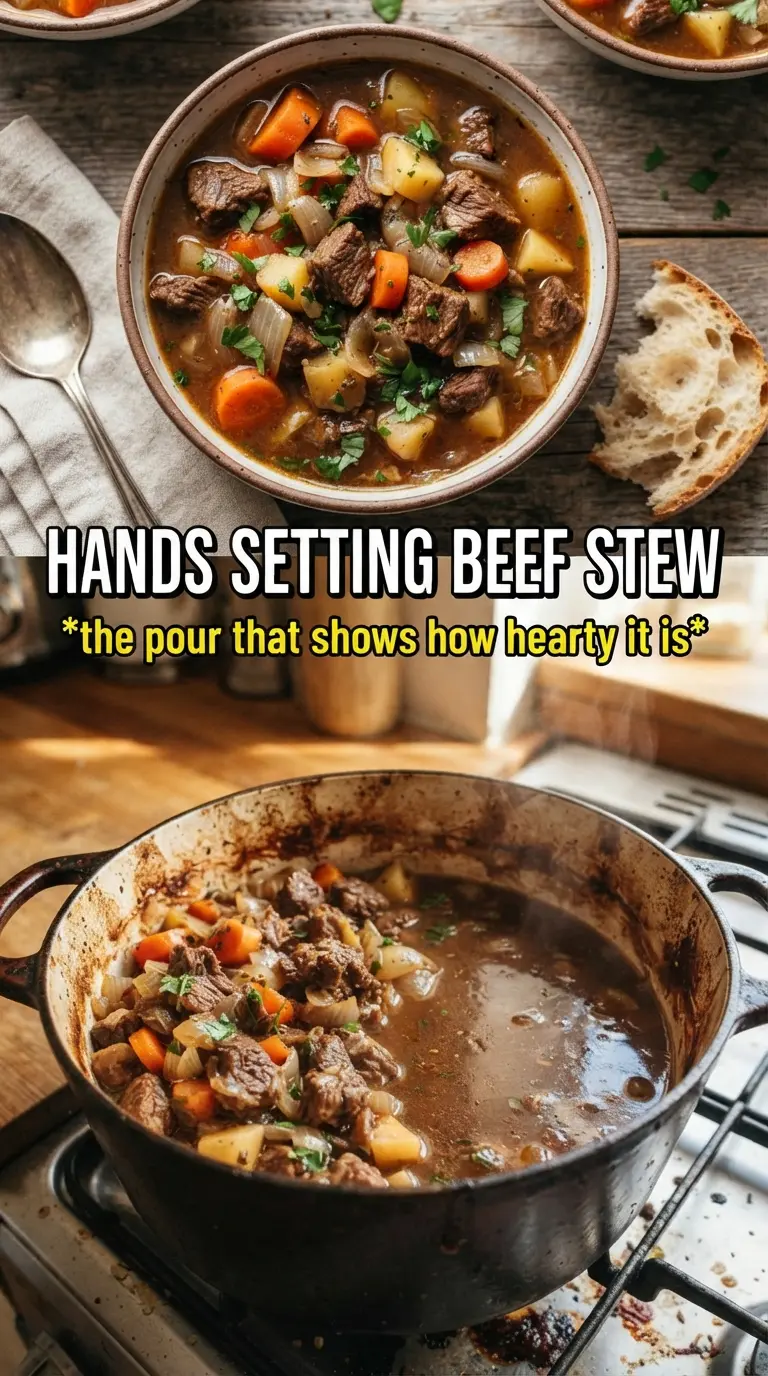
- Beef chuck — This is the cut you want for stew because it has enough fat and connective tissue to turn silky during the long simmer. Lean cuts dry out before the broth has time to do its work.
- Yukon gold potatoes — They hold their shape better than russets and give the stew a creamy texture without dissolving. If you swap them, use another waxy potato, not a starchy baking potato.
- Red wine — It adds depth and a little acidity, which keeps the stew from tasting heavy. Use something dry and drinkable; if you wouldn’t sip it, don’t cook with it.
- Tomato paste and diced tomatoes — The paste concentrates the base, while the tomatoes round out the broth and give it that deep mahogany color. Tomato paste needs the short cooking time in the pan so it loses its raw edge.
- Worcestershire — This is the quiet ingredient that makes the broth taste finished. It brings salt, tang, and a little fermented richness that’s hard to replace exactly.
- Frozen peas — They go in at the end so they stay sweet and bright. If you add them too early, they lose both color and texture.
Building the Stew in the Right Order
Brown the Beef in Batches
Heat the oil until it shimmers, then add the floured beef in a single layer. Let each side sit long enough to pick up a deep brown crust before turning it. If the pan looks crowded or starts steaming, pull some pieces out and work in more batches. That first dark layer is what gives the broth its real depth.
Cook the Vegetables Until They Start to Sweeten
Once the beef is out, add the onion, carrots, and celery to the same pot. They should soften and pick up some color from the browned bottom, not just go limp. Stir in the garlic and tomato paste for the last couple of minutes so the garlic doesn’t scorch and the paste has time to darken. That step keeps the stew from tasting raw or metallic.
Let the Liquid Work Slowly
Pour in the wine and scrape up every browned bit from the bottom of the pot. After that, add the broth, tomatoes, Worcestershire, thyme, bay leaves, and beef, then bring it all up to a boil before lowering the heat. A hard boil will tighten the beef instead of tenderizing it, so once it’s simmering, keep it at a gentle burble with the lid on.
Add the Potatoes After the Beef Starts to Tenderize
The beef needs that first long simmer on its own before the potatoes go in. If you add them too early, they’ll collapse before the meat is ready. After about 60 to 75 minutes, the beef should be close to fork-tender, then the potatoes can cook in the broth for the last 20 minutes. The stew is ready when a knife slides into the beef with almost no resistance.
Finish With the Peas and Final Seasoning
Frozen peas only need a few minutes. Stir them in near the end so they heat through and stay bright green. Pull out the bay leaves, taste the broth, and season with salt and pepper after the stew has finished reducing. If you salt too early, you can overshoot once the liquid concentrates.
How to Adjust This Beef Stew Without Losing the Point
Make It Gluten-Free
Swap the all-purpose flour for a gluten-free flour blend that’s meant for thickening, or use cornstarch mixed with cold water at the end instead. The flour on the beef helps the sear and thickens the broth slightly, so if you skip it entirely, the stew will still work, but the sauce will be thinner and the crust on the meat won’t be as defined.
Skip the Wine and Keep the Depth
Use an extra cup of beef broth and add 1 to 2 teaspoons of red wine vinegar or balsamic vinegar at the end. You’ll lose some of the rounded complexity that wine brings during the simmer, but the vinegar restores enough brightness that the stew won’t taste flat.
Make It a Bigger-Batch Freezer Meal
Double the recipe in a heavy Dutch oven, but don’t crowd the pot during the sear — brown the meat in more rounds if you need to. This stew freezes well, but if you know you’re freezing it, slightly undercook the potatoes so they don’t turn grainy after reheating.
Add Mushrooms for a Deeper, Earthier Pot
Brown sliced mushrooms after the onion mixture softens, before the liquid goes in. They add a more savory, almost roast-like note and give the stew another layer of texture, but they also release water, so let that moisture cook off before deglazing.
Storage and Reheating
- Refrigerator: Up to 4 days. The stew thickens as it chills, and the broth will look even richer the next day.
- Freezer: Freezes well for up to 3 months in airtight containers. Leave a little headspace, and thaw overnight in the fridge before reheating.
- Reheating: Warm it gently on the stove over medium-low heat with a splash of broth or water if needed. Don’t blast it on high heat, or the beef can tighten up and the potatoes can break apart.
Answers to the Questions Worth Asking
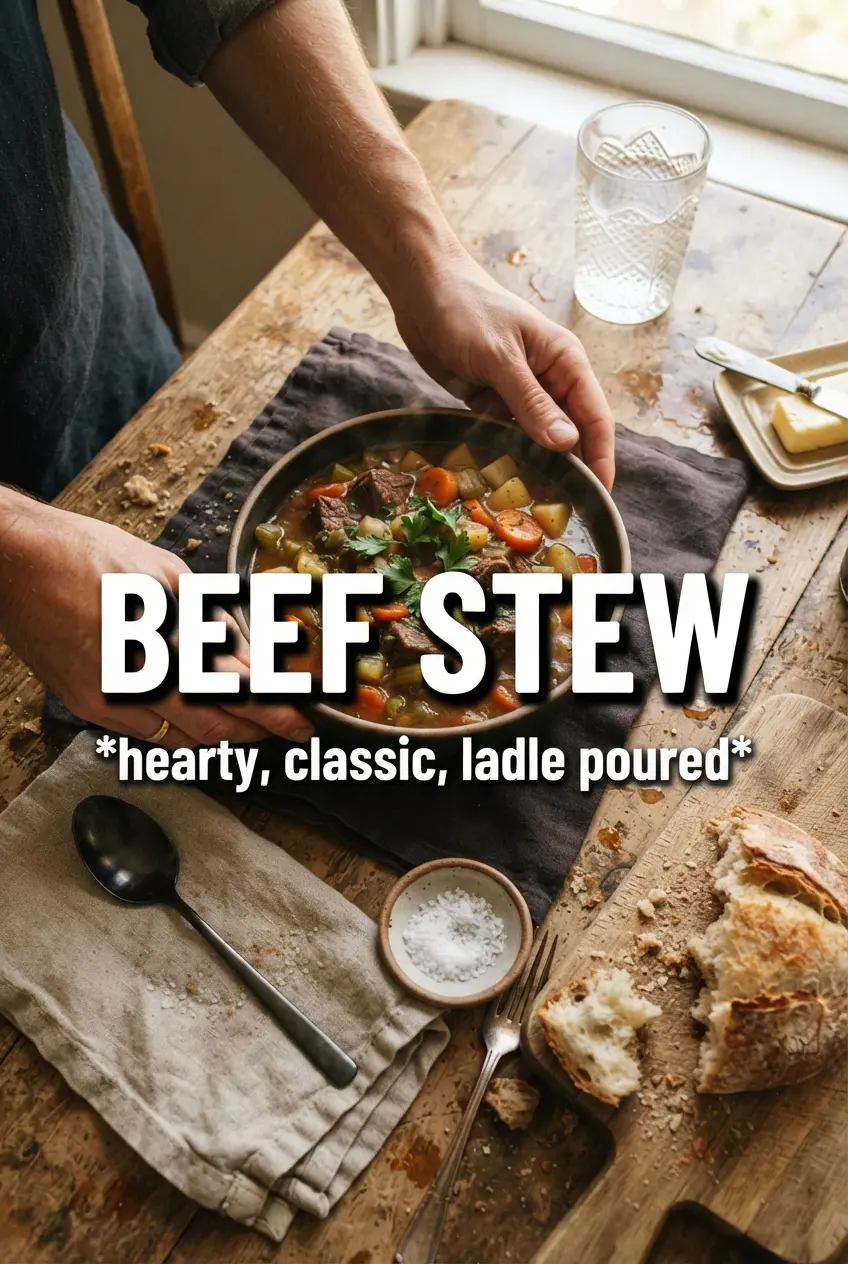
Beef Stew
Ingredients
Equipment
Method
- Season beef by tossing the cubes with flour until evenly coated. Use a hot, dry surface so the coating can brown rather than steam.
- Heat olive oil in a Dutch oven over high heat, then sear the beef in batches until deeply browned, about 3-5 minutes per batch. Remove to a plate when the edges are dark and crusty.
- Add onion, carrots, and celery to the Dutch oven and sauté for 5 minutes. Cook until the vegetables soften and begin to smell sweet.
- Add garlic and tomato paste and cook for 2 minutes. Stir until the tomato paste darkens slightly.
- Deglaze with red wine, scraping up the browned bits from the bottom of the pot. Cook for 1-2 minutes so the wine smell cooks off.
- Add beef broth, diced tomatoes, Worcestershire, dried thyme, bay leaves, and the browned beef. Stir to combine and make sure the beef is submerged as much as possible.
- Bring to a boil, then reduce heat, cover, and simmer for 60-75 minutes until the beef is very tender. Look for steady bubbling and beef that pulls apart with a fork.
- Add cubed Yukon gold potatoes and cook for 20 minutes. The broth should bubble gently and the potatoes should be tender through.
- Add frozen peas and cook for 3 minutes. They should turn bright green and heat through without getting mushy.
- Remove bay leaves, then season with salt and pepper to taste. Adjust until the broth tastes balanced and savory.