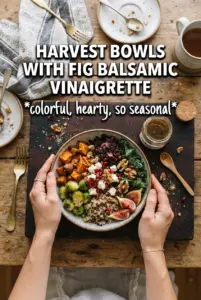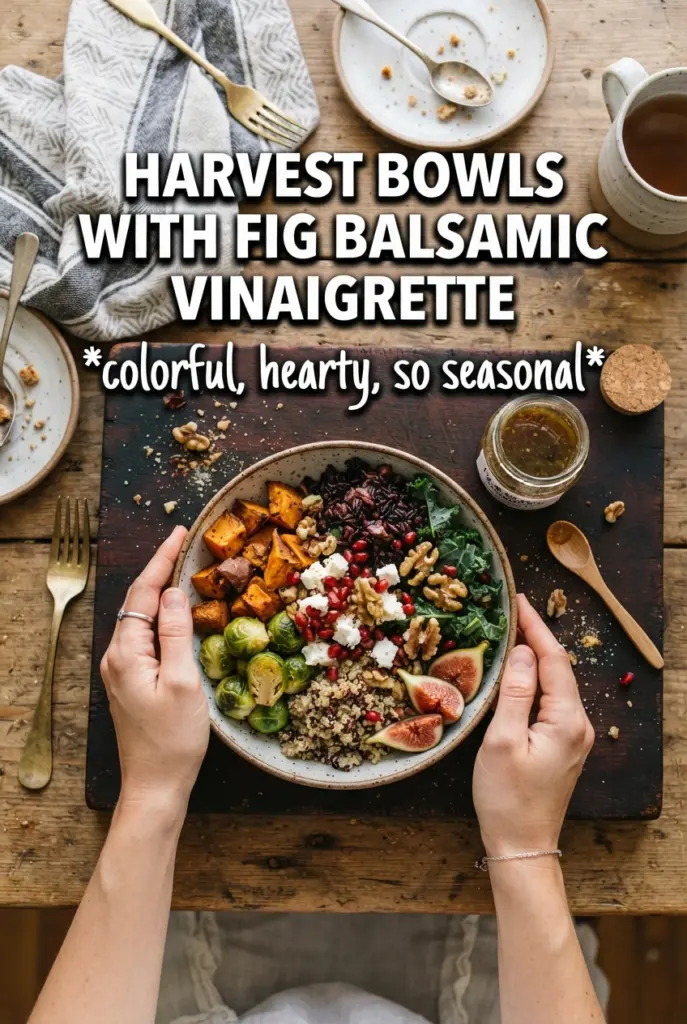
Roasted sweet potatoes, crispy chickpeas, and a glossy fig balsamic vinaigrette turn these harvest bowls into the kind of dinner that eats like a meal and still feels fresh at the end of the bite. You get warm grains, cool shaved Brussels sprouts, pops of pomegranate, and the salty creaminess of goat cheese all in one bowl. Nothing gets muddy or heavy, which is exactly why this combination works so well.
The trick is keeping the components distinct. The sweet potatoes need enough space on the pan to caramelize instead of steaming, and the chickpeas need to roast long enough to dry out and crunch. The vinaigrette leans on fig jam for body, so it coats the grains and vegetables without turning the bowl sticky or overly sweet. A little Dijon and garlic keep it sharp and balanced.
Below, I’ll walk through the parts that matter most, including the order I build the bowls and the one thing that keeps the Brussels sprouts from tasting harsh. If you like grain bowls that land somewhere between cozy and bright, this one earns its place in the rotation.
The vinaigrette coated everything without overpowering it, and the chickpeas stayed crisp even after I assembled the bowls. My husband kept going back for more of the sweet potatoes and goat cheese together.
Save these harvest bowls for the nights when you want a grain bowl that’s hearty, colorful, and finished with that sweet-tangy fig balsamic drizzle.
The Roast-and-Assemble Order That Keeps Every Bite Bright
Harvest bowls can go flat fast when everything gets mixed too early. The roasted vegetables soften the greens, the chickpeas lose their crunch, and the dressing spreads into a sweet puddle at the bottom of the bowl. The fix is simple: keep the grains warm, the vegetables roasted separately, and the Brussels sprouts raw so the bowl keeps some snap.
Roasting the sweet potatoes and chickpeas on separate pans matters more than it looks like it should. Sweet potatoes release moisture as they cook, and chickpeas need dry heat to crisp. If you pile them together, the chickpeas steam and the potatoes start to collapse before they get those caramelized edges. The bowl tastes better when each part keeps its own texture.
- Sweet potatoes — Cube them evenly so they finish at the same time and roast them until the edges are browned and the centers are tender. Larger pieces stay starchy; smaller pieces can burn before they soften.
- Chickpeas — Dry them well after draining. That step is what helps them crisp instead of turn leathery. A little oil is enough; too much and they fry-soft instead of getting crunchy.
- Shaved Brussels sprouts — Keep them raw for a clean, crunchy bite. If yours taste bitter, toss them with a spoonful of dressing first and let them sit for a few minutes before building the bowls.
What Each Ingredient Is Actually Doing in This Bowl
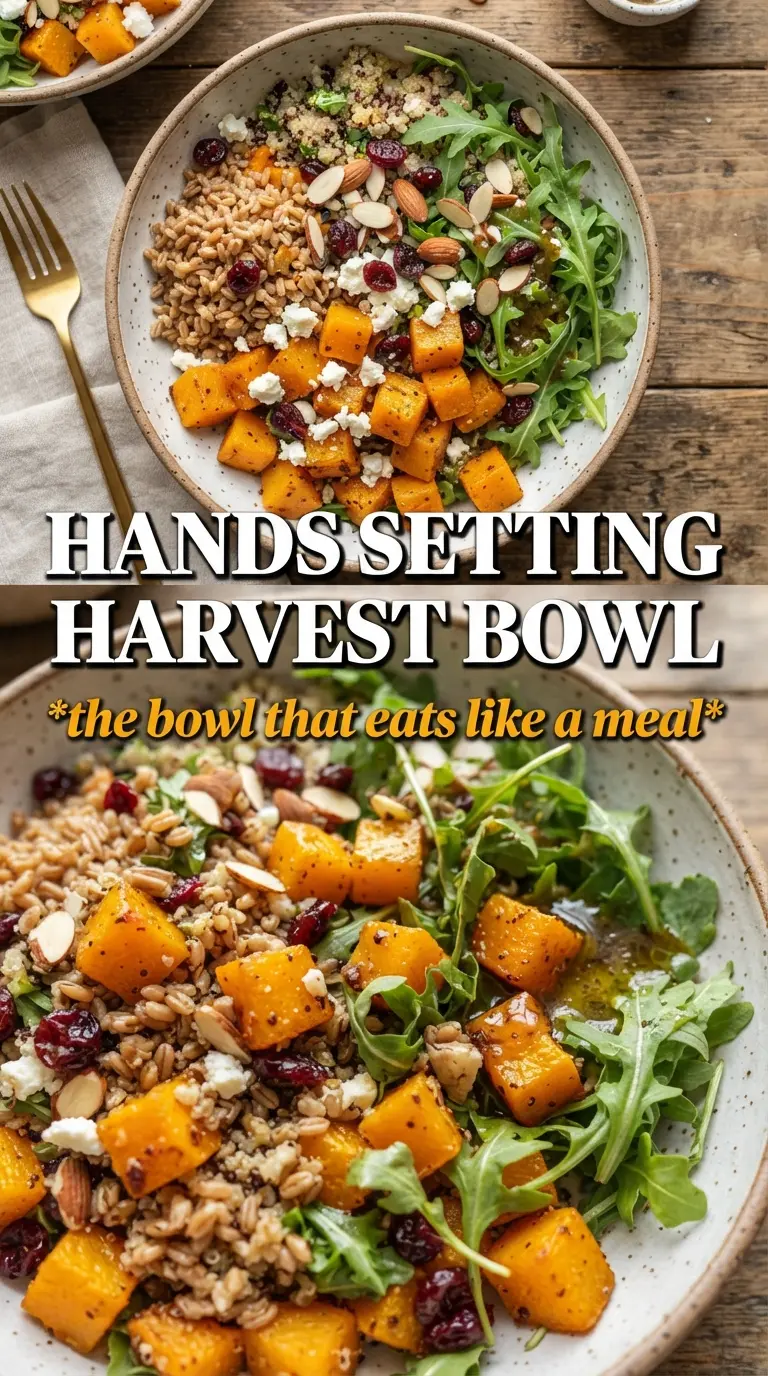
- Farro or quinoa — This is the base that holds the bowl together. Farro gives you a nutty chew, while quinoa keeps things lighter and naturally gluten-free. If you use quinoa, rinse it first so it doesn’t taste bitter.
- Fig jam — This is what gives the vinaigrette body and that soft, fruity sweetness. Regular jam works in a pinch, but fig jam has a deeper, less candy-like flavor that suits the roasted vegetables better.
- Balsamic vinegar — It cuts through the sweetness and keeps the dressing from tasting flat. Use a balsamic you actually like tasting on its own, since this recipe doesn’t cook it down.
- Dijon mustard — This pulls the dressing together and helps it emulsify so it clings instead of separating. If you skip it, the vinaigrette will still taste fine, but it won’t coat the grains as well.
- Goat cheese — The tang is what keeps the bowl from leaning too sweet. Feta works if that’s what you have, but it changes the mood of the bowl; feta is saltier and sharper, while goat cheese stays creamy.
Building the Bowl So the Crunch Stays Crunchy
Roasting the Sweet Potatoes Until the Edges Brown
Toss the sweet potato cubes with oil and roast them at 425°F until the edges turn deep gold and the centers give easily when pierced. If they go in crowded on the pan, they’ll steam and turn soft all over instead of developing those caramelized corners. Pull them when they’re tender but still hold their shape.
Turning Chickpeas Crisp Instead of Chewy
Pat the chickpeas dry before they hit the oven. That’s the difference between crisp and tough. Roast them until they sound dry when shaken on the pan and their skins look lightly blistered. If they’re still soft in the center, give them a few more minutes; they crisp as they cool.
Whisking the Fig Balsamic Until It Goes Glossy
Whisk the fig jam, balsamic vinegar, olive oil, Dijon, and garlic until the dressing looks smooth and slightly thickened. If the jam clings to the bottom of the bowl, keep whisking a little longer or warm the jam for a few seconds first. The goal is a spoonable vinaigrette that drizzles, not a sticky glaze.
Assembling in the Right Order
Start with the grains, then layer the warm roasted vegetables, sprouts, pomegranate seeds, pecans, and goat cheese. Drizzle the vinaigrette over the top instead of tossing everything together in one bowl. That keeps the sprouts crisp, the cheese visible, and the dressing from disappearing into the grains.
Three Ways to Change This Bowl Without Losing the Point
Make It Gluten-Free With Quinoa
Quinoa gives you a lighter base and keeps the bowl naturally gluten-free. It won’t have the same nutty chew as farro, but it soaks up the vinaigrette beautifully and keeps the bowl from feeling heavy.
Make It Dairy-Free Without Losing Balance
Skip the goat cheese and add avocado or a handful of extra pecans for richness. The bowl will be less tangy, so a small extra drizzle of vinaigrette helps bring the flavors back into balance.
Swap the Pecans for Toasted Pumpkin Seeds
Pumpkin seeds give you a similar crunch with a more savory edge. They’re a strong choice if you want the bowl to lean less sweet, and they hold up especially well if you’re packing leftovers for lunch.
Use Maple Mustard Dressing Instead of Fig Balsamic
If you don’t have fig jam, whisk together Dijon, maple syrup, balsamic vinegar, and olive oil for a sharper, less fruity dressing. It changes the bowl from orchard-sweet to more savory, but the structure stays the same.
Storage and Reheating
- Refrigerator: Store the components separately for up to 4 days. The Brussels sprouts soften a bit, but the grains and roasted vegetables hold up well.
- Freezer: The roasted sweet potatoes and chickpeas can be frozen, but the assembled bowl doesn’t freeze well. Leave out the sprouts, cheese, and pomegranate until serving.
- Reheating: Reheat the grains, sweet potatoes, and chickpeas in a skillet or the microwave until just warm. Don’t heat the assembled bowl after adding the sprouts and cheese or they’ll wilt and lose their texture.
Answers to the Questions Worth Asking
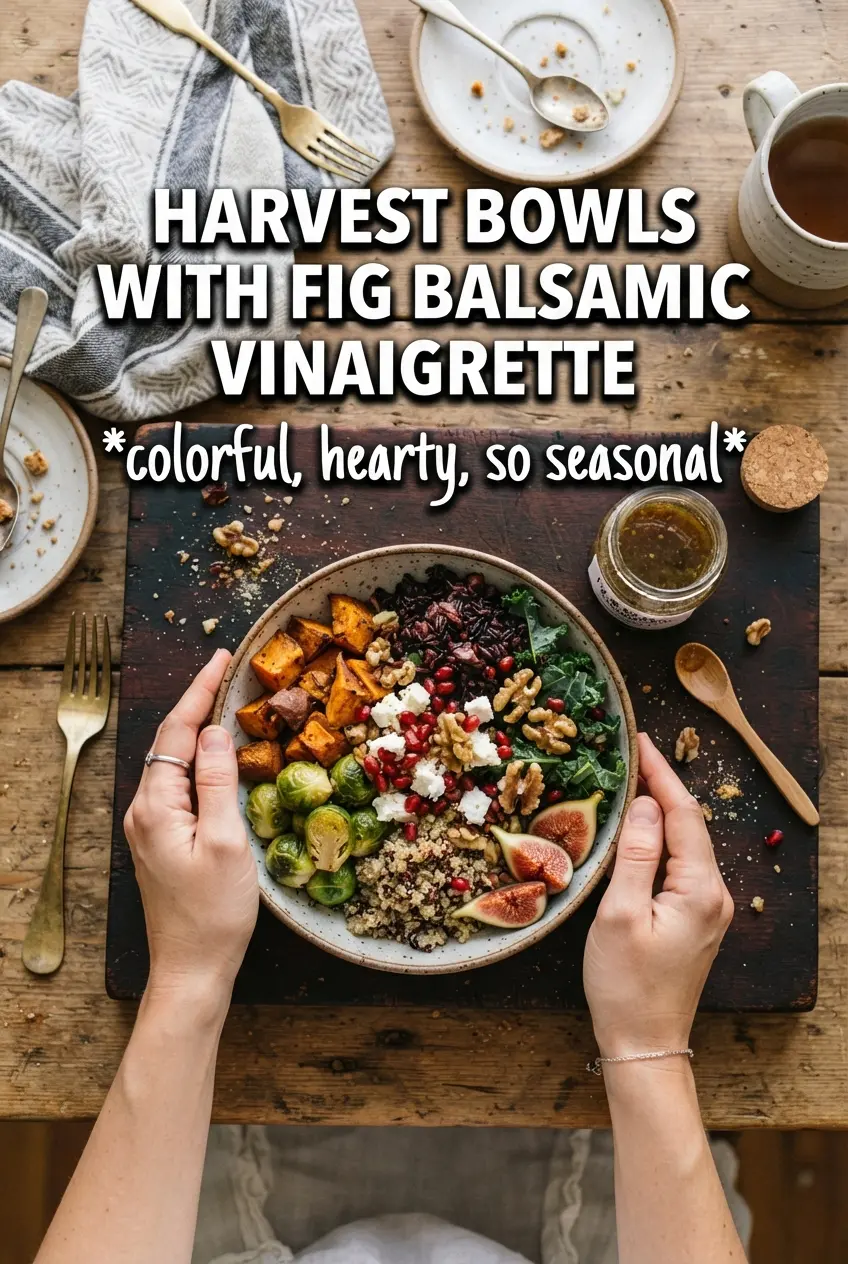
Harvest Bowls With Fig Balsamic Vinaigrette
Ingredients
Equipment
Method
- Heat the oven to 425F and line a sheet pan for easy cleanup. Roast the sweet potato cubes for 25 minutes, until browned and tender, then remove to a bowl (keep the oven on).
- Roast the drained chickpeas on the same type of sheet pan setup at 425F for 20-25 minutes, until crispy and golden. Transfer to a bowl and let cool slightly so they stay crunchy.
- Whisk fig jam, balsamic vinegar, olive oil, Dijon mustard, minced garlic, and salt and pepper together until smooth and glossy. Taste and adjust with more salt and pepper if needed.
- Add cooked farro or quinoa to bowls as the base. Top each with roasted sweet potatoes and crispy chickpeas.
- Pile on shaved Brussels sprouts, then sprinkle with pomegranate seeds and candied pecans. Crumble goat cheese over each bowl.
- Drizzle generously with the fig balsamic vinaigrette right before serving for best texture. Serve immediately while the chickpeas are still crisp.