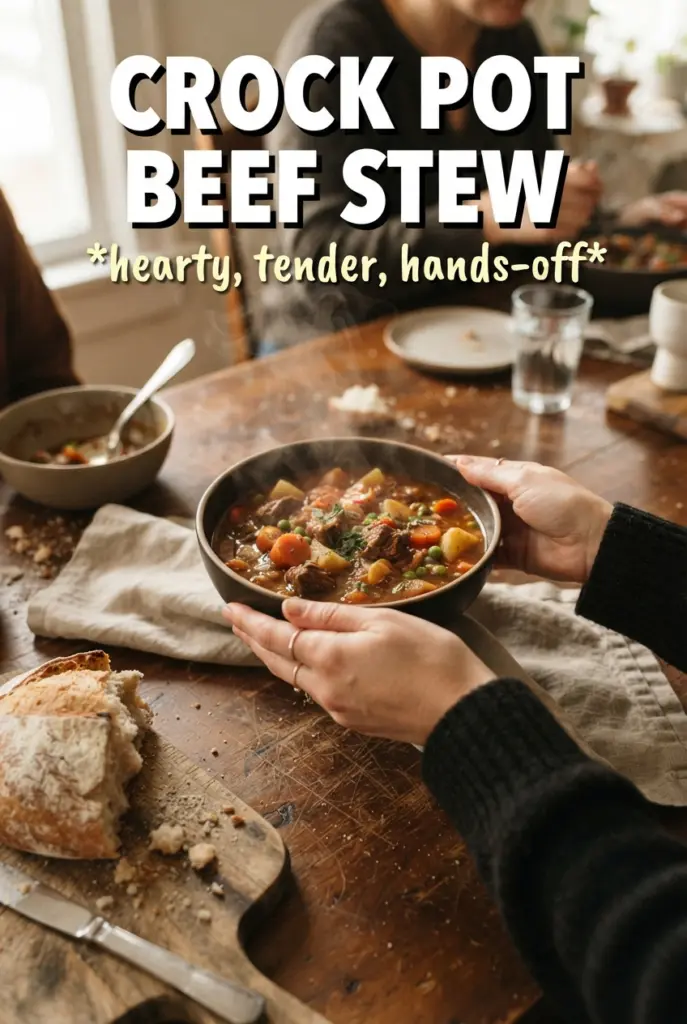
Deep, slow-cooked beef stew has a way of turning a plain pot of ingredients into something that tastes like it’s been building all day, because it has. The beef gets spoon-tender, the potatoes hold their shape without going chalky, and the broth turns dark and savory with just enough body to coat the back of a spoon. This version leans on a little red wine, tomato paste, and Worcestershire sauce to give the slow cooker stew the kind of depth that usually takes much longer on the stove.
The order matters here. The vegetables go in first so they can sit in the broth without getting battered, and the beef stays on top long enough to braise gently instead of boiling apart. The cornstarch slurry goes in at the end, after the stew has had time to fully cook, which keeps the broth glossy instead of muddy. That last step is what turns a thin slow cooker broth into something that eats like real stew.
Below, I’ve laid out the parts that matter most — which cut of beef gives you that fall-apart texture, why the wine helps even if you don’t want the stew to taste like wine, and how to thicken it without making the vegetables soft.
The beef came out fork-tender and the broth thickened up just right after the slurry went in. I liked that the potatoes stayed intact instead of turning to mush, and my husband said it tasted even better the next day.
Save this Crock Pot Beef Stew for a deep, rich broth and fall-apart beef that tastes like it simmered all day with almost no hands-on work.
The Secret to Stew That Doesn’t Taste Watery
The biggest problem with slow cooker beef stew is thin broth. A crock pot traps moisture, so if you don’t build enough flavor up front, you end up with something that tastes more boiled than braised. Tomato paste, Worcestershire sauce, and a little red wine do the heavy lifting here. They bring body and savoriness before the long cook even starts, which means the stew tastes rounded instead of flat when it’s done.
The other trap is overthinking the vegetables. Potatoes and carrots hold up well in a slow cooker, but only if they’re cut large enough to survive eight hours without collapsing. The beef also matters. Chuck roast has the marbling you want, and that fat slowly melts into the broth while the connective tissue breaks down. Leaner cuts will dry out before the stew gets where it needs to go.
What Each Ingredient Is Actually Doing in This Stew
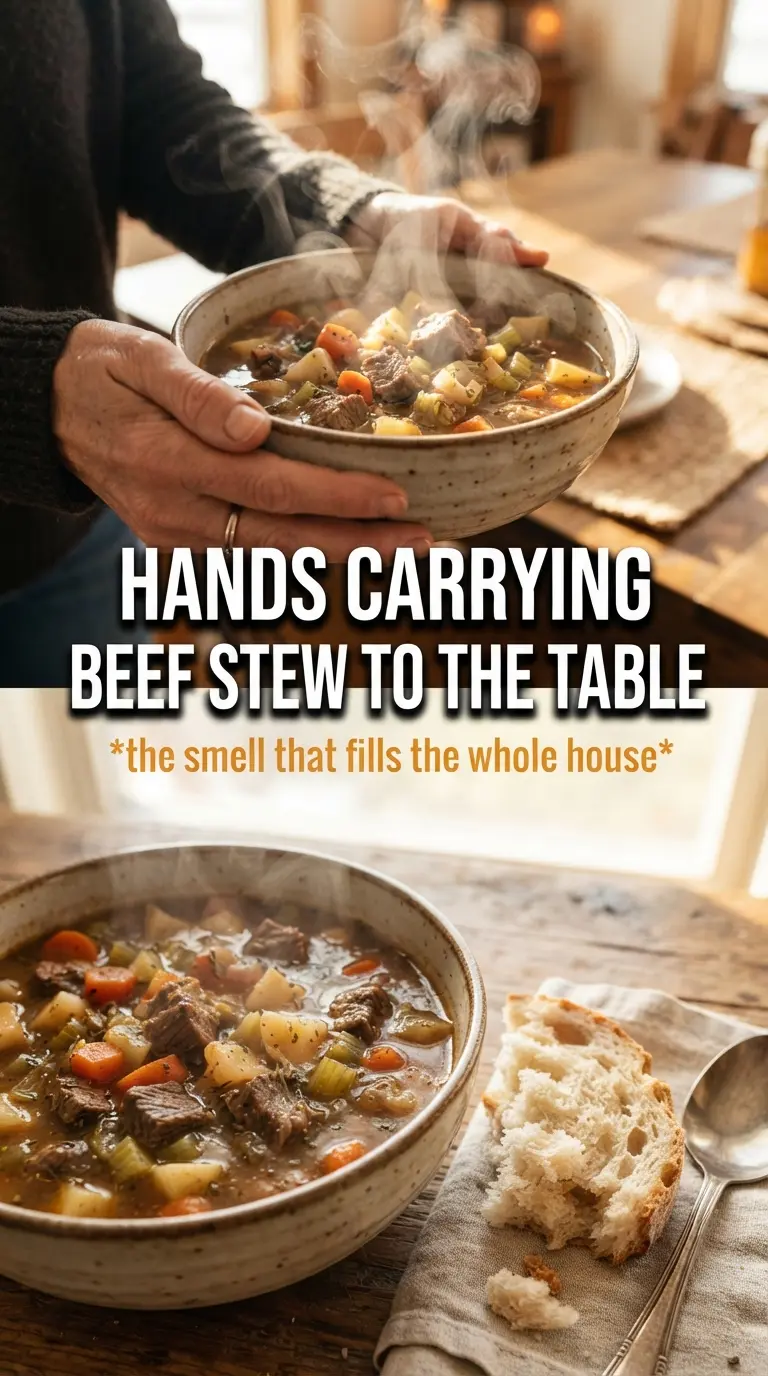
- Beef chuck — This is the cut that turns tender instead of stringy. The marbling and connective tissue break down during the long cook, which gives you that rich, spoonable texture. Trim off only the toughest exterior fat; don’t chase every bit of it.
- Baby potatoes — They hold their shape better than russets and don’t fall apart into the broth. Halving them is enough for even cooking, and leaving them too small is how you end up with broken potato pieces by the end.
- Carrots, celery, and onion — These build the base of the stew and soften into the broth without disappearing. Onion adds sweetness, celery adds a little savory edge, and carrots bring balance. If you want a deeper flavor, dice the onion fairly small so it melts in more fully.
- Red wine or extra broth — Wine adds acidity and depth, which makes the beef taste beefier. If you skip it, use more broth and add an extra teaspoon of Worcestershire sauce to keep the stew from tasting one-note.
- Tomato paste and diced tomatoes — Tomato paste gives the stew a darker, more concentrated backbone, and the diced tomatoes bring enough brightness to keep the broth from tasting heavy. Don’t leave out the paste; it’s doing more than the canned tomatoes alone can do.
Building the Stew So the Beef Stays Tender
Starting with the vegetables
Put the potatoes, carrots, celery, and onion in the bottom of the slow cooker first. They need the longest time to soften, and this keeps the beef from sitting directly on the bottom where it can overcook. The layer also helps keep the meat just above the liquid, which lets it braise instead of simmering hard.
Seasoning the beef and layering the broth
Season the beef well before it goes in. The slow cooker mutes seasoning over time, so timid salting leaves the whole pot flat. Nestle the beef over the vegetables, then add the garlic, broth, wine, tomatoes, tomato paste, Worcestershire sauce, thyme, rosemary, and bay leaves. The liquid should come up around the ingredients, not bury everything completely.
Cooking until the chuck gives up easily
Cook on Low for 8 to 10 hours until the beef breaks apart with a fork and the vegetables are tender at the center. If you cook it on High, the stew still works, but the beef won’t have quite the same silky texture. Don’t lift the lid unless you need to; every peek dumps heat and stretches the timing.
Thickening without turning the stew cloudy
Take out the bay leaves before you stir in the cornstarch slurry. Add it after the stew has finished cooking, then leave the lid on and cook on High for 20 to 30 minutes. The broth will go from loose to glossy, and that short finish keeps the thickening clean. If you add the slurry too early, the starch can break down over the long cook and lose its power.
Three Ways to Make This Crock Pot Beef Stew Fit Your Kitchen
No-Wine Version
Use extra beef broth in place of the wine, then add a little more Worcestershire sauce for depth. You’ll lose the slight acidity wine brings, but the stew will still taste rich and balanced if the broth is well seasoned.
Gluten-Free Version
This stew is naturally close to gluten-free, but check your Worcestershire sauce and broth labels because those are the ingredients most likely to hide gluten. The cornstarch slurry is already a good thickener for gluten-free cooking and gives the broth a smooth finish.
Thicker, Gravy-Like Stew
Use 4 tablespoons cornstarch mixed with 4 tablespoons water if you want a heavier spoon-coating texture. Add it in two smaller additions if needed; that’s safer than dumping in all at once, which can make the stew pasty instead of rich.
Storage and Reheating
- Refrigerator: Store in an airtight container for up to 4 days. The broth thickens as it chills, so it may look denser the next day.
- Freezer: Freezes well for up to 3 months. Cool it completely first, then portion it into freezer-safe containers and leave a little space for expansion.
- Reheating: Reheat gently on the stove over medium-low or in the microwave in short bursts, stirring between intervals. Add a splash of broth or water if the stew has tightened up too much, since chilled cornstarch can make it seem thicker than it really is.
Answers to the Questions Worth Asking
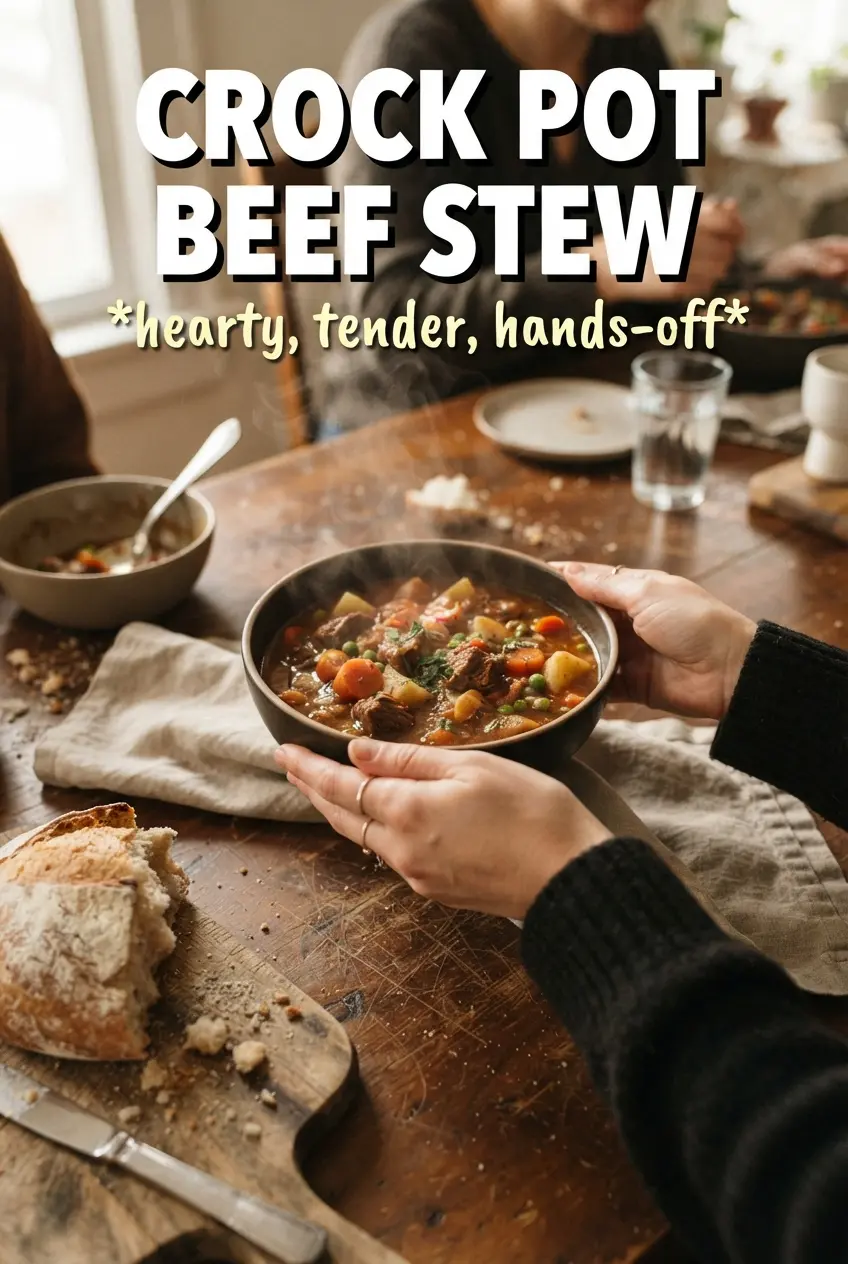
Crock Pot Beef Stew
Ingredients
Equipment
Method
- Season the beef chuck generously with salt and black pepper, making sure the cubes are well coated. The meat should look evenly speckled before it goes into the cooker.
- Add the baby potatoes, carrots, celery, and onion to the bottom of the slow cooker. Spread them into an even layer so they cook through.
- Nestle the seasoned beef on top of the vegetables. Arrange it in a single-ish layer for more even contact with the broth.
- Add the garlic, beef broth, red wine, diced tomatoes, tomato paste, Worcestershire sauce, dried thyme, dried rosemary, and bay leaves. Stir gently just to combine, keeping the top mostly covered.
- Cook on Low for 8-10 hours until the beef is fall-apart tender. You should see the beef easily give way when pressed with a spoon.
- Remove the bay leaves and discard them. The stew should be free of visible bay leaf pieces before thickening.
- Stir the cornstarch slurry into the stew. The mixture will look cloudy at first, then start to thicken as it heats.
- Cook on High for 20-30 minutes until the broth thickens. The surface should look glossy and the stew should coat a spoon.
- Season with additional salt and black pepper to taste. Adjust until the flavor pops and the broth tastes balanced.