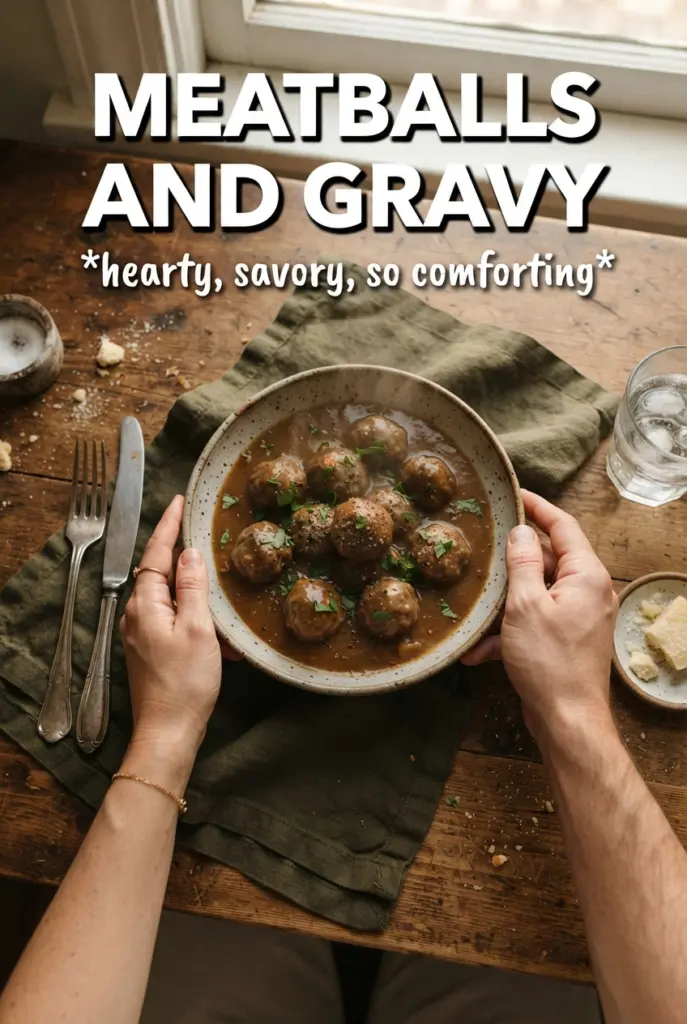
Tender meatballs tucked into a rich brown onion gravy are the kind of dinner that disappears fast, especially when they’re spooned over mashed potatoes. The meatballs stay soft instead of dense, and the gravy picks up all the browned bits from the skillet, which gives it a deep, savory flavor that tastes like it took much longer than it did.
What makes this version work is the balance: enough breadcrumbs and egg to keep the meatballs light, but not so much that they turn bready, and enough time on the onions to build a gravy with real depth. A little Worcestershire and Dijon do a lot of quiet work here. They don’t make the gravy taste like either one; they just sharpen the beefiness and keep the sauce from tasting flat.
Below, I’ll walk you through the exact point where the meatballs should come off the heat, how to keep the gravy smooth, and the one small adjustment that helps if you want to make this ahead.
The gravy thickened up beautifully and the meatballs stayed tender even after simmering. I served it over mashed potatoes and my husband went back for seconds before I even sat down.
Love these tender meatballs and rich onion gravy? Save this for the night you want a cozy skillet dinner that tastes like comfort food from scratch.
Why the Meatballs Stay Tender Instead of Turning Dense
The biggest mistake with meatballs is overworking the mixture. Once the ground beef is combined with the egg, breadcrumbs, and Parmesan, stop mixing as soon as everything looks evenly distributed. If you knead it like bread dough, the meatballs tighten up and turn springy instead of soft.
Size matters too. These are rolled to about 1.5 inches, which gives them enough surface area to brown well without drying out before the center cooks through. Browning first is worth the extra pan time because it builds flavor on the outside and leaves browned bits behind for the gravy.
The other thing that helps is letting the meatballs finish cooking in the sauce instead of trying to fully cook them in the skillet. The gravy keeps them moist, and the simmer gives the center time to reach doneness without overcooking the edges.
What Each Ingredient Is Actually Doing in This Dish

- Ground beef — Use 80/20 if you can. It gives the meatballs enough fat to stay juicy and also leaves a little richness in the pan for the gravy. Leaner beef works, but the texture will be a bit firmer and the flavor less full.
- Breadcrumbs and egg — This pair holds the meatballs together without making them heavy. If you need a substitute, crushed saltines or panko both work; just keep the amount close to the original so the mixture doesn’t fall apart.
- Parmesan — The cheese adds saltiness and a little savory depth. Freshly grated is best because it melts into the meat mixture more cleanly, but the finely grated shelf-stable kind is fine here too.
- Worcestershire sauce — It’s doing quiet background work in both the meatballs and the gravy. That tiny hit of tang and umami makes the beef taste beefier, and there isn’t a swap that gives the same result quite as well.
- Onion — Thin slices are the right move because they soften, sweeten, and practically melt into the gravy. If you rush this part, the gravy tastes harsh instead of round and savory.
- Beef broth — This is the backbone of the gravy, so use one you like the taste of. If your broth is salty, hold back on the added salt until the end.
- Dijon mustard — You won’t taste mustard specifically. It sharpens the gravy and keeps the sauce from tasting heavy.
The Browning and Gravy Stage That Makes the Whole Dish Work
Mix the Meatballs Gently
Combine the beef, breadcrumbs, Parmesan, egg, garlic, onion powder, Worcestershire, salt, and pepper just until the mixture looks even. It should hold together when pressed, but it shouldn’t look mashed or pasty. If the mixture feels sticky, wet your hands lightly before rolling. That keeps the meatballs smooth and prevents you from packing in too much pressure.
Brown Before You Simmer
Set the meatballs in a hot skillet and let them develop a deep golden crust before turning them. Don’t move them too early or they’ll tear and stick. They don’t need to cook through at this stage; you’re building flavor and structure. Remove them once they’ve browned on several sides and set them aside while you make the gravy.
Cook the Onions Until They Change Color
Melt the butter and give the onions time to soften and turn deeply golden. This is where the gravy gets its sweetness, and it’s worth the full 10 minutes. If the heat is too high, the onions will scorch at the edges before they soften, and the gravy will taste sharp instead of mellow.
Build the Gravy Slowly
Whisk the flour into the onions and butter, then cook it for about a minute so the raw flour taste disappears. Add the broth gradually while whisking, especially at the start, because that is what keeps the sauce smooth. Once it thickens, stir in the Worcestershire and Dijon, then bring the sauce to a gentle simmer rather than a hard boil.
Finish the Meatballs in the Sauce
Return the meatballs to the skillet and let them simmer in the gravy for about 15 minutes. The sauce should bubble lazily around the edges, not boil hard. That slow simmer finishes cooking the centers and keeps the meatballs tender. Spoon them over mashed potatoes once the gravy coats the back of a spoon and the meatballs feel firm but still springy when pressed.
Three Ways to Make This Meatballs and Gravy Recipe Work for Your Table
Make it gluten-free without losing the texture
Swap the breadcrumbs for gluten-free breadcrumbs or finely crushed gluten-free crackers, and use a gluten-free flour blend in the gravy. The meatballs will still hold together, and the gravy will thicken the same way as long as the flour blend contains a starch that behaves like wheat flour.
Use ground turkey for a lighter version
Ground turkey works, but it needs the fat and seasoning help that beef already brings. Add a little extra Worcestershire and don’t skip the browning step, because turkey can taste flat if it only simmers in the gravy. The result will be lighter, but still cozy and satisfying.
Stretch it for a bigger crowd
You can double the recipe without changing the method, but brown the meatballs in batches so the pan doesn’t crowd. If they steam instead of sear, the gravy loses the browned flavor that makes it taste like more than just broth and flour. Use a larger skillet or a Dutch oven so the sauce has enough room to simmer evenly.
Storage and Reheating
- Refrigerator: Store the meatballs and gravy in an airtight container for up to 4 days. The gravy thickens as it chills, so it may look tighter the next day.
- Freezer: This freezes well. Cool completely, then freeze the meatballs and gravy together in a freezer-safe container for up to 3 months.
- Reheating: Warm gently on the stove over low heat with a splash of broth or water to loosen the gravy. High heat can make the meatballs tough and can cause the sauce to break or scorch on the bottom.
Answers to the Questions Worth Asking
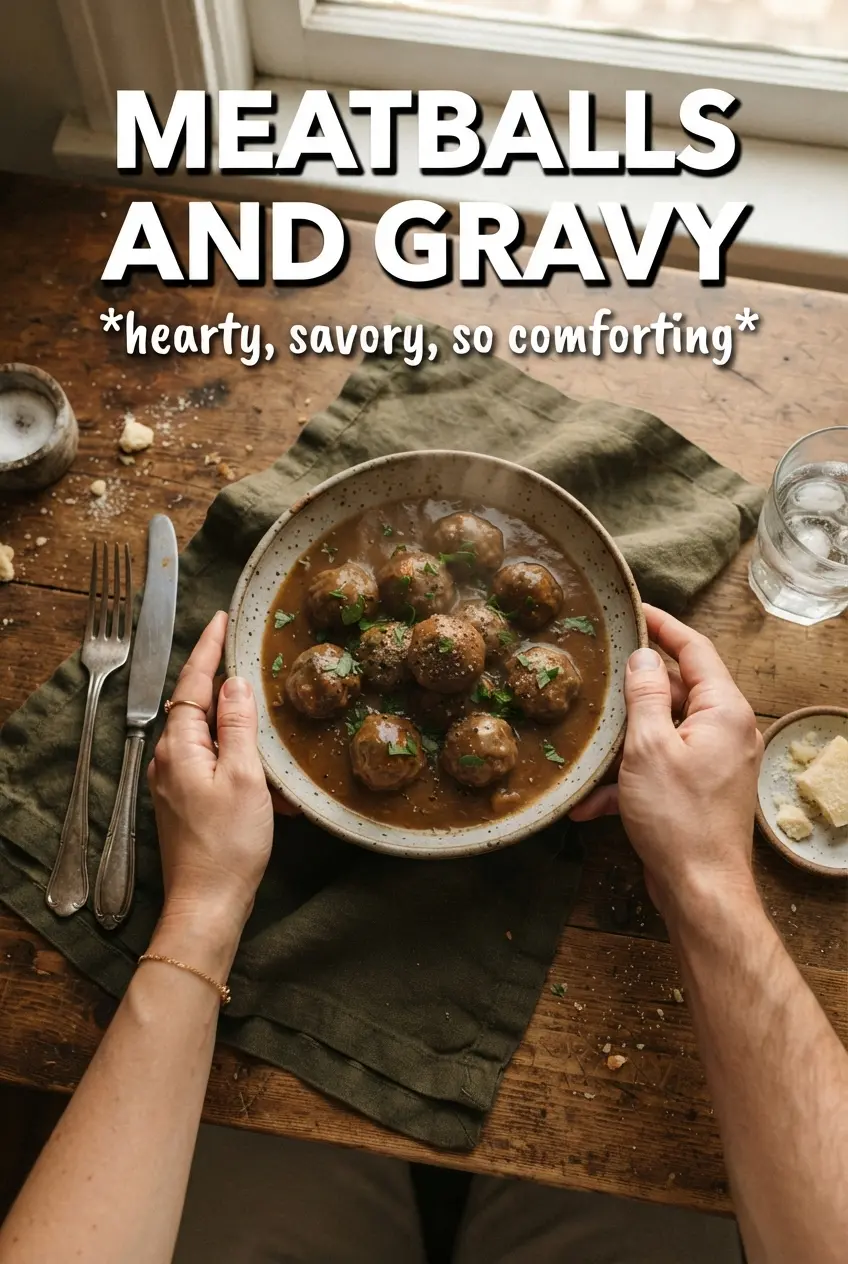
Meatballs And Gravy
Ingredients
Equipment
Method
- In a large bowl, mix ground beef, breadcrumbs, parmesan, egg, minced garlic, onion powder, Worcestershire sauce, salt, and pepper until just combined. Avoid overmixing so the meatballs stay tender.
- Roll the mixture into 1.5-inch balls and keep them uniform in size for even cooking. Place on a plate while you brown the batch.
- Heat a large skillet over medium-high heat and brown the meatballs until golden on the outside, then remove and set aside. The skillet should be hot enough to sear quickly.
- Melt butter in the same skillet and caramelize the thinly sliced onion for 10 minutes. Stir occasionally so the onion turns deep golden-brown.
- Whisk in flour and cook for 1 minute to remove the raw flour taste. Keep stirring until the mixture looks smooth and lightly foamy.
- Gradually add beef broth, Worcestershire sauce, and Dijon mustard while whisking. Bring to a simmer and cook until thickened.
- Return the browned meatballs to the gravy and simmer for 15 minutes until cooked through. Stir gently so the meatballs stay intact.
- Spoon gravy and meatballs over mashed potatoes. Garnish with fresh parsley to finish.