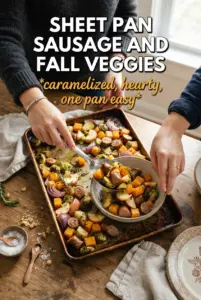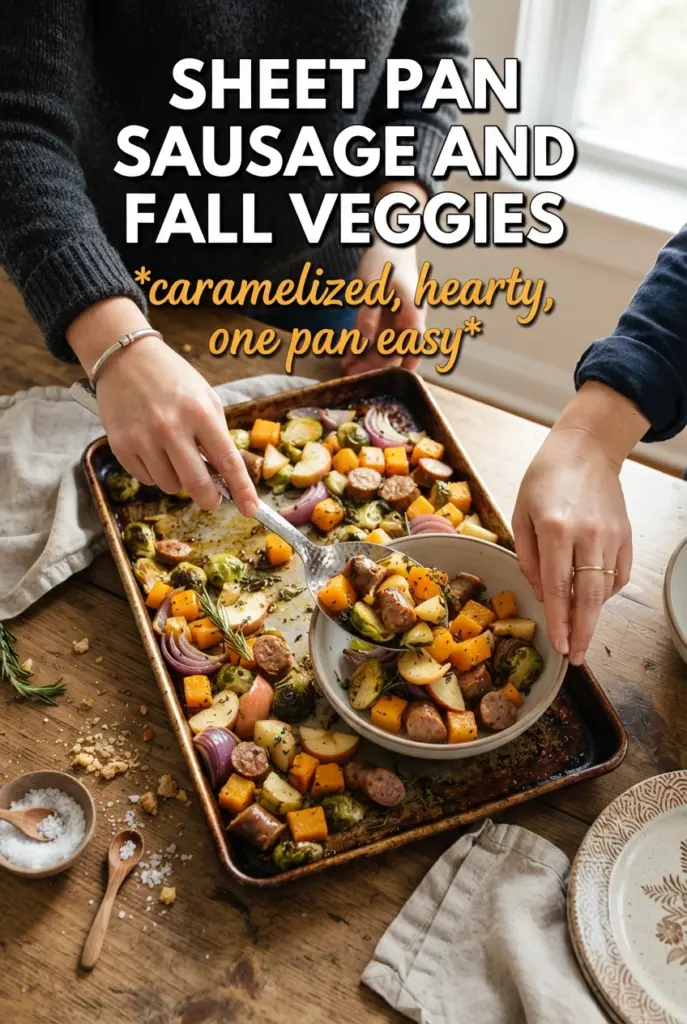
Caramelized sausage, tender cubes of butternut squash, and Brussels sprouts with crisped edges are exactly what a good sheet pan dinner should deliver. This one lands in that sweet spot where the vegetables roast into something deeply savory and the sausage gives you browned, juicy bites in the same pan. The apple and red onion keep it from feeling heavy, and the balsamic-maple glaze pulls everything into one glossy, tossable finish.
What makes this version work is the balance of sizes and timing. The squash is cut small enough to cook through in the same window as the sausage and Brussels sprouts, and the glaze goes on before roasting so it can cling and reduce instead of pooling on the pan. I also like the Dijon here because it sharpens the sweetness without turning the dish into something sugary. Rosemary and Italian seasoning give the whole pan a warm, savory backbone that holds up to the sausage.
Below, I’ve included the small things that matter most: how to keep the vegetables roasting instead of steaming, what to swap if you don’t have one of the produce items on hand, and how to reheat leftovers so the sausage stays good and the vegetables don’t go limp.
The glaze coated everything without making the pan watery, and the squash came out tender with those browned edges I was hoping for. My husband kept picking out the sausage rounds straight from the tray.
Love this sheet pan sausage and fall veggies dinner? Save it to Pinterest for an easy roasted meal with caramelized edges and a balsamic-maple finish.
The Trick to Roasting Everything in the Same Time Window
The biggest mistake with sheet pan dinners is crowding the pan or cutting the vegetables in uneven sizes. When that happens, the vegetables steam before they brown, and the sausage sits there without ever getting those crisp, caramelized edges you want. This recipe avoids that by using a hot oven, a large rimmed sheet pan, and pieces that can finish together.
The glaze helps, but it won’t rescue an overloaded pan. Spread everything into a single layer so the heat can move around each piece. If your pan looks packed, split it between two pans. That one change does more for texture than any extra seasoning ever will.
- Butternut squash — Cut it into small, even cubes so it softens by the time the sausage is cooked through. Larger pieces will lag behind and leave you with a mix of underdone squash and overbrowned sausage.
- Brussels sprouts — Halving them gives you cut sides that can caramelize against the pan. If you leave them too large, they tend to stay firm in the center.
- Italian sausage links — Slice them into rounds before roasting so the edges brown quickly. Chicken sausage works too, but it won’t render as much fat, so the pan will taste a little leaner.
- Apple and red onion — These bring sweetness and a little sharpness. The apple softens into the glaze, while the onion turns jammy and helps round out the savory parts of the dish.
- Balsamic, maple syrup, and Dijon — This is the finish that makes the pan taste cohesive. The balsamic adds acidity, the maple gives browning and depth, and the Dijon keeps the sweetness from taking over.
How to Build the Glaze So It Clings Instead of Pooling
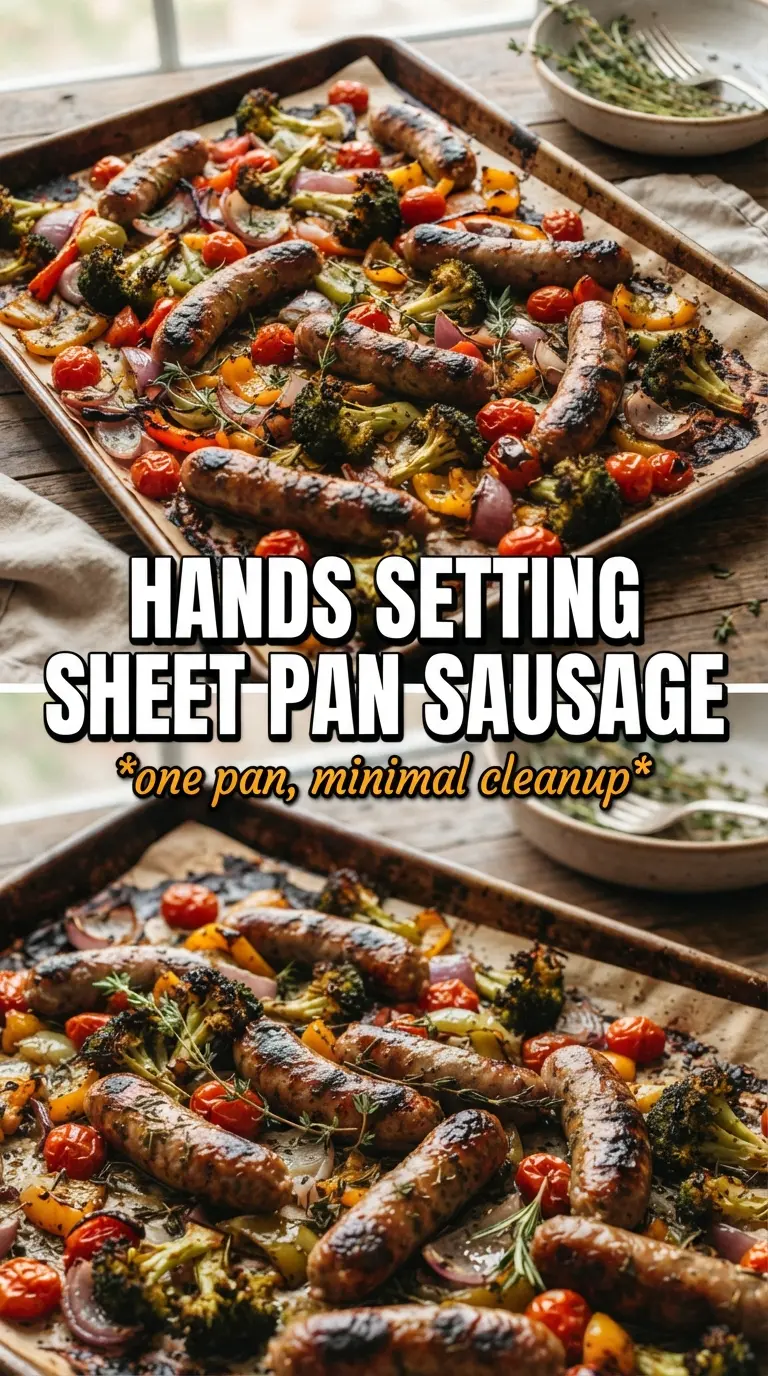
Whisk the glaze together before it touches the pan, and toss it through the ingredients just enough to coat. If you pour it in and leave it there, the sugar in the maple syrup can settle and burn in one spot while the vegetables underneath stay dry. A thin, even coating is what gives you glossy edges instead of sticky patches.
Prepping the Pan
Line the sheet pan with parchment so the balsamic and maple don’t weld themselves to the metal. Then spread the sausage and vegetables out with a little breathing room between pieces. If the pan is crowded, the vegetables release moisture and start braising instead of roasting, which is the fastest way to lose browning.
Coating Everything Evenly
Drizzle the glaze over the tray and toss until every piece has a light coating. The sausage should look glossy, not wet, and the vegetables should pick up the seasoning without sitting in a puddle. Too much liquid at the bottom means you added the glaze before the ingredients were spread out well enough.
Roasting to the Right Finish
Roast at 425°F, stirring once halfway through so the cut sides rotate onto the pan. You’re looking for browned edges on the Brussels sprouts, squash that yields easily with a fork, and sausage that’s fully cooked through. If the vegetables are tender but pale, give the tray two to three minutes under the broiler and watch it closely, because the glaze can go from caramelized to bitter fast.
Make It Dairy-Free and Naturally Gluten-Free
This recipe already lands in a good place for both of those diets as long as your sausage is labeled gluten-free. The glaze doesn’t rely on butter or cream, so you don’t lose any structure by leaving dairy out. Just check the sausage seasoning, since some brands use fillers that contain gluten.
Swap the Sausage for Chicken Sausage
Chicken sausage gives you a lighter dish with the same ease of slicing and roasting. It won’t brown quite as deeply as pork sausage, so don’t expect the same amount of rendered fat on the pan. The flavor stays strong if the sausage is well seasoned.
Use Sweet Potatoes Instead of Butternut Squash
Sweet potatoes hold up well here and give the tray a deeper sweetness. Cut them into small cubes so they roast in the same timeframe as the Brussels sprouts. If they’re cut too large, they’ll still be firm when the sausage is already done.
Storage and Reheating
- Refrigerator: Store in an airtight container for up to 4 days. The vegetables soften a bit, but the flavor holds up well.
- Freezer: It freezes, though the vegetables lose some of their texture after thawing. Freeze in portions for up to 2 months if you don’t mind softer squash and sprouts later.
- Reheating: Reheat on a sheet pan in a 400°F oven until hot, about 10 to 12 minutes. The microwave works in a pinch, but it makes the vegetables limp and mutes the browning you worked for.
Questions I Get Asked About This Recipe
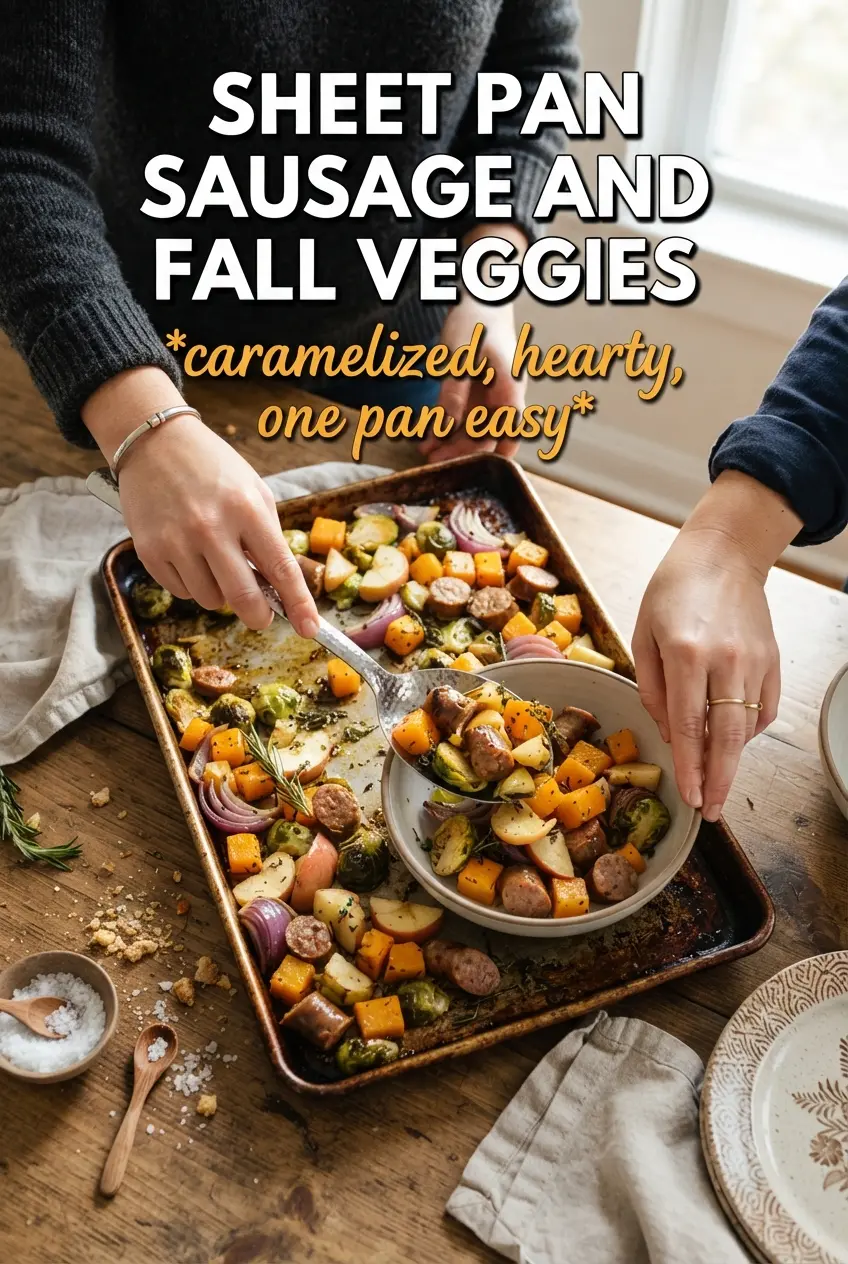
Sheet Pan Sausage And Fall Veggies
Ingredients
Equipment
Method
- Preheat the oven to 425F, and line a large rimmed baking sheet with parchment so the vegetables roast evenly without sticking.
- Whisk olive oil, balsamic vinegar, maple syrup, Dijon mustard, garlic, rosemary, Italian seasoning, salt, and pepper until smooth and cohesive, with the glaze looking glossy.
- Arrange sausage, butternut squash, Brussels sprouts, red onion, bell peppers, and apple in an even layer on the sheet pan for consistent caramelization.
- Drizzle the glaze over everything and toss just until coated, making sure the sausage rounds and vegetables have visible glaze clinging to their surfaces.
- Roast at 425F for 30-35 minutes, stirring once halfway, until vegetables are caramelized and sausage is cooked through.
- Broil for 2-3 minutes to deepen browning, watching closely until edges look caramelized and slightly crisp.