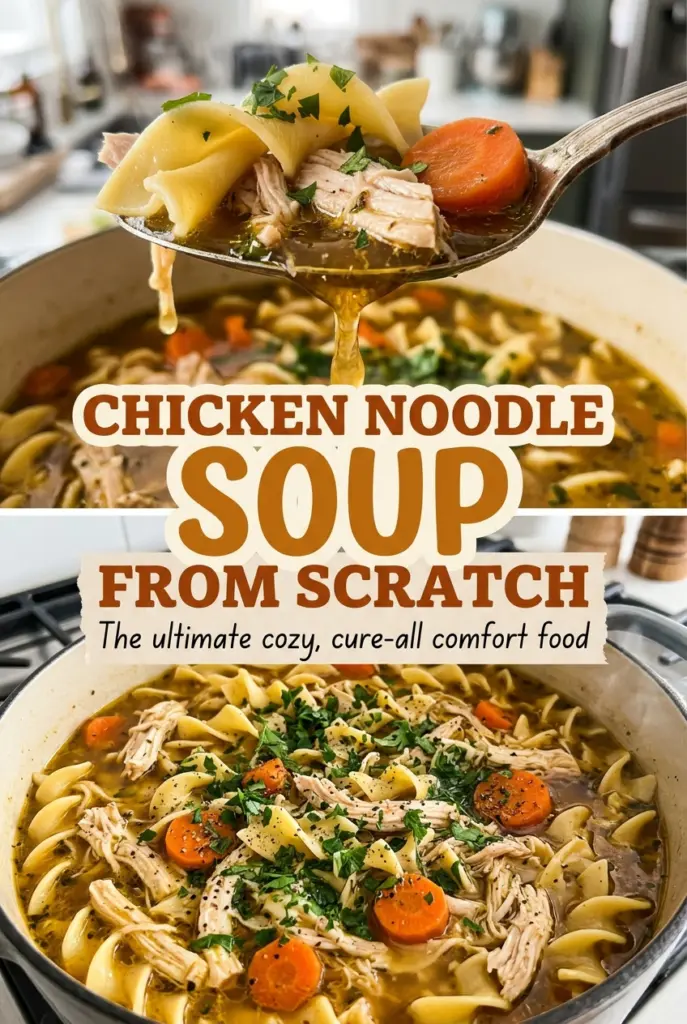
Homemade chicken noodle soup has a depth that canned broth just can’t touch. The broth turns warm and golden from the chicken, onion, herbs, and peppercorns, then the noodles soak up all that flavor instead of floating in something thin and salty. It tastes clean, rich, and comforting in a way that only happens when you start with the whole bird.
The trick is patience at the beginning. Cold water pulls more flavor out of the chicken as it heats, and a gentle simmer keeps the broth clear instead of cloudy and harsh. The vegetables in the broth do their job early, then get discarded so the finished soup tastes focused, not muddled. Fresh carrots, celery, and onion go in later for texture, and the noodles cook right in the pot so they pick up the broth instead of tasting separately boiled.
Below, you’ll find the small timing details that keep the broth clean, the noodles tender, and the chicken juicy instead of stringy. There’s also a smart way to handle leftovers so the noodles don’t turn the soup into a starchy mess by the next day.
The broth turned out so clear and full of flavor, and the noodles held their shape instead of going mushy. I loved that the chicken stayed tender after shredding, and the soup tasted even better the next day.
Save this chicken noodle soup from scratch for the kind of broth-rich soup that starts with a whole chicken and finishes with tender noodles and fresh herbs.
The Broth Is the Recipe Here, So Don’t Rush the First Simmer
A good chicken noodle soup stands or falls on the broth. If the pot comes up too fast and boils hard for the entire cook, the broth turns cloudy and the chicken can go stringy before it has had time to give up its flavor. The goal is a steady, gentle simmer after the first boil, with just a few lazy bubbles breaking the surface.
That slower heat does two jobs at once. It keeps the broth clean enough to taste bright instead of muddy, and it lets the meat from the whole chicken stay tender enough to shred in long pieces instead of falling apart into dry little bits. Skimming the foam early matters here because that is where a lot of the off-flavors and cloudiness start.
If your soup has ever tasted flat even after a long cook, the problem was probably heat management, not the ingredients. This method gives the broth time to deepen without beating it into submission.
What Each Ingredient Is Actually Doing in This Soup
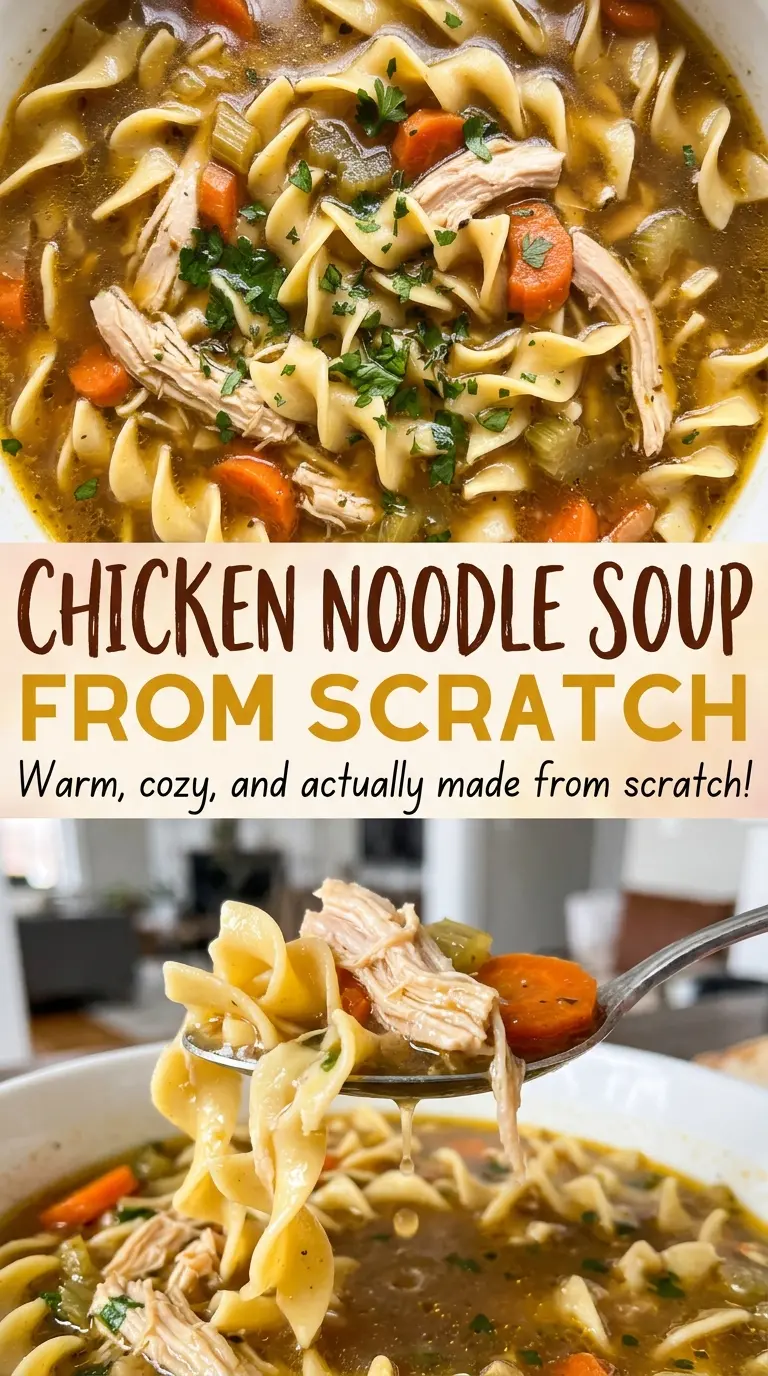
- Whole chicken — This is where the broth gets its body and the chicken flavor that chopped breasts alone can’t give you. A whole bird gives you meat for the finished soup and enough bones, skin, and connective tissue to make the broth taste rounded and rich.
- Carrots, celery, onion, and garlic for the broth — These are there to season the liquid from the inside out, not to be eaten at the end. Their job is to perfume the stock while it cooks, then get strained away once they’ve given up their flavor.
- Bay leaves, peppercorns, thyme, and parsley stems — This is the backbone of the broth. Parsley stems are worth using here because they carry a cleaner herbal note than the leaves, and the peppercorns add warmth without making the soup spicy.
- Wide egg noodles — These hold up better than thin noodles and give the soup that classic, spoon-coating feel. Add them near the end so they stay tender instead of bloated and soft.
- Fresh parsley — Stir it in at the end, not earlier. It wakes up the whole pot and keeps the finished soup tasting fresh instead of cooked-down.
The Order That Keeps the Broth Clear and the Noodles Tender
Building the Stock Slowly
Put the whole chicken and broth ingredients in a very large pot, then cover them with cold water before turning on the heat. That slow climb gives the chicken time to release flavor evenly. Once the pot reaches a boil, skim off the foam, then drop it to a gentle simmer. If the surface is raging, the broth will turn murky and the meat will toughen before the flavor has had time to develop.
Straining the Pot Before the Finish
When the chicken is tender, remove it and strain the broth. Discard the cooked vegetables; they’ve already done their job and don’t have much to give the finished soup except mush. Taste the broth before you season it. It should already taste like chicken soup at this point, and salt only needs to sharpen what’s there, not rescue it.
Cooking the Vegetables and Noodles at the End
Bring the strained broth back to a simmer, then add the fresh carrots, celery, and onion. Let them cook until they’re just tender before adding the egg noodles. If the noodles go in too early, they’ll drink too much broth and the soup gets cloudy and starchy. Add the shredded chicken and parsley in the last few minutes so the meat warms through without drying out.
Finishing With the Right Texture
Taste again right before serving and adjust the salt and pepper. The broth should be bold, the noodles soft but still structured, and the vegetables tender with a little bite left in the center. If it tastes thin, it usually needs a touch more salt rather than more simmer time. Overcooking at this stage only dulls the fresh flavor you worked for.
Three Practical Ways to Adapt This Chicken Noodle Soup
Gluten-Free Version With Better Noodles
Swap the egg noodles for a gluten-free noodle that holds up to simmering, then cook it separately if the brand tends to soften fast. Gluten-free noodles vary a lot, and some will turn the broth cloudy or break apart if they sit too long in the pot. Adding them just before serving keeps the texture much closer to the original.
Low-Carb Bowl Without the Noodles
Leave out the noodles and add extra sliced celery, carrots, or even a handful of wilted greens at the end. The soup will feel lighter, but the broth still carries enough body from the whole chicken to stand on its own. If you want it to eat more like a full meal, add a little extra shredded chicken in each bowl.
Using a Rotisserie Chicken in a Pinch
You can use a rotisserie chicken if you’re short on time, but the broth won’t have the same depth as one made from a whole raw bird. Simmer the carcass, skin, and any scraps with the broth vegetables for at least 45 minutes, then add shredded meat near the end. It’s a shortcut, not an equal swap, but it still makes a solid soup.
Storage and Reheating
- Refrigerator: Store for up to 4 days. The noodles will keep soaking up broth, so expect the soup to thicken a bit as it sits.
- Freezer: The broth and chicken freeze well, but noodles go soft after thawing. For best results, freeze the soup without the noodles and add fresh cooked noodles when reheating.
- Reheating: Warm it gently over medium-low heat until just steaming. A hard boil is the mistake that turns the chicken dry and the noodles mushy, especially if they were already cooked in the soup.
Questions I Get Asked About This Recipe
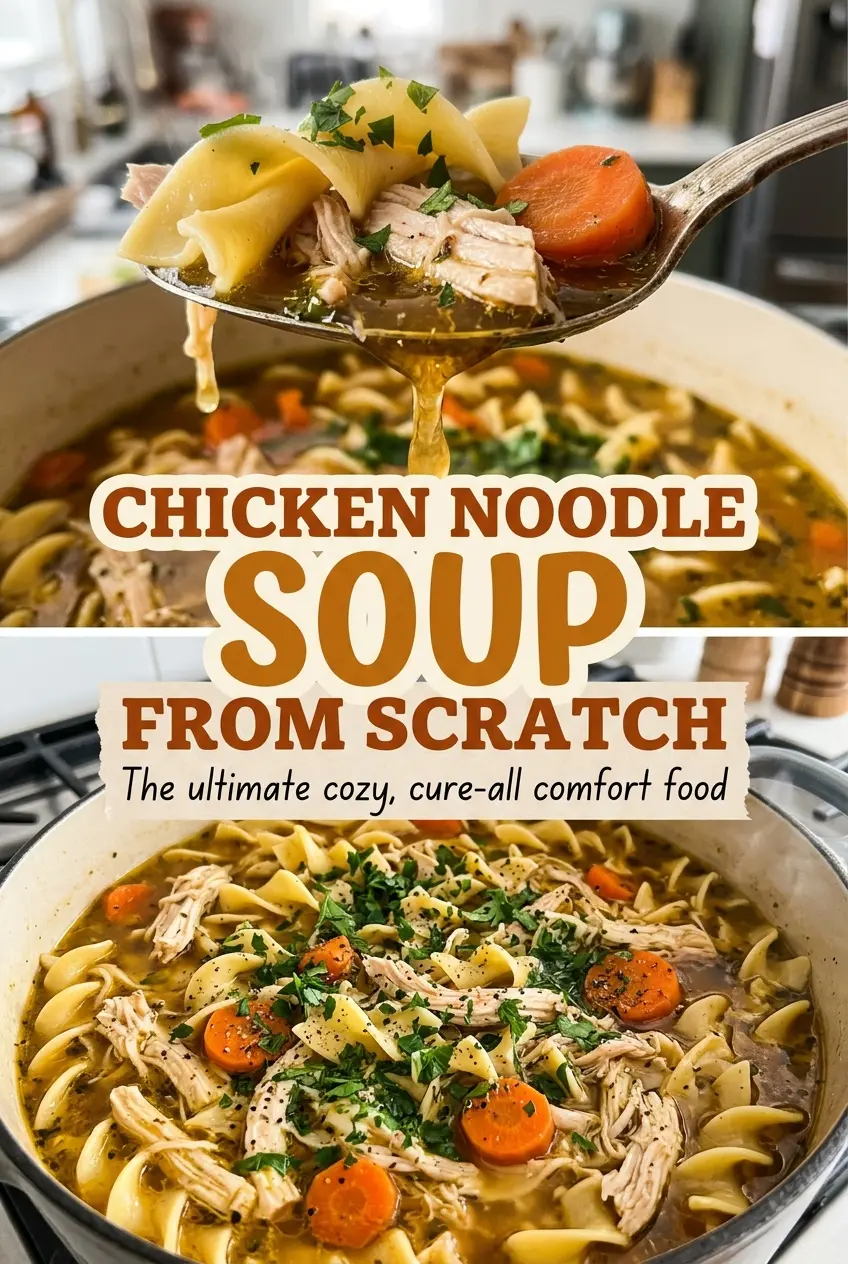
Chicken Noodle Soup From Scratch
Ingredients
Equipment
Method
- Place the whole chicken and all broth ingredients in a very large pot with cold water. Bring to a boil over high heat, with a rolling bubbling surface forming across the pot.
- Skim foam from the top as it rises to keep the broth clear. Reduce heat to a gentle simmer so small bubbles break the surface steadily.
- Simmer for 1 hour 30 minutes at a gentle simmer, until the chicken is very tender. Look for meat that pulls easily and broth that looks deeper in color as it reduces.
- Strain the broth and discard the used vegetables. Remove all meat from the chicken and shred into bite-size pieces.
- Return the clear broth to the pot. Taste and season with salt so the broth is well balanced.
- Bring the seasoned broth to a simmer. Add the sliced carrots, celery, and diced onion so the pot resumes bubbling right away.
- Cook for 10 minutes at a simmer until the vegetables are tender. You should see carrots soften and onions become translucent.
- Add the wide egg noodles and stir to keep them from sticking. Cook for 6 minutes at a simmer, then check for al dente texture and continue up to 8 minutes total if needed.
- Add the shredded chicken and fresh parsley and stir to distribute. Cook for 1 minute just to warm through and keep parsley bright.
- Adjust seasoning with salt and pepper to taste. Taste again for final balance before serving.