
Wide egg noodles give chicken noodle soup the kind of body that keeps it from feeling thin or watery. They turn plump and silky in the broth, and when the chicken is tender and the vegetables still have a little bite, every spoonful tastes like it simmered all afternoon even though it comes together fast. The dill at the end sharpens the whole pot and keeps the soup from tasting flat.
The trick here is timing. The chicken simmers first so the broth picks up flavor, then the noodles go in only after the meat is shredded and returned to the pot. That keeps the noodles from soaking up too much liquid before dinner hits the table. I also like using wide egg noodles instead of thin pasta because they hold their shape better and give you that classic, homey texture.
Below, you’ll find the timing that keeps the noodles tender, the broth rich, and the vegetables from turning to mush. There’s also a simple storage note if you want leftovers that still taste good the next day.
The noodles stayed tender without getting bloated, and the broth had such a good dill-and-thyme finish. I let it sit 10 minutes before serving and it tasted even better.
Save this chicken noodle soup with egg noodles for the nights when you want a brothy, cozy bowl with tender chicken and wide noodles that hold up beautifully.
The Reason the Noodles Go In Last
The fastest way to ruin chicken noodle soup is to let the noodles sit in the pot too long. Wide egg noodles drink up broth fast, and once they cross that line, they turn swollen and soft instead of tender. Adding them after the chicken is shredded keeps the texture where it belongs and keeps the broth from disappearing before everyone gets a bowl.
That order also keeps the chicken from overcooking. Once the meat is cooked through and pulled out, the soup can finish around the noodles without drying out the breast. If the pot stays at a hard boil after the noodles go in, they break apart and cloud the broth, so a lively simmer is the right heat here.
What Each Ingredient Is Actually Doing in This Soup

- Chicken breast — Lean breast meat cooks quickly and shreds cleanly, which keeps the soup light. If you want a richer bowl, boneless thighs work too, and they’ll give you a deeper chicken flavor with a softer texture.
- Chicken broth — This is the backbone of the soup, so use a broth you’d actually taste on its own. If yours is low-sodium, that’s better than salty broth; you can season at the end after the noodles and dill go in.
- Wide egg noodles — These hold their shape better than thin noodles and give the soup its classic texture. Regular pasta will work in a pinch, but it won’t have the same soft, wavy bite.
- Fresh dill — Dill wakes up the whole pot at the end. Dried dill doesn’t have the same bright finish, so if you only have dried, use less and add it with the broth instead of waiting until the end.
- Carrots, celery, and onion — This is the base that gives the broth sweetness and depth. Dice the onion and slice the vegetables evenly so they soften at the same pace and don’t leave you with a mix of mushy and crunchy pieces.
Building the Broth Before the Noodles Take Over
Softening the vegetables first
Start with the onion, carrots, and celery in the olive oil and cook them until the onion looks translucent and the edges of the carrots start to soften. That first five minutes is what gives the soup its savory base instead of raw-vegetable flavor. If the pan runs too hot, the onion browns before the carrots are ready, so keep the heat at medium and stir often.
Simmering the chicken gently
Add the broth, thyme, parsley, garlic powder, and chicken, then bring everything to a boil before lowering it to a steady simmer. You want the chicken cooked through and just starting to lose its pinkness in the center, not shredded by force. A hard boil makes the breast stringy, while a gentle simmer keeps it tender enough to pull apart easily.
Finishing with the noodles and dill
Once the chicken is shredded and returned to the pot, bring the soup back to a boil and add the egg noodles. Cook them until they’re tender but still have a little spring at the center, then turn off the heat and stir in the dill. If you add the dill too early, the flavor fades; if you let the noodles boil too long, the soup turns heavy and the broth thins out as the pasta absorbs more liquid.
How to Adapt This for a Different Pantry or a Bigger Batch
Use chicken thighs for a richer bowl
Boneless, skinless thighs bring more flavor and stay juicy even if they simmer a little longer. The broth gets a deeper, rounder taste, and the meat shreds into softer pieces than breast meat. If you like a heartier soup, this is the swap I’d pick first.
Make it gluten-free
Use a gluten-free egg noodle or another sturdy gluten-free pasta, but cook it separately if you want the best texture. Gluten-free noodles can break down faster in soup, and cooking them on the side keeps the broth clear and the noodles from turning gummy.
Add extra vegetables without changing the soup’s balance
A handful of peas, baby spinach, or chopped green beans fits in nicely near the end. Add delicate vegetables after the noodles are tender so they keep their color and texture. Heavier additions like potatoes need to cook with the carrots and celery so they’re tender by the time the chicken is done.
Storage and Reheating
- Refrigerator: Store in an airtight container for up to 4 days. The noodles will keep absorbing broth, so the soup gets thicker as it sits.
- Freezer: It freezes, but the noodles soften after thawing. For the best result, freeze the broth, chicken, and vegetables without noodles, then cook fresh noodles when you reheat.
- Reheating: Warm it slowly over medium-low heat until just steaming. A hard boil will break up the noodles and make the chicken stringy, so gentle heat is the move.
Answers to the Questions Worth Asking
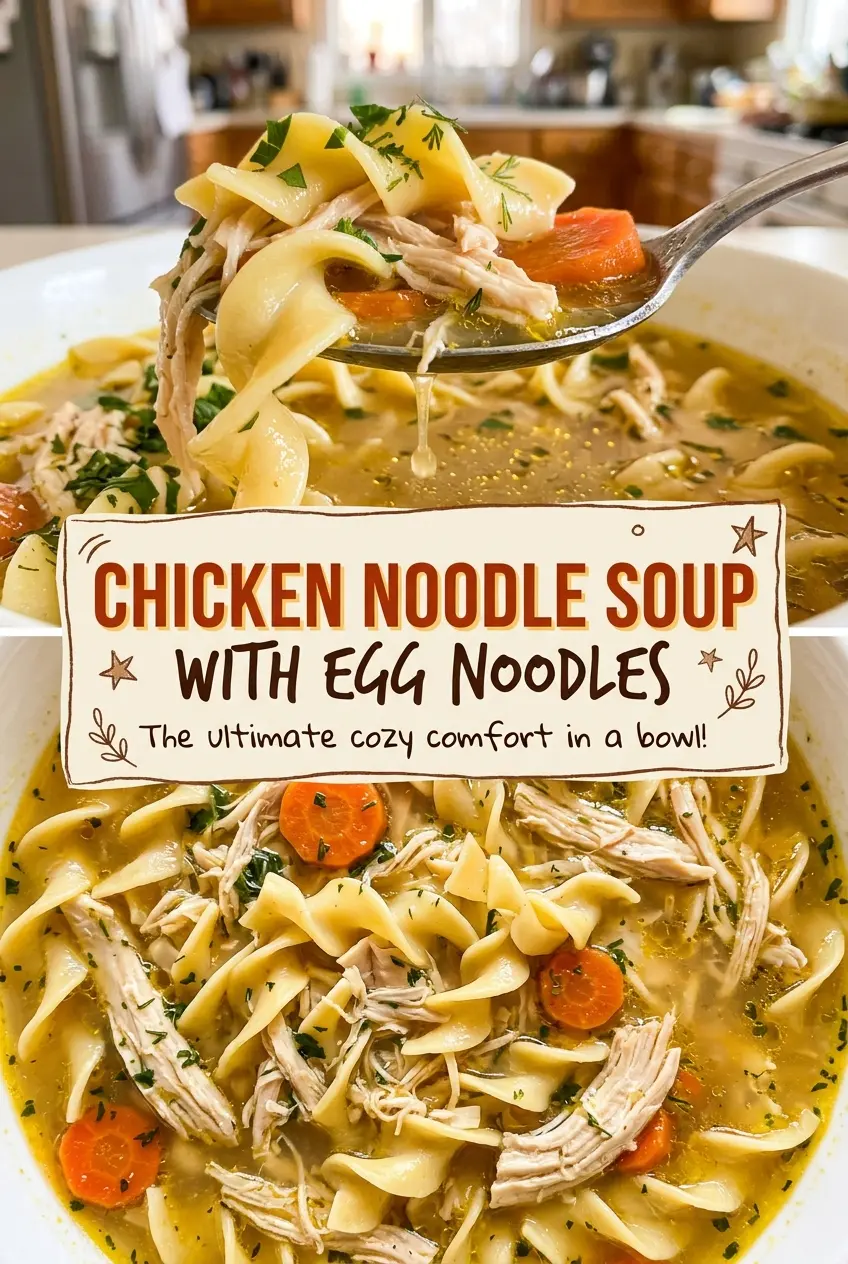
Chicken Noodle Soup With Egg Noodles
Ingredients
Equipment
Method
- Heat the olive oil in a large pot over medium heat, then sauté the onion, carrots, and celery for 5 minutes, until the onion softens and the edges start to turn tender.
- Add the garlic and cook for 1 minute, stirring constantly until fragrant, then add the chicken broth, dried thyme, dried parsley, garlic powder, and the chicken.
- Bring the mixture to a boil, then reduce the heat to maintain a gentle simmer and cook for 18-20 minutes until the chicken is cooked through and no longer pink.
- Remove the chicken from the pot, shred it, then return the shredded chicken to the broth.
- Bring the soup back to a boil, add the wide egg noodles, and cook for 7-8 minutes until tender but not mushy.
- Stir in the fresh dill and season generously with salt and pepper to taste.