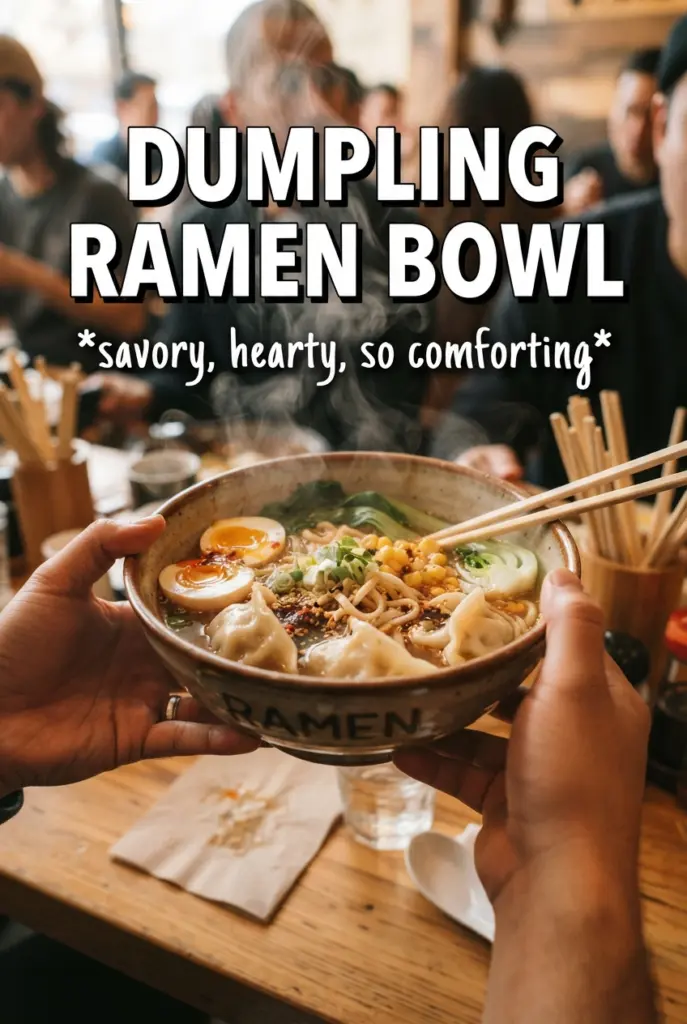
Dumpling ramen bowl delivers the kind of dinner that feels layered and complete without asking for much more than a simmering pot and a few smart toppings. You get salty, savory broth, springy noodles, tender dumplings, and that soft egg yolk running into everything. It eats like something from a noodle shop, but it comes together fast enough for a weeknight.
The trick is in building the broth with miso, soy sauce, mirin, and sesame oil before anything else goes in. Miso brings body, but it can taste flat if it never gets the chance to dissolve into hot broth. Cooking the dumplings right in the soup keeps the whole bowl cohesive, while the noodles stay separate so they don’t turn gummy before serving.
Below you’ll find the timing that keeps the dumplings juicy, the best way to keep the noodles bouncy, and a few swaps that still give you a bowl with real depth.
The broth had so much more depth than I expected, and the dumplings stayed tender instead of getting soggy. I loved that the egg yolk mixed into the soup and made it taste extra rich.
Save this dumpling ramen bowl for the nights when you want a rich soy-miso broth, chewy noodles, and a soft egg without a long simmer.
The Reason the Broth Tastes Deeper Than a Basic Soup Base
The broth needs to taste seasoned before the noodles ever go in. That means whisking the miso into hot broth until it disappears, not dropping it in as a clump and hoping it sorts itself out. If the miso stays uneven, you get pockets of salty paste and a broth that tastes thin everywhere else.
Mirin matters here because it rounds out the soy sauce and keeps the bowl from tasting sharp. Sesame oil belongs in the broth, but only in a modest amount; too much and it starts to dominate everything. The other thing people often miss is heat control. A hard boil can make the broth muddy and can toughen the dumplings’ wrappers. Keep it at a steady simmer instead.
What Each Ingredient Is Doing in This Bowl
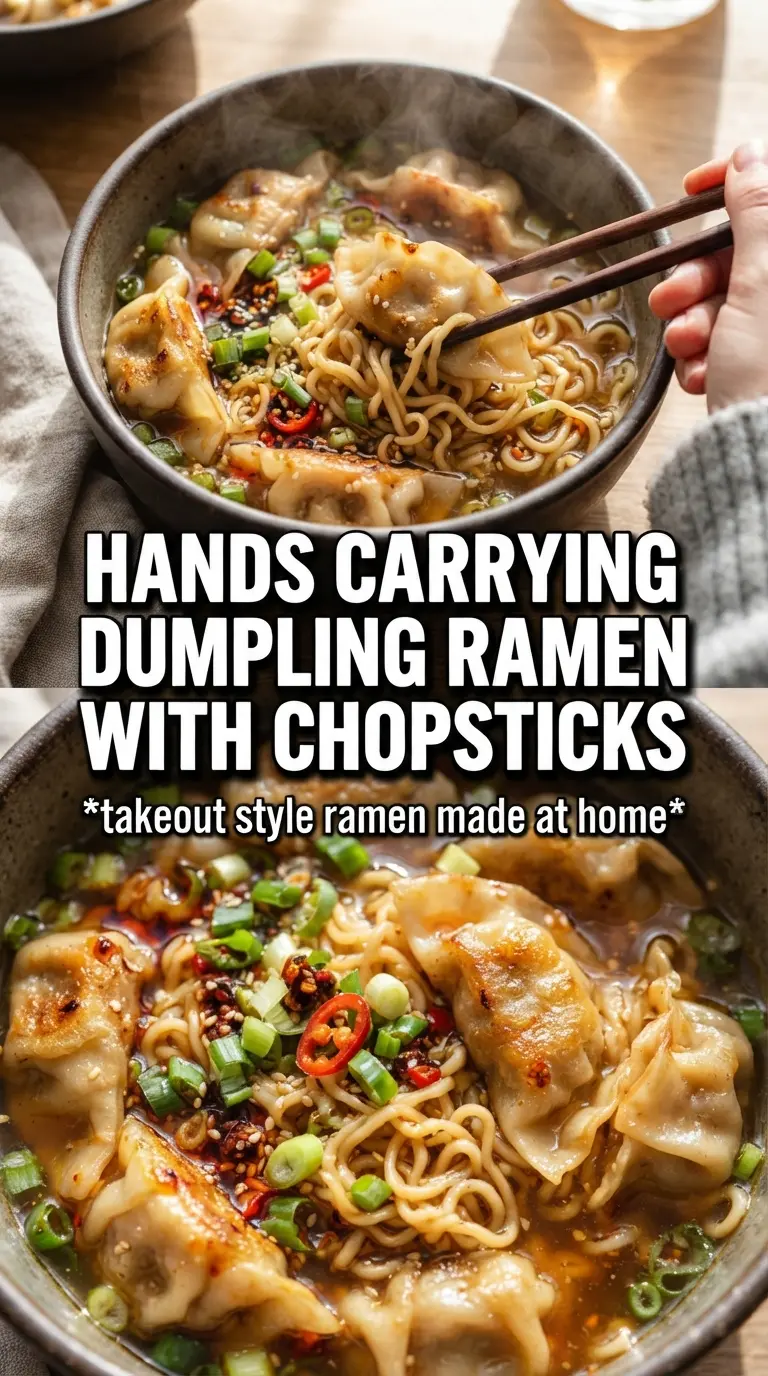
- Frozen dumplings — These do the heavy lifting on texture and protein. Pork gives the bowl a richer, more savory finish; chicken stays a little lighter. Use them straight from frozen so the wrappers don’t stick or tear during thawing.
- White miso paste — This is what gives the broth its quiet depth and a little body. White miso is the mildest option, which is why it works so well in a quick soup. If you swap in a darker miso, use a little less at first because the flavor gets saltier and more intense.
- Fresh ramen noodles — Fresh noodles cook quickly and stay springy, which is exactly what you want in a bowl like this. Dried ramen works in a pinch, but it won’t have the same chew. Cook them separately so the starch doesn’t cloud the broth and turn the noodles soft.
- Soft-boiled eggs — The runny yolk becomes part of the broth as soon as you cut into it. Seven minutes gives you the set white and jammy center this bowl needs. If your eggs are cold from the fridge, start timing once the water returns to a boil after they go in.
- Bok choy and corn — Bok choy adds freshness and a little crunch, while corn brings sweetness that plays well with the miso. Frozen corn is fine here. Slice the bok choy in half so it wilts quickly without turning limp.
- Nori, sesame seeds, and chili oil — These finish the bowl with salt, crunch, and heat. Don’t skip the nori if you like that classic ramen-shop taste; it adds a briny note that pulls the whole bowl together.
The 20 Minutes That Matter Most
Building the Broth First
Bring the chicken broth to a gentle simmer before anything else goes in. Whisk in the miso until the broth looks smooth and slightly cloudy, then add the soy sauce, mirin, and sesame oil. If the broth is boiling hard at this point, the aromatics can taste flat and the miso won’t dissolve as cleanly.
Cooking the Dumplings Without Breaking Them
Add the frozen dumplings directly to the simmering broth and let them cook until they’re heated through and tender, usually 5 to 7 minutes. Stir gently once or twice so they don’t stick to the bottom of the pot. If the wrapper tears, the broth can turn cloudy, so keep the heat steady instead of tossing them around aggressively.
Wilty Greens, Not Mushy Greens
Drop in the bok choy near the end and cook it just until the leaves soften and the stems turn bright green. Two to three minutes is enough. Any longer and it loses its structure, which makes the bowl feel tired instead of fresh.
Noodles in the Bowl, Not the Pot
Cook the ramen noodles separately according to the package directions, then drain them well. This keeps the broth clear and stops the noodles from soaking up too much liquid before serving. Divide the noodles into bowls first, then ladle the hot broth and dumplings over the top so everything lands at the right texture.
How to Adapt This for a Different Pantry
Make it dairy-free and keep the same rich broth
This bowl is naturally dairy-free as written, which is one reason it tastes so clean and savory. If you want a little extra richness, add a splash of toasted sesame oil at the end rather than reaching for cream or butter. That keeps the broth glossy without changing the flavor profile.
Use vegetarian dumplings and vegetable broth
Swap in vegetable broth and veggie dumplings for a fully vegetarian version. The soup will be a little lighter, so add an extra half tablespoon of miso or a touch more soy sauce to keep the base from tasting thin. Mushroom or cabbage dumplings work especially well here.
Make it gluten-free without losing the ramen feel
Use gluten-free tamari in place of soy sauce and choose gluten-free dumplings if you can find them. Rice noodles can replace the ramen noodles, but they’ll give you a softer bite and a less springy finish. If you go that route, cook them separately and under the package time by a minute so they don’t turn mushy in the hot broth.
Turn it into a faster pantry dinner
Frozen corn, bagged bok choy, and store-bought soft-boiled eggs cut the prep time down without changing the structure of the dish. The one place not to shortcut is the broth seasoning; bland broth makes the whole bowl taste unfinished. Taste it before serving and add a pinch of salt only if it needs it.
Storage and Reheating
- Refrigerator: Store the broth, dumplings, and toppings separately for up to 3 days. The noodles soften quickly, so keep them apart if you want the best texture.
- Freezer: The broth and cooked dumplings freeze well for up to 2 months. Freeze the noodles separately only if they’re fresh and still have some bite; otherwise they turn too soft after thawing.
- Reheating: Reheat the broth and dumplings gently on the stove until steaming, then add freshly warmed noodles to the bowl. Don’t boil the soup hard during reheating or the dumplings can split and the broth can taste dull.
Answers to the Questions Worth Asking
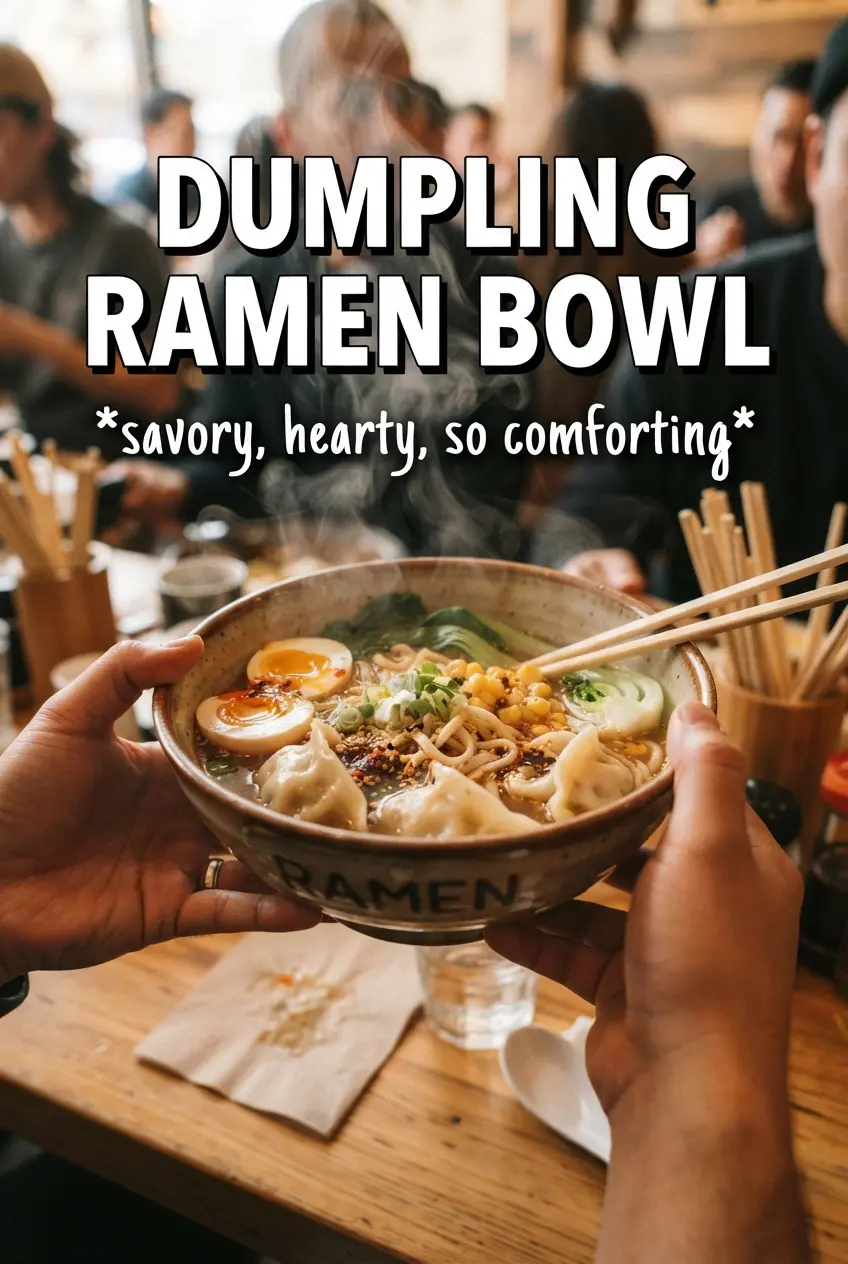
Dumpling Ramen Bowl
Ingredients
Equipment
Method
- Bring the chicken broth to a simmer in a Dutch oven, then whisk in the white miso paste, soy sauce, mirin, and sesame oil until smooth and aromatic.
- Add the frozen pork or chicken dumplings to the simmering broth and cook for 5-7 minutes until cooked through, stirring gently once or twice.
- Add the halved bok choy and cook for 2-3 minutes until wilted and bright green.
- Cook the fresh ramen noodles separately according to package instructions, then drain well.
- Divide the noodles between 4 bowls and ladle the hot broth, dumplings, and bok choy over the top.
- Top each bowl with a halved soft-boiled egg, corn, green onions, nori, sesame seeds, and chili oil, then adjust with salt to taste.