
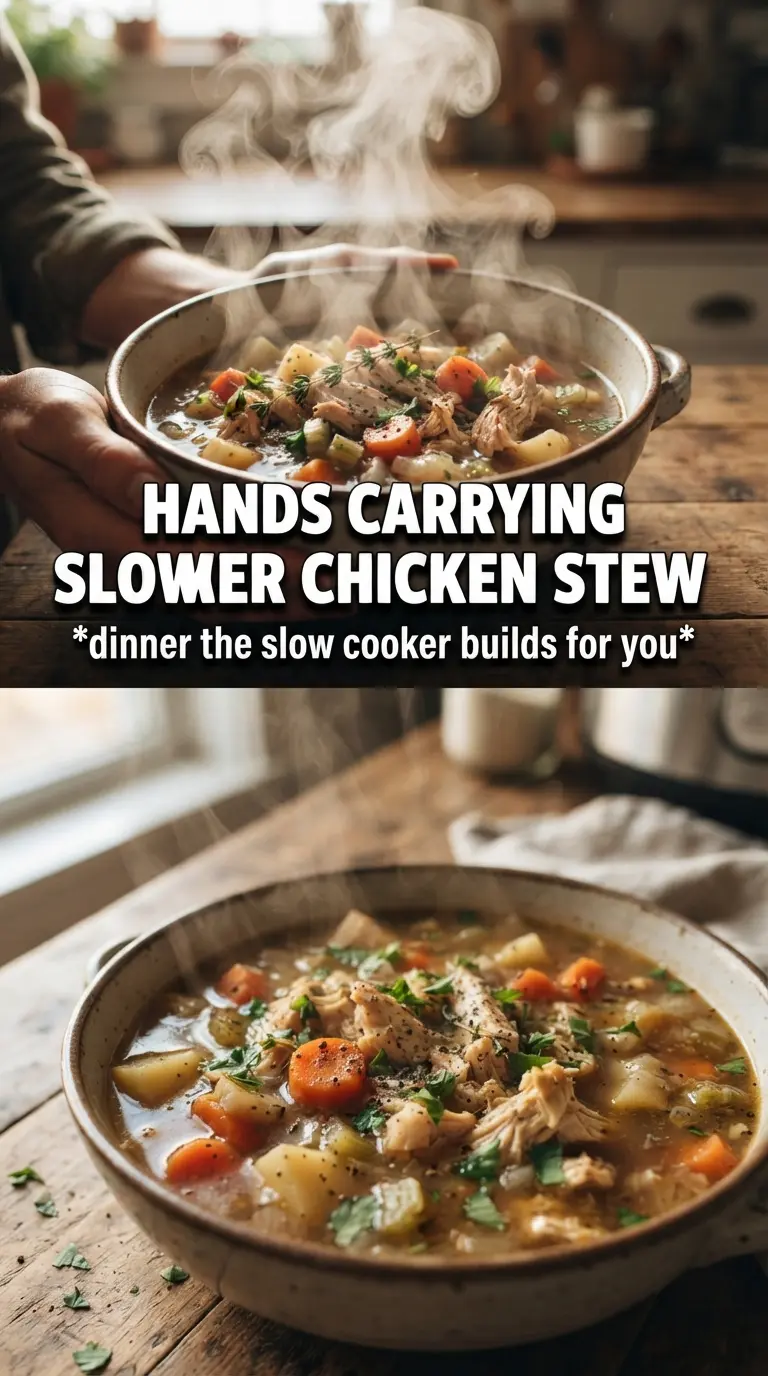
Slow cooker chicken stew lands in that perfect middle ground between brothy soup and thick, spoon-coating comfort food. The chicken turns tender enough to fall apart with a fork, the potatoes hold their shape without going chalky, and the gravy comes together glossy and rich instead of watery. It’s the kind of dinner that tastes like it took all day, because it did — but most of that time is hands-off.
What makes this version work is the layering. The vegetables go in first so they sit in the broth and soften evenly, while the chicken thighs cook on top and keep their texture. The cream of chicken soup and tomato paste give the stew body and a deeper savory base, and the cornstarch slurry goes in only at the end so the broth thickens without turning gluey. That final 20 minutes on High matters more than people think; it’s what takes this from loose and soupy to properly stew-like.
Below, I’ll walk through the small details that keep the vegetables from overcooking and the gravy from thinning out after you shred the chicken. There’s also a simple storage note, because this stew reheats well and tastes even better the next day.
The gravy thickened up perfectly after the last 20 minutes, and the chicken thighs were so tender I barely had to shred them. I added extra parsley on top and served it with crusty bread — no leftovers.
Save this slow cooker chicken stew for a low-effort dinner with thick gravy, tender thighs, and potatoes that hold their shape.
The Trick to Keeping the Potatoes Intact While the Chicken Turns Tender
If you’ve ever made stew in a slow cooker and ended up with potatoes that collapse into mash before the chicken is done, the problem is usually placement and cut size. The vegetables need to sit on the bottom where the heat is gentler and steadier, but they also need to be cut large enough to survive a long cook. Baby potatoes, halved, are ideal here because they soften through without breaking apart as easily as smaller diced potatoes.
Chicken thighs are doing the heavy lifting too. Bone-in thighs hold up better than chicken breasts in a long cook, and the bones help keep the meat moist. If you use boneless thighs, the stew still works, but shorten the cook a little so the meat doesn’t go stringy. The other thing that matters is resist the urge to stir early. Every time you lift the lid, you lose heat and stretch the cook time.
What Each Ingredient Is Actually Doing in This Stew
- Bone-in chicken thighs — These give the stew its richest flavor and stay tender through the long cook. Boneless thighs work in a pinch, but they won’t add quite the same depth. If you use them, start checking earlier so they don’t dry out.
- Baby potatoes — Their waxy texture helps them hold their shape better than russets. Halving them gives the stew more surface area for flavor without letting them disappear into the gravy.
- Cream of chicken soup — This is part convenience, part texture. It gives the broth a built-in creamy base that helps the stew thicken smoothly. I wouldn’t swap in plain milk here; it won’t give the same body.
- Tomato paste — Just a little adds depth and rounds out the savory flavor. It doesn’t make the stew taste tomatoey; it just keeps the broth from tasting flat.
- Cornstarch slurry — This is the final thickener, and it has to go in at the end. If you add it too early, it can thin back out after hours of heat. Mixed with cold water first, it thickens the stew cleanly without lumps.
Building the Stew So the Sauce Thickens at the End, Not the Beginning
Layer the vegetables first
Put the potatoes, carrots, celery, and onion in the bottom of the slow cooker. That keeps the chicken from sitting directly on the heat source and gives the vegetables a chance to cook through in the broth below. If you pile everything in randomly, the potatoes near the top can stay firm while the bottom turns soft, which throws off the whole texture.
Stack the chicken and seasonings on top
Nestle the chicken thighs over the vegetables, then add the garlic, broth, cream of chicken soup, tomato paste, thyme, rosemary, and bay leaf. Don’t worry if it looks a little messy at this stage; the slow cooker evens everything out. The important part is that the tomato paste gets broken up into the liquid so you don’t end up with little concentrated streaks in the finished stew.
Cook until the meat is ready to shred
Set it on Low for 6 to 8 hours, or High for 3 to 4 hours if you’re short on time. You’re looking for chicken that pulls apart easily and vegetables that are tender but not falling apart. If the chicken still fights you when you try to shred it, it needs more time; forcing it early gives you tough shreds instead of soft ones.
Thicken after shredding, not before
Remove the chicken, discard the skin and bones, and shred the meat. Take out the bay leaf, then stir in the cornstarch slurry and cook on High for about 20 minutes. That last burst of heat activates the thickener and turns the broth into a real gravy; if you add the slurry too soon, long cooking can weaken its effect and leave the stew thinner than you want.
Finish with the chicken and final seasoning
Return the shredded chicken to the slow cooker and season with salt and pepper. The stew will taste muted before this last step, so don’t judge it until the end. A handful of parsley at serving adds freshness and cuts through the richness, especially if you’re pairing it with bread.
What to Change When You Want a Different Kind of Stew
Make it dairy-free
Swap the cream of chicken soup for a dairy-free condensed soup or a thick homemade roux-style base made with broth and a little flour. The texture will still be creamy, but the flavor will be a little less rich and more broth-forward. This is the best route if you need the stew to stay comforting without relying on dairy.
Use chicken breasts instead of thighs
You can use boneless chicken breasts, but they need less time and they dry out faster. Start checking early and pull them as soon as they shred easily. You’ll lose some richness, so the stew tastes a little leaner and less silky than it does with thighs.
Make it gluten-free
Use a gluten-free cream of chicken soup and check that your broth is certified gluten-free. Cornstarch is already doing the thickening here, so you don’t need to change the texture plan at all. This is one of the cleaner recipes to adapt because the final gravy doesn’t depend on flour.
Add extra vegetables
Mushrooms, peas, or green beans fit in well, but add quick-cooking vegetables near the end so they don’t go soft and dull. Mushrooms can go in at the start if you want them to disappear into the broth, while peas should be stirred in during the last 15 minutes. The stew gets heartier without losing its classic chicken-and-potato structure.
Storage and Reheating
- Refrigerator: Store in an airtight container for up to 4 days. The stew thickens as it chills, so it may look almost too dense the next day.
- Freezer: It freezes well for up to 3 months. Cool it completely first, then portion it into freezer containers; the potatoes will soften a little after thawing, but the flavor holds up.
- Reheating: Reheat gently on the stovetop or in the microwave with a splash of broth to loosen it. Don’t boil it hard, or the potatoes can break down and the chicken can turn stringy.
Answers to the Questions Worth Asking

Slow Cooker Chicken Stew
Ingredients
Equipment
Method
- Place baby potatoes, carrots, celery, and onion in the bottom of the slow cooker. Spread them into an even layer so everything cooks through.
- Nestle the bone-in chicken thighs on top of the vegetables. Tuck them in so they sit mostly in the cooker rather than on top of the pile.
- Add garlic, chicken broth, cream of chicken soup, tomato paste, dried thyme, dried rosemary, and bay leaf over everything. Pour in any thick soup mixture evenly so it disperses.
- Cook on Low for 6-8 hours until the chicken is very tender. The vegetables should look softened and the broth should be bubbling gently.
- Remove chicken thighs and discard the skin and bones, then shred the meat. Taste the stew base and check that the vegetables are tender.
- Remove the bay leaf from the stew and stir the cornstarch slurry into the pot. You should see the gravy begin to look cloudy and thicken.
- Cook on High for 20 minutes to fully thicken. Keep the heat steady so the gravy turns glossy and clings to the chicken and vegetables.
- Return the shredded chicken to the slow cooker and season with salt and pepper. Stir until the chicken is evenly coated, then garnish with fresh parsley before serving.